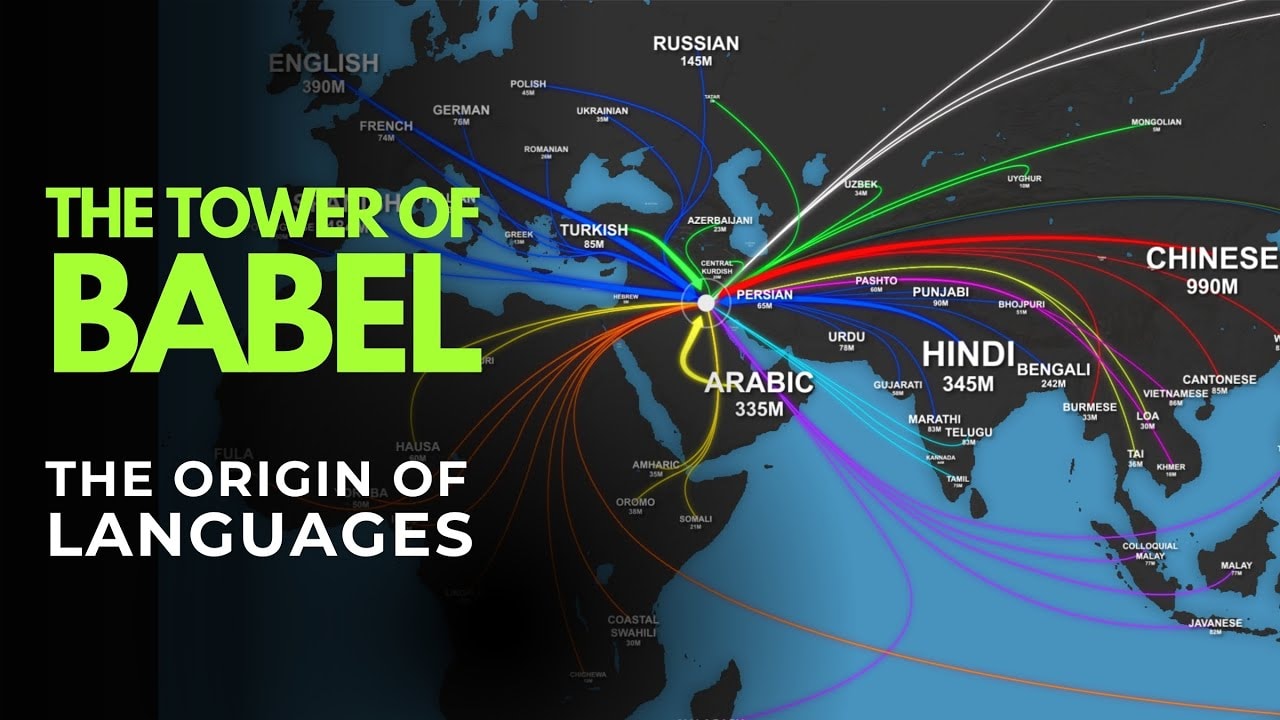
The Tower of Babel is one of Scripture’s biggest origin stories. It begins with one people, one place, and one shared language. Then it opens into a world of thousands of tongues, nations, migrations, and cultures.
Genesis places the Tower of Babel after the flood, when humanity traveled east into the plain of Shinar. What happened there was more than a story about a tower reaching heaven. It was the turning point that sent humanity outward across the earth.
Genesis places the Tower of Babel after the flood, when humanity traveled east into the plain of Shinar. What happened there was more than a story about a tower reaching heaven. It was the turning point that sent humanity outward across the earth.
The story begins with one voice, but it does not end in division without purpose.
Takeaways
- The Tower of Babel frames language diversity as part of humanity’s global dispersion.
- Ham’s proposed migration routes emphasize Africa, Arabia, and Mediterranean lands.
- Japheth’s proposed line spans Europe, Asia, Siberia, and the Americas.
- Shem’s line centers on ancient Near Eastern languages, including Akkadian, Hebrew, Arabic, and Aramaic.
Babel in the Valley of Shinar
In the biblical account, people gathered in Shinar and chose a bold building project. They used a new kind of construction for the ancient world: baked brick instead of stone and tar instead of mortar. Their goal was a city and a tower that would make a name for themselves and keep them from scattering.
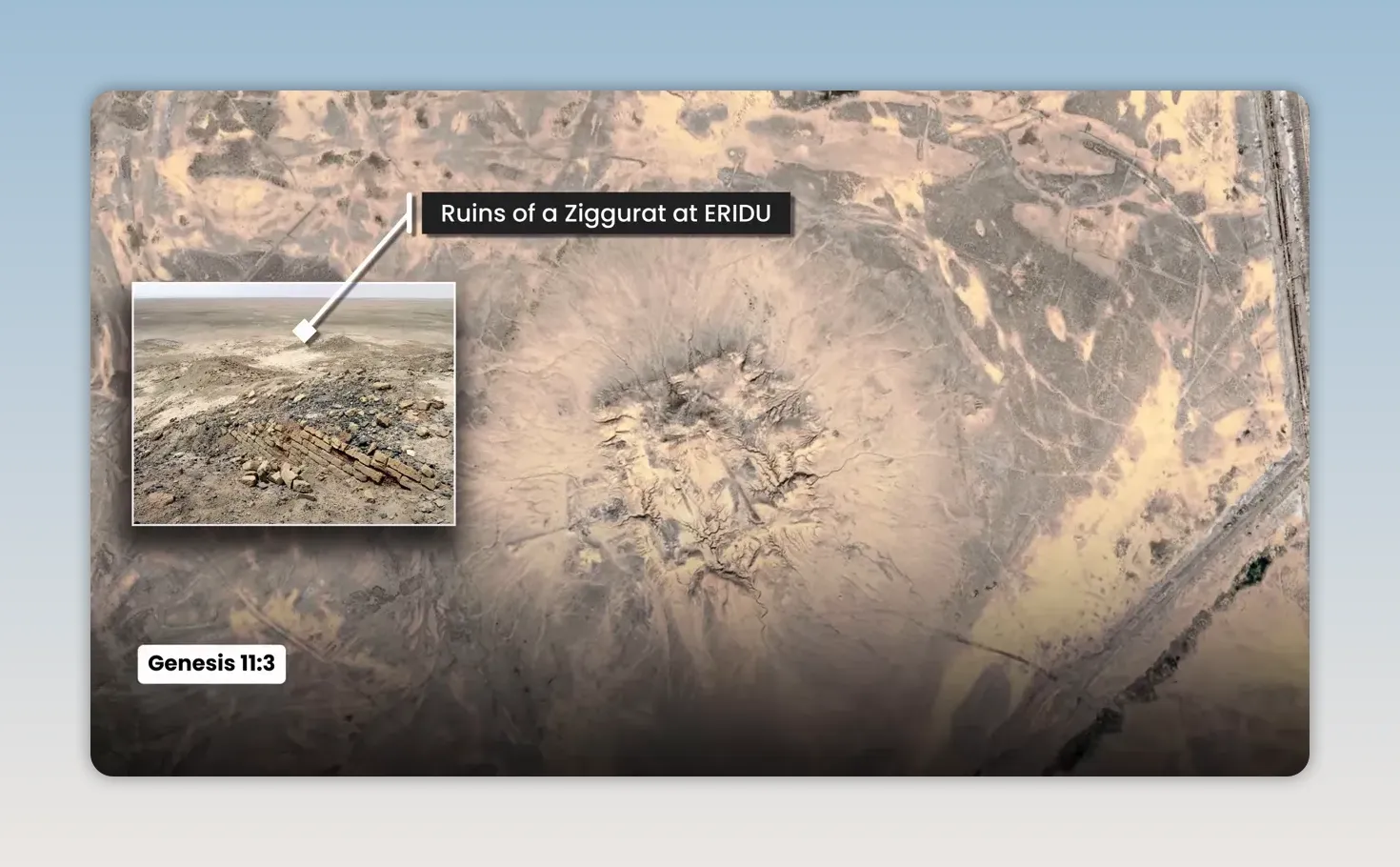
Eridu, one of Mesopotamia’s oldest cities, offers an intriguing setting for thinking about the Tower of Babel. The region was known for ziggurats, huge stepped structures built from brick. Whether one identifies Babel with a particular ruin or not, the landscape fits the world described in Genesis.
The Tower of Babel story says God confused their language. In this biblical framework, that act was not simply punishment. It also fulfilled the earlier command to fill the earth. The people who wanted to remain together were now set in motion.
Babel was not the end of humanity’s story. It was the beginning of humanity’s great journey.
Genesis connects this dispersion with the generations following Noah: Ham, Japheth, and Shem. The map that follows is a theoretical synthesis of biblical genealogy, ancient traditions, archaeology, language patterns, and proposed migration routes. Specific connections remain debated, and language families do not always map neatly onto one ancient ancestor.
The Line of Ham Across Africa
In this reconstruction, Ham’s descendants moved largely southwest from the Tower of Babel into Africa, Arabia, and the Mediterranean region. The story begins with Cush, Mizraim, Put, and Canaan.
Cush is linked here with a route from the Arabian Peninsula across the Red Sea into the Horn of Africa. From there, Cushitic languages emerge in East Africa. The model then traces wider movements into central, western, and southern Africa, connecting them with Nilo-Saharan, Niger-Congo, and Khoisan language regions.
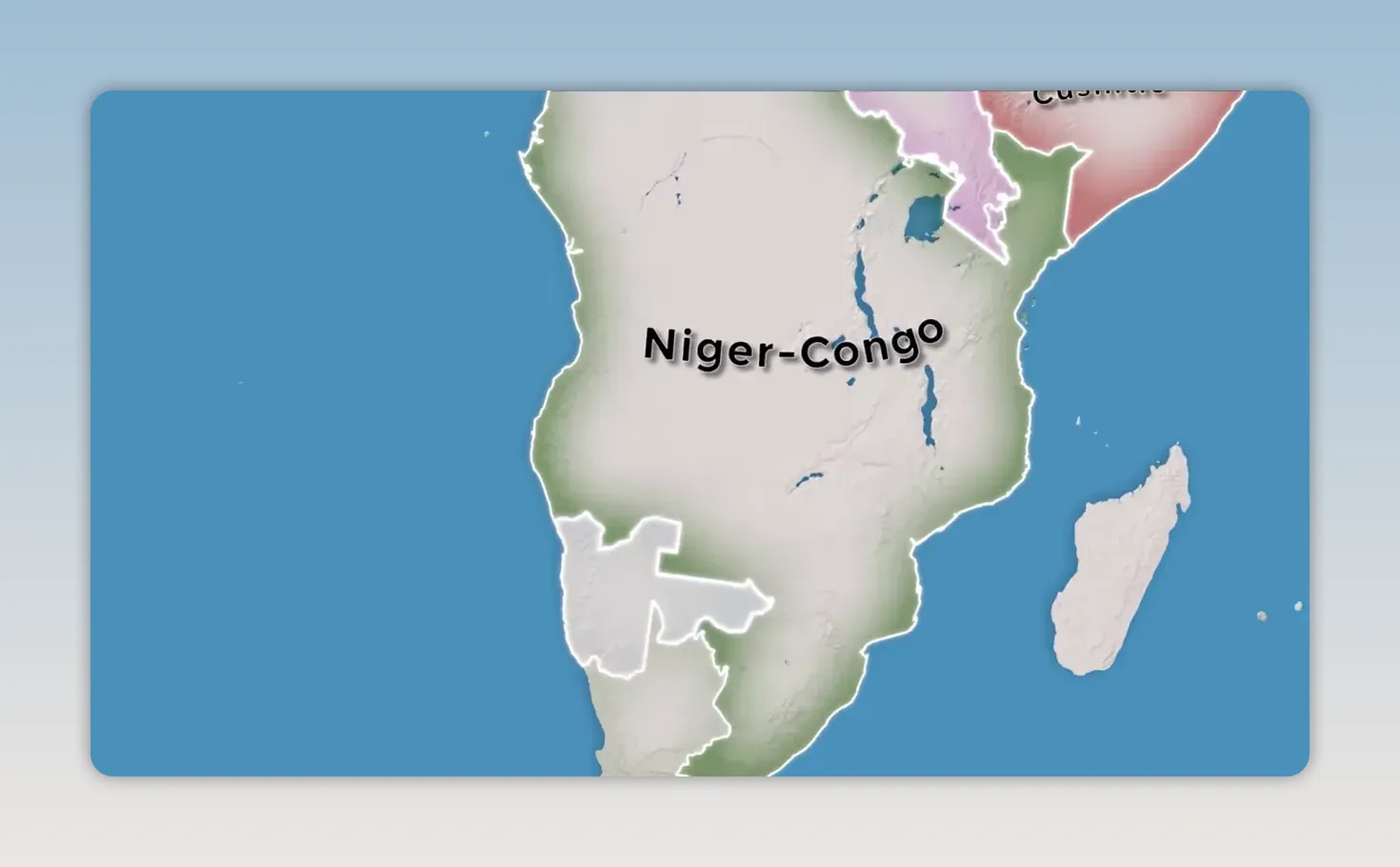
Modern linguistics generally treats these groups as distinct language families, rather than as a single “Hamitic” branch. Still, the Tower of Babel framework explores whether the broad dispersal of Africa’s peoples can be understood through the line of Cush and Ham.
The southern route may have continued even farther. One hypothesis suggests movements along the Indian Ocean coast toward Papua and Australia, linking the expansion to Papuan and Australian Aboriginal languages. It is a sweeping proposal, but it captures the scale of the migration imagined after Babel.
From the Horn of Africa to the southern continent, the journey keeps moving.
Mizraim is associated with Egypt and the Egyptian language that later developed into Coptic. The account also follows possible movements through Crete and toward Canaan. Put is traditionally connected with Libya and North Africa, while Berber languages occupy a prominent place in this western region.
There is also a fascinating proposal about Europe before Indo-European languages became dominant. Neolithic farmers may have traveled through the Mediterranean into Europe, and Basque is presented as a possible surviving witness to an ancient pre-Indo-European layer. Canaan and the Amorites, meanwhile, are portrayed as descendants of Ham who adopted neighboring Semitic speech through long contact in Mesopotamia and the Levant.
The Line of Japheth Across Europe & Asia
If Ham’s line fills much of the south, Japheth’s line spreads widely across Europe, Asia, Siberia, and eventually the Americas. Genesis 9:27 speaks of Japheth being enlarged, and this reconstruction sees that expansion in the enormous geographic reach of the language families associated with his descendants.
The Caucasus appears first, a mountain crossroads with its own complex language landscape. Then comes the Eurasian steppe and the Kurgan cultural horizon, often associated with the rise and spread of Indo-European languages. This is the largest language family discussed in the Tower of Babel map.
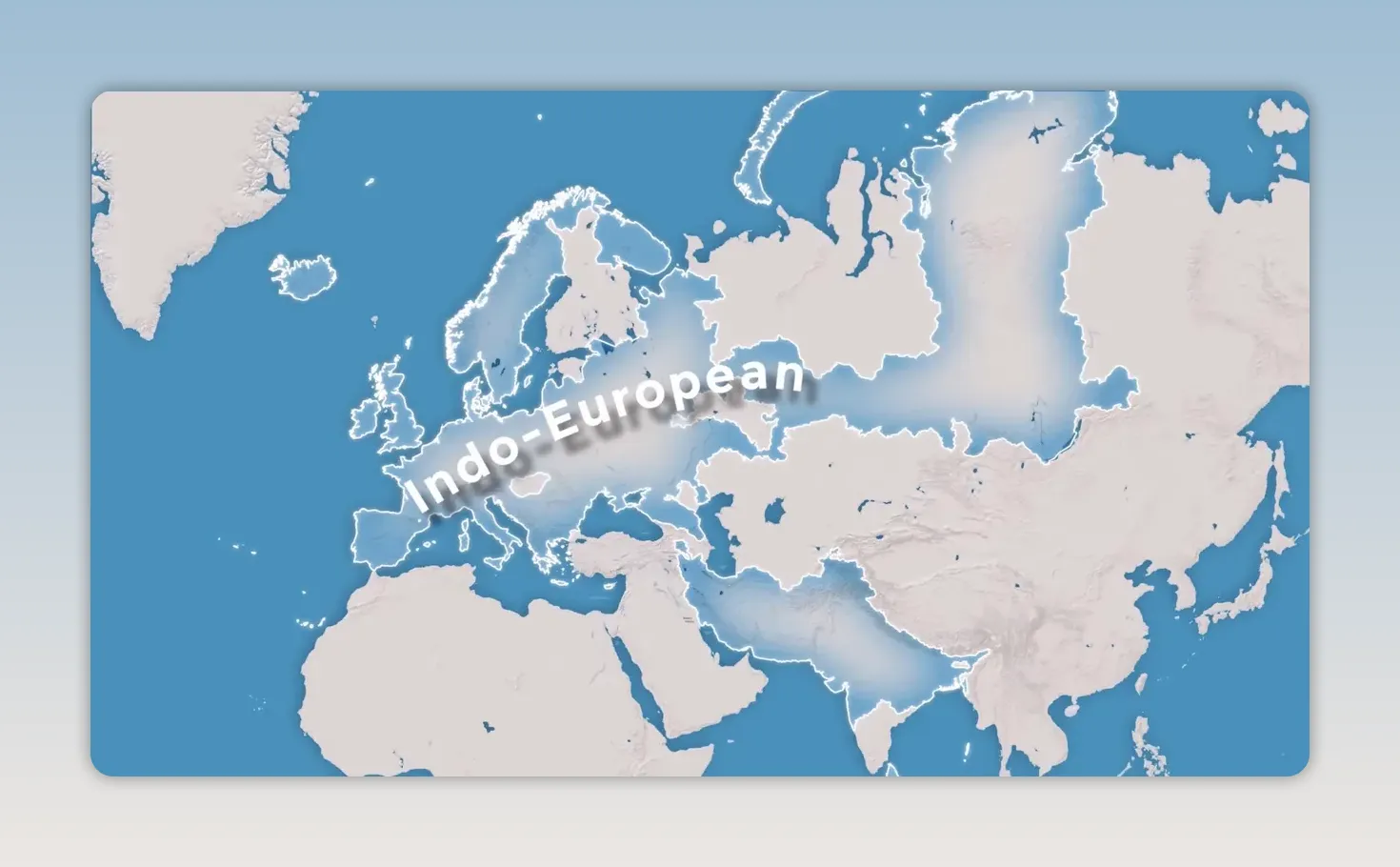
In this model, Gomer moves west and becomes associated with the Celtic and Germanic branches. Magog is linked with northern movements and the Uralic family, including Finnish, Hungarian, and Samoyedic languages. Madai is connected with the Indo-Iranian world, stretching through Iran and into India.
Javan is traditionally tied to Greek culture. His descendant Kittim is associated with Cyprus and Italy, offering a proposed path into the Italic branch. Togarmah is connected with Armenia, while Tubal and Togarmah are linked in some theories to the Turkic, Mongolic, and Tungusic regions of Central and East Asia.
The map does not show a still world. It shows people moving, mixing, adapting, and carrying speech into new lands.
Some proposals go even further. Meshech may be associated with Slavic languages. Tiras may connect with Dravidian languages in southern India. Magog’s eastern movement is linked here with Sino-Tibetan languages, and a southern movement with Austroasiatic languages. Thai languages are presented as a possible meeting point between northern Sino-Tibetan and southern Austroasiatic influences.
Austronesian languages remain especially debated. Some traditions connect them with Javan, fitting an image of maritime peoples. Others place them elsewhere. This is exactly where the Tower of Babel model should be held with an open hand: it offers a fascinating possible map, not a final verdict.
Finally, the journey reaches Siberia and crosses the Bering Strait. Proposed connections include Paleo-Siberian groups, Na-Dene languages, Eskimo-Aleut languages, and widespread language families in the Americas. From Mesopotamia to the New World, the route is staggering.
The Line of Shem in the Middle East
Shem’s line remains centered in the Middle East and is associated with the Semitic family. Here lie some of humanity’s earliest written languages and great civilizations.
Elam is placed eastward in ancient Persia, with Elamite. Asshur settles in northern Mesopotamia, where Akkadian became one of the oldest written languages in history. Arpachshad is connected with Hebrew and Arabic roots, while Aram is linked with Aramaic.
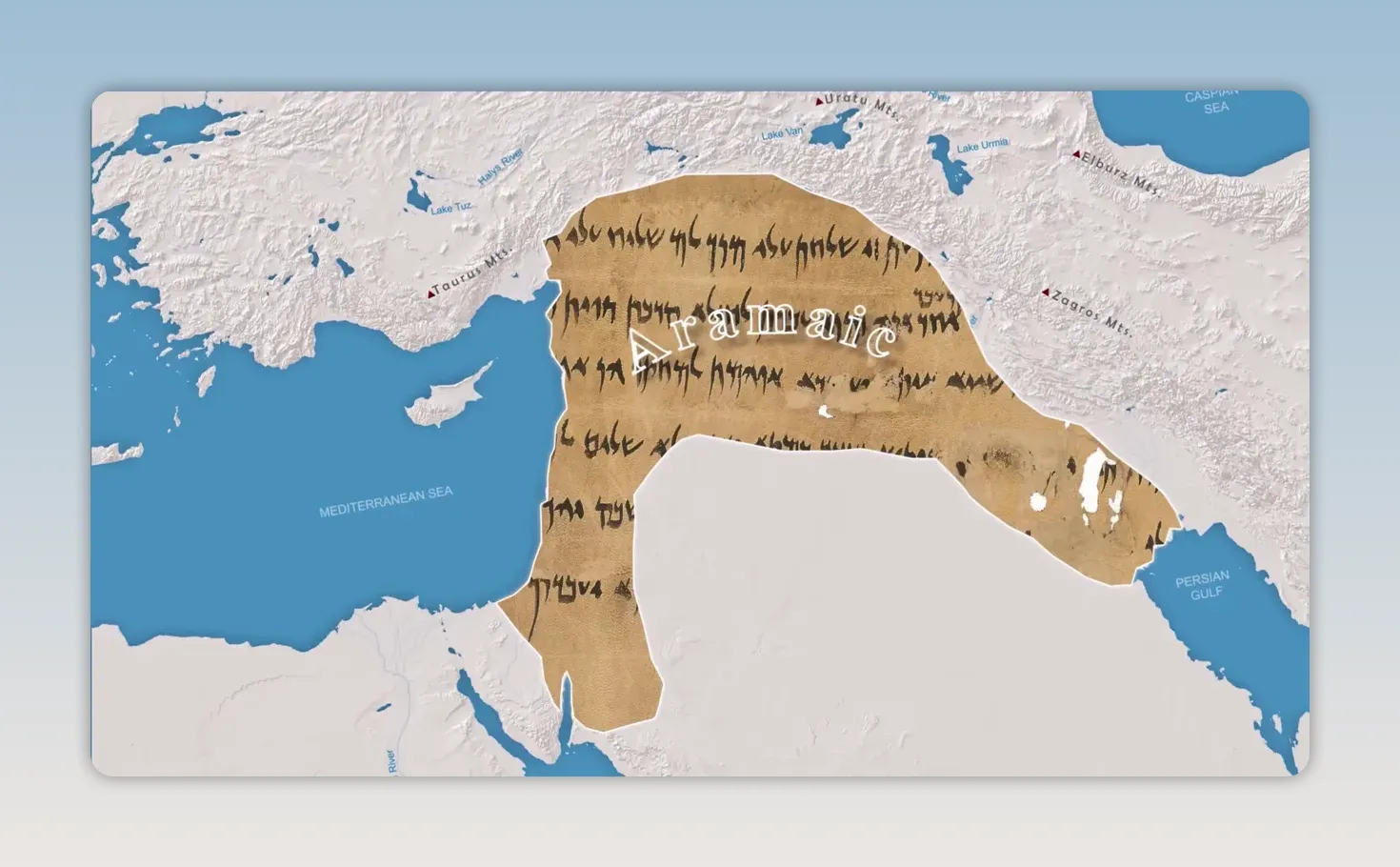
Sumerian adds a beautiful mystery to the Tower of Babel discussion. It is a language isolate, meaning it has no confirmed relationship to another known language family. One suggestion is that a family from Arpachshad’s line may have preserved something close to a pre-Babel tongue. It is an intriguing thought, though still a hypothesis.
Some ancient languages speak from clay tablets, some from Scripture, and some from mysteries still unsolved.
Lud is connected with Asia Minor and Anatolian languages, despite their classification within the Indo-European family. That tension highlights a key lesson: ancestry, culture, geography, and language do not always travel together. Peoples can adopt the speech of neighbors, conquerors, trading partners, or surrounding communities.
What the Tower of Babel Means Today
The Tower of Babel gives a biblical answer to a question every traveler, student, and historian feels: why do people speak so differently across the world?
This map offers one grand answer. Humanity scattered from a common center. Families moved through deserts, mountains, river valleys, coastlines, islands, and frozen northern lands. Over time, words changed. Languages branched. Cultures became wonderfully distinct.
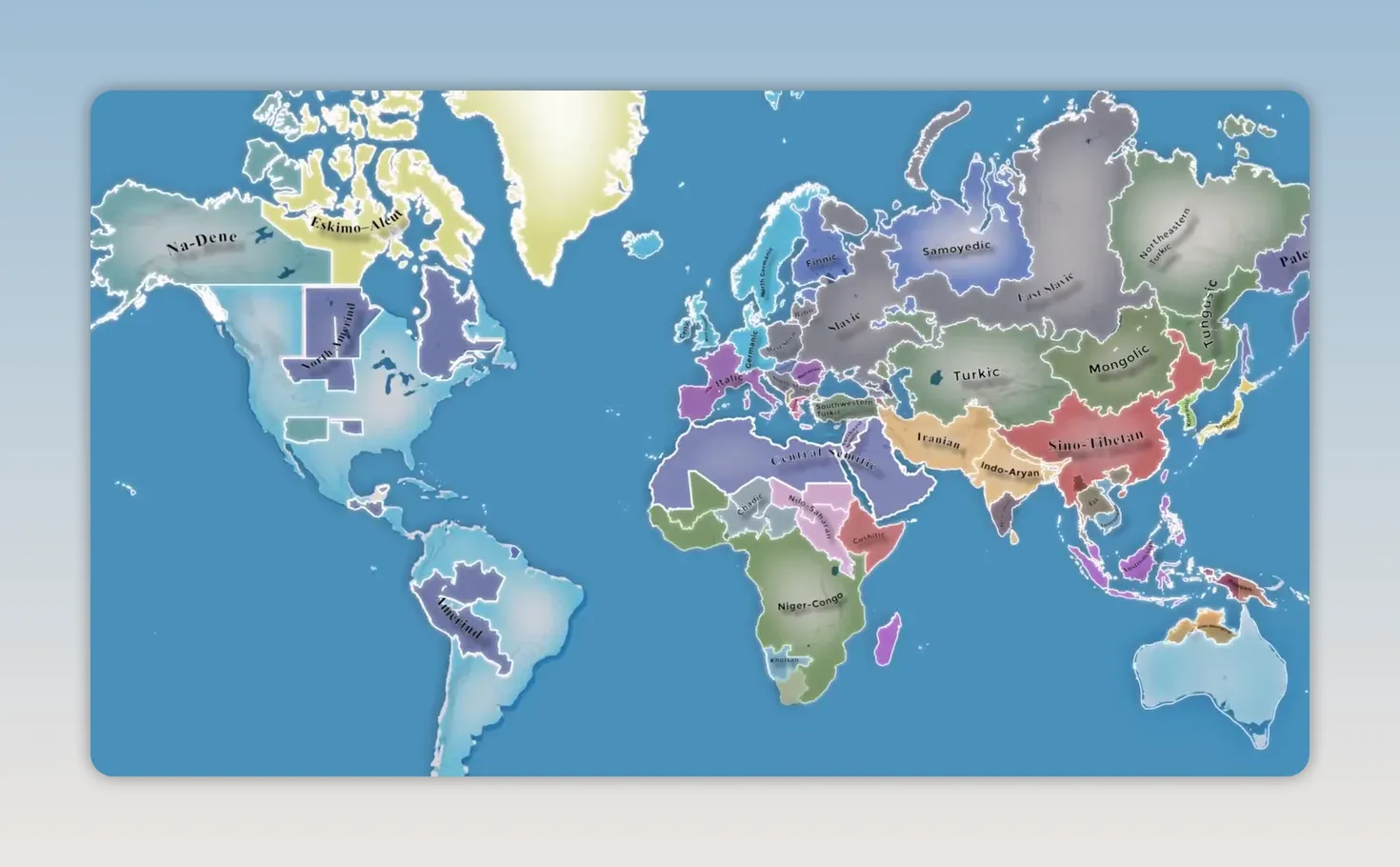
But the Tower of Babel story does not have to leave us thinking only about separation. It also points back to a shared beginning. Our words may sound completely different. Our histories may travel down separate roads. Yet the biblical picture insists that humanity is one family.
We speak many tongues, but we share one human story.
The Tower of Babel: What Was Up With It?
Story in the Torah
After the Great Flood, man had again begun to multiply and fill the earth. They all spoke one language and understood one another well. They decided to build a tower that would reach heaven, to make themselves equal to God and, at the same time, to ensure they could stay together. This symbol of their divine strength, as they thought, was to be built in the valley of the Land of Shinear.
God decided to destroy their arrogance by destroying their ability to understand one another. He, therefore, confused the people by splitting them up into seventy different nations and tribes, each with a language of its own (hence the name Babel, meaning “confusion”).
When this happened, the Tower project had to be abandoned. The various groups migrated in different directions and settled across the world.
Inner Meaning
There are a number of fascinating explanations on the subject in the classic commentaries. Let’s begin with the Talmud (Sanhedrin 109a), where we find three traditions:
In the School of Rabbi Shila, it was taught that they built the tower with the intention of piercing the heavens with axes to drain all the water held therein, making it impossible for God to bring another flood should they vex Him again. (Perhaps what’s meant by this is that they had embraced their understanding of science and its workings to the extent that they felt they were now able to spar with God on His turf—the heavens.)
Rabbi Yirmiya bar Elazar taught that there were actually three groups, each with its own plans for the tower: One group planned to climb the tower, safely out of harm’s way, should another flood come. A second camp wanted to use it as a shrine for idol worship. Yet a third group actually wanted to use it as a platform from which to battle God.
Rabbi Natan, on the other hand, taught that all of them intended to serve idols.
The Targum Yerushalmi explains that the tower was to be crowned by the form of a man holding a sword in his hand as an act of defiance against the God whom they hoped to overcome.
An interesting teaching in the Midrash is that they feared the heavens would collapse every 1656 years, as they did during the flood, which occurred in the year 1656 from Creation, and they therefore decided to build a scaffolding to support them.
The Maharal (Rabbi Yehuda Lowe, 16th-century rabbi of Prague) explains the Midrash and the teachings of the School of Rabbi Shila to mean that they saw the Flood as a natural occurrence that took place as a result of the movements of the celestial spheres and their positioning in the sky at the time of the Flood. The purpose of the tower was to somehow change what they perceived as the natural weather pattern.
Rabbi Obadiah Sforno (15th-16th century) explains that their plan to place an idol on top of the tower was so that it would gain universal acclaim as the world’s tallest shrine and greatest god, making it the center of worship for all, with the result that the one who ruled that city would rule all humankind.
Rabbeinu Bachya (13th-14th century) gives a number of explanations. At an elementary level, he explains that their plan was to build a monument visible for miles around. They wanted to settle together and decided to remain within view of the tower and never stray from it. Anyone who strayed too far from the metropolis would have the tower to guide him back. This, however, was not God’s plan, since He created us to settle the world, all of it, and make it a better place.
He also suggests that they may have actually been creating the first lightning rod. They knew that God had promised not to bring another flood and feared that He would instead punish those who rebel with fire. They hoped that the tower would serve to divert any electrical storms that G‑d would send their way. (Note that Bachya lived many centuries before Franklin.)
The Netziv (Rabbi Naphtali Tzvi Yehuda Berlin, the 19th-century Rosh Yeshiva of the famed Volozhin Yeshiva) has a fascinating and very instructive view on their plan. He explains that they were the first social engineers hoping to create a utopian society where all lived and thought as one. They feared that if some people settled their own colonies and towns, they would develop their own cultures and unique modes of living. They wanted everyone to live in one controlled environment where they could ensure that all remained culturally homogenous. The tower served as a base around which all people of their planned colony would settle, with no one leaving its immediate environs. The problem with their plan was that it was the first step toward a tyrannical state where no individual expression would be tolerated, and God split them into separate nations.
A Tower to Nowhere
The Rebbe once explained the episode as follows: They planned a tower to serve as a monument, inspiring commitment to their common goal, which was survival. They wanted to “make for ourselves a name,” to ensure the continuity of the human race.
Where did they go wrong?
Precisely, that was their error: they saw survival as an end in itself. Let us make a name for ourselves, they said; let us ensure that future generations will read of us in their history books. To them, life itself was an ideal, survival itself a virtue.
This was the beginning of the end. Nature abhors a vacuum, and this is true of spiritual realities as well: unless a soul or cause is filled with positive content, corruption will ultimately seep in. A hollow name and shrine soon become a tower of Babel.
RESOURCES:
This article was created from the video The Tower of Babel & The Origin of Languages | https://www.youtube.com/watch?v=cpiEKVwjKjI with the help of AI.
Watch More: Jewish History...
- Abraham – One Man Chose a Different Path
- Timeline of Jewish History
- Tower of Babel & the Origin of Languages
- 1177 BC: How the First Globalized World Fell Apart
- Nineveh: The Greatest City Erased from History
- Babylon in 570 BC: Inside the City That Shaped the World
- Nebuchadnezzar, Solomon’s Temple & the Fire that Changed Jerusalem
- Hezekiah’s Tunnel: Faith, Fear & Water Beneath Jerusalem
- “Rivers of Babylon” Written in Exile 2600 Years Ago
- Nebuchadnezzar: The King Who Built Babylon, Lost Everything & Returned
- Secret of Jewish Survival & Esther’s Courage
- Canaan to Rome: The Ancient History of Israel
- Arch of Titus: Rome’s Monument of Triumph & Jewish Heartbreak
- Roman Empire: The Rise, The Madness, The Fall of a Civilization
- Fall of Rome: How the Ancient World’s Greatest Empire Changed Shape
- When Nations Turn Against Israel, What Happens to Them?
- ‘All Things Are Mortal But the Jew’ – Mark Twain
- 7 Wonders of Jewish History: A Story That Should Not Be Possible
- Samaritans: Last 800 Guardians of Mount Gerizim
- Amalek Command: Why It's Misunderstood
- PART 1 | The Land of Israel & Ottoman Palestine (HEB)
- Part 2 | The Land Reached Its Peak & Byzantine Palestine’s Demographic High Point (HEB)
- PART 3 | Arab Conquest: How the Land Gradually Became Muslim (HEB)
- 5000 Years of Jewish History (5-Min Clips)