Hezekiah Was an Upright King with a Human Flaw that Brought Catastrophe on His People for Generations
Hezekiah was a great king and a strong leader. But he had one fault, both human and disastrous. He leaned on his successes and forgot how they were achieved.
The ultimate price for his pride was paid by the common people who were carried into exile, and by his offspring, who suffered and never knew their homeland.
Digging of Hezekiah’s Tunnel & the Assyrian Siege of Jerusalem
The Assyrian siege of Jerusalem took place around 548 BCE (according to the Chabad.org Timeline).
King Sennacherib of Assyria invaded Judah to crush a rebellion, capturing 46 fortified towns and besieging Jerusalem.
King Hezekiah survived the blockade, and the Assyrians abruptly lifted the siege and withdrew.
Preparations & Context
- Hezekiah became king of Judah and initiated religious reforms, withholding tribute from Assyria
- Hezekiah built the Broad Wall and carved Hezekiah’s Tunnel to secure the Gihon Spring inside Jerusalem’s walls.
The Campaign
- Sennacherib launched his campaign into the Levant, defeating rebels at the Battle of Eltekeh.
- Assyrian forces captured Judean fortress cities such as Azekah and brutally sacked Lachish.
- Hezekiah paid a heavy emergency tribute of gold and silver stripped from the Temple.
- Siege: Sennacherib rejected full submission and sent his commander (the Rabshakeh) to demand unconditional surrender outside Jerusalem’s walls.
- Withdrawal: Assyria lifted the siege and withdrew due to an unexpected crisis or plague (attributed in biblical texts to divine intervention and in Assyrian annals to Hezekiah remaining trapped “like a caged bird” while tribute was secured).
King Hezekiah’s Royal Seal (Bulla) Found in Jerusalem
The royal seal impression (bulla) of biblical King Hezekiah was announced in December 2015 by archaeologist Dr. Eilat Mazar, who discovered it during excavations at the Ophel in Jerusalem.
Dating back 2700 years, the tiny clay piece measures roughly 13 by 12 millimeters.
Details of the Discovery
- Location: Found in an ancient royal refuse dump near the southern wall of the Temple Mount, recovered via wet-sifting.
- Significance: It is the first seal impression of an Israelite or Judean king ever uncovered in a controlled, scientific archaeological excavation rather than the antiquities market.
- Inscription: Written in ancient paleo-Hebrew script, it reads, “Belonging to Hezekiah, (son of) Ahaz, king of Judah.”
- Imagery: Features a two-winged sun disk with wings turned downward, flanked by two Egyptian ankh symbols representing life.
- Backside Clue: The reverse side shows the imprint of coarse papyrus fibers and string cords, indicating it once secured a royal document likely touched by the king himself.
Hezekiah’s Tunnel begins with a terrifying problem: an unstoppable army is coming, Jerusalem’s only spring is outside the city walls, and thirsty people cannot survive a siege for long.
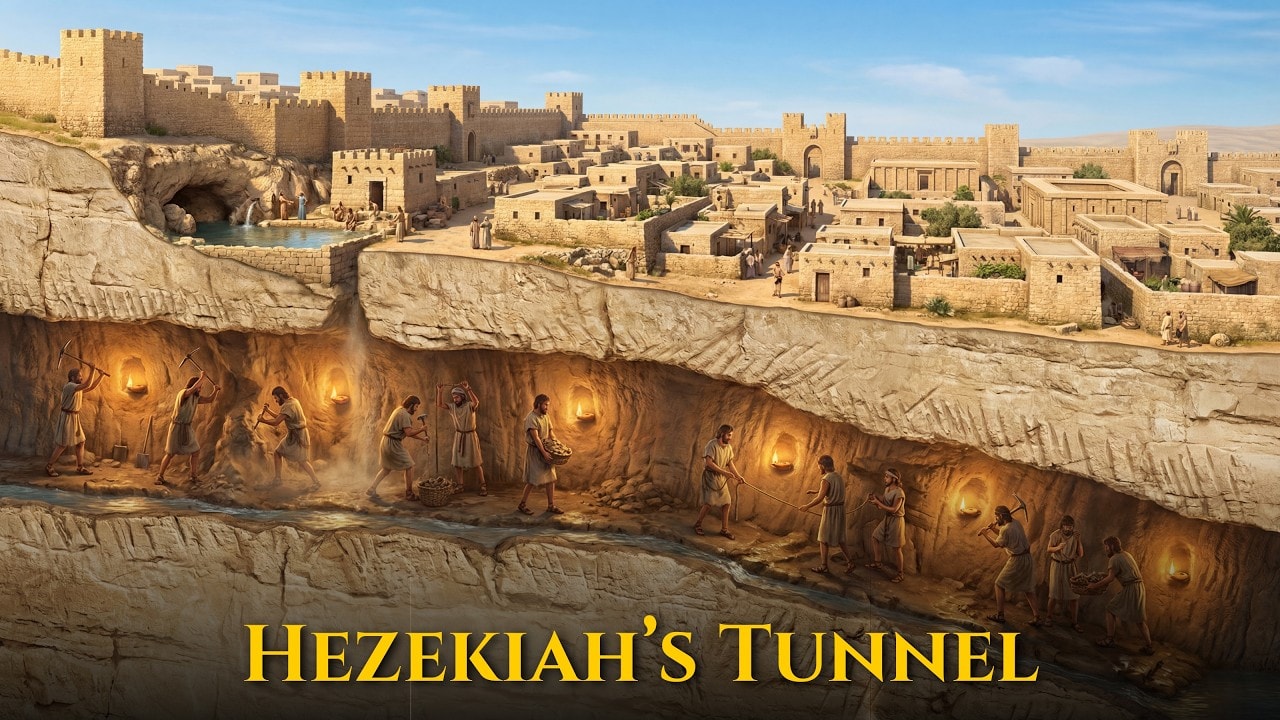
So King Hezekiah’s workers carved a passage through limestone beneath Jerusalem. They worked from two opposite ends. In darkness. In cramped spaces. With bronze tools. And somehow, against every reasonable expectation, the two teams met.
Hezekiah’s Tunnel is a stunning feat of ancient engineering. But its deepest message is not really about rock, water, or construction. It is about the moment when human skill reaches its limit.
You can build the wall. You can secure the water. You can plan brilliantly. But you cannot save yourself by your own strength.
>> CLICK TO WATCH THE VIDEO ON YOUTUBE.
Takeaways
- Hezekiah’s Tunnel redirected Jerusalem’s water supply during the Assyrian threat.
- Two teams carved through limestone and met using remarkable precision in darkness.
- Isaiah warned Jerusalem not to place ultimate confidence in human preparation.
The Empire Coming for Judah
To understand Hezekiah’s Tunnel, we need to feel the pressure that created it.
The Neo-Assyrian Empire was the great terror of the eighth century BC. From its capital at Nineveh, Assyrian kings built a military machine that swallowed nations whole. Their armies were massive. Their siege methods were brutal. But their most devastating weapon was deportation.
Assyria did not simply defeat cities. It uprooted whole populations. Families were separated. Communities were scattered across foreign lands. Languages, songs, family histories, and local identities could disappear within a generation.
In 722 BC, the northern kingdom of Israel fell. Samaria was conquered, and ten tribes were carried into exile. Second Kings 18:12 connects that catastrophe to Israel’s refusal to obey God’s covenant.
Ten tribes were not merely defeated. They were scattered so completely that their national life was broken.
Then Assyria turned south toward Judah.
Jerusalem’s king was Hezekiah, a reformer unlike his father Ahaz. Hezekiah cleansed the temple, removed idols, and centralized worship. When the Assyrian king Sargon II died, rebellion spread through the empire. Hezekiah stopped paying tribute to Nineveh.
It was bold. It was dangerous. And it brought Sennacherib marching toward Judah in 701 BC.
Sennacherib’s own royal records boast that he conquered forty-six fortified cities of Hezekiah and trapped the king in Jerusalem “like a caged bird.” Hezekiah paid a crushing ransom of silver and gold, even stripping gold from the temple doors. Yet the threat did not disappear.
Jerusalem was still in the path of Assyria.
The Gihon Spring Was Jerusalem’s Weak Point
Jerusalem’s ancient core sat on a narrow limestone ridge south of the Temple Mount. Valleys made direct assault difficult. Strong walls could help. Weapons could help. But one weakness could destroy everything.
The Gihon Spring was Jerusalem’s only reliable source of fresh, flowing water, and it lay outside the city walls in the Kidron Valley.
That was a disaster waiting to happen. An Assyrian army could camp beside the spring, drink freely, and settle in for a long siege. Meanwhile, those trapped inside Jerusalem could face thirst within days.
The Gihon was no ordinary spring. Its Hebrew name carries the sense of bursting or gushing forth. It surged from underground chambers several times a day in winter, producing an extraordinary volume of water each year.
It also carried deep spiritual weight. Solomon had been anointed king at the Gihon Spring in 1 Kings 1:33-34. This was not just the city’s water source. It was part of Jerusalem’s sacred memory.
The spring was the pulse of the city. But it was also exposed.
Hezekiah’s answer was audacious. He would block the spring’s upper outlets so the enemy could not use them. Then he would redirect the water underground to a reservoir safely within Jerusalem, the Pool of Siloam.
That emergency plan became Hezekiah’s Tunnel.
How Hezekiah’s Tunnel Was Carved
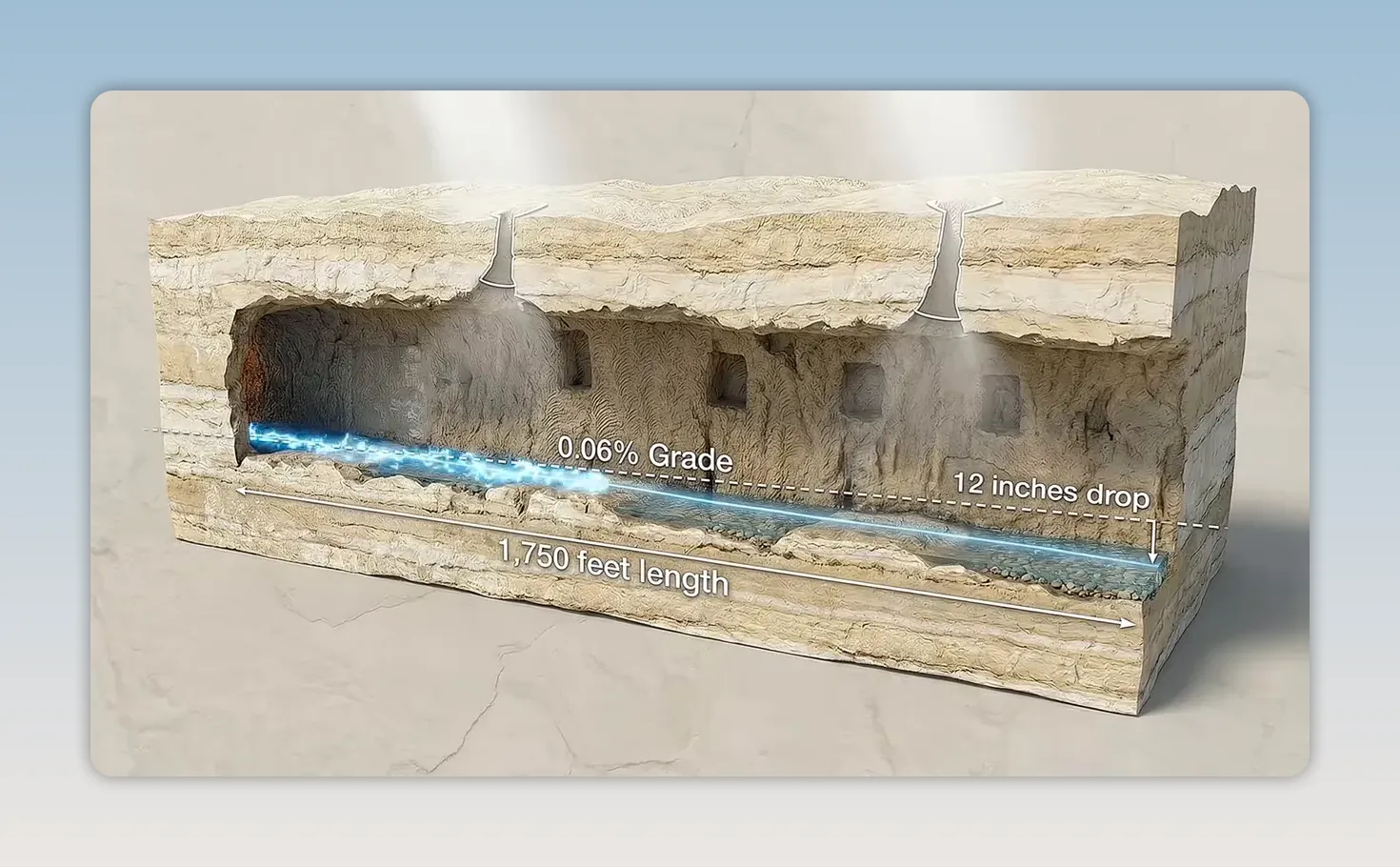
Hezekiah’s Tunnel runs about 1,750 feet, roughly one-third of a mile, through solid limestone. Its path bends in a winding S-shape. A straight route would have been only about 1,070 feet, meaning the finished passage is around 40 percent longer than the direct distance.
Why the curve? The workers may have followed natural fissures and dissolution channels already present in the limestone. They may also have used sound, hammering at intervals and listening for vibrations from the other team.
Most likely, they used both.
Picture the work. The tunnel could be barely two feet wide. A laborer could not fully stretch his arms. Oil lamps offered little light. Dust filled the air. Rubble had to be hauled out through the same narrow space. And every strike against the rock happened under a crushing deadline.
Do not count the rock. Just swing.
The greatest technical achievement may be the slope. The water needed to travel from the Gihon Spring to the Pool of Siloam by gravity. Too steep, and the flow could become destructive. Too flat, and the water would stall.
Across the entire length of Hezekiah’s Tunnel, the drop is only about twelve inches. That works out to a gradient near 0.06 percent.
No GPS. No laser levels. No modern surveying instruments. Just limestone, labor, sound, instinct, and an astonishing degree of practical skill.
Hezekiah’s Tunnel reminds us that ancient people were not simple or careless. They could solve enormous technical problems under intense pressure. These workers cut through darkness and met with only a few feet of rock left between them.
The Inscription that Honors Unknown Workers
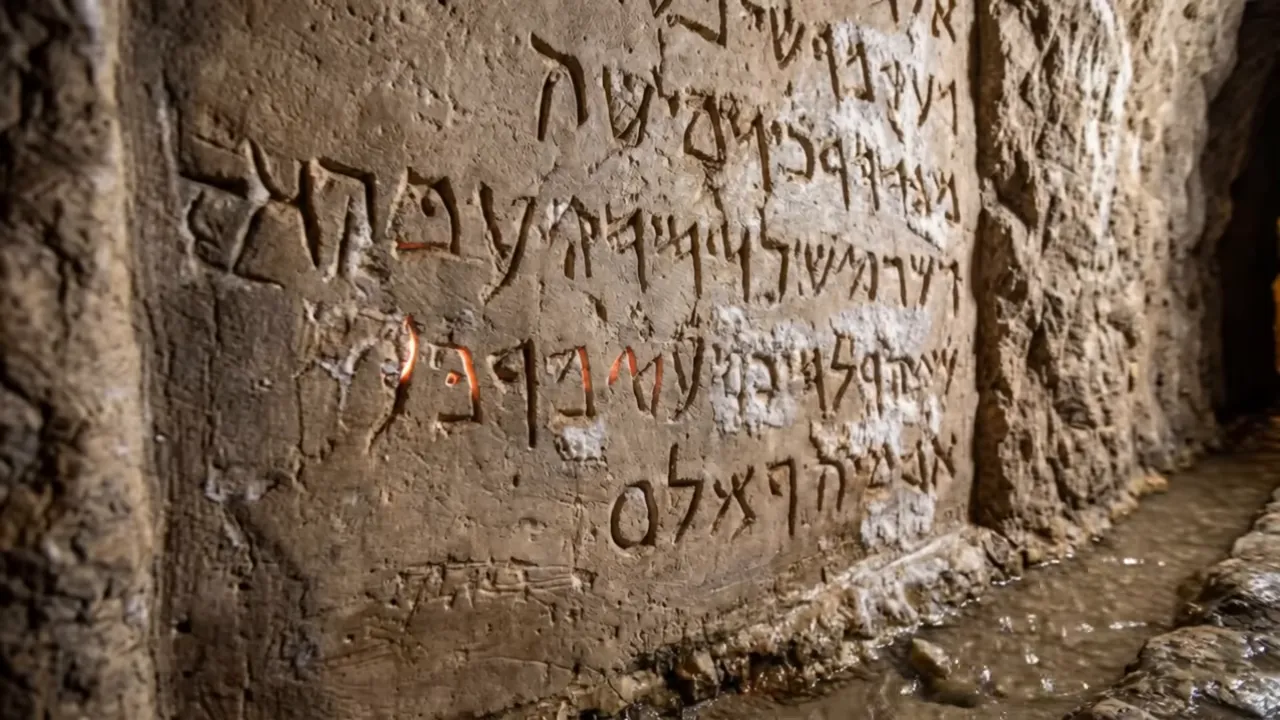
In 1880, a sixteen-year-old boy named Jacob Eliyahu was moving through the water in Hezekiah’s Tunnel when he discovered ancient writing carved into the wall near the southern outlet.
It became known as the Siloam Inscription.
The six lines of Paleo-Hebrew script date to around 700 BC. They describe the final breakthrough, when the two teams were close enough to hear each other calling through the stone. Then the workers struck toward one another until axe met axe.
Two groups working blind in the rock finally heard human voices on the other side.
That is already remarkable. But here is what makes the inscription especially beautiful.
It does not praise Hezekiah. It does not name a god. It does not celebrate a military victory. In an ancient world packed with royal propaganda, this inscription points to the stonecutters themselves.
The anonymous men with aching shoulders. The men are breathing limestone dust. The men who trusted that another team was somewhere beyond the wall.
Second Kings 20:20 remembers that Hezekiah made “the pool and the conduit” and brought water into the city. But the inscription preserves the sound of the people who made the impossible possible.
The Warning Hidden in Hezekiah’s Tunnel
The water flowed. The Pool of Siloam (Shiloach) filled. The Broad Wall rose. Jerusalem prepared for the siege with courage and precision.
And then Isaiah delivered a warning that cuts straight through all human confidence.
Isaiah 22:8-11 lists the city’s preparations: inspecting weapons, repairing breaches, tearing down houses to strengthen the wall, and building a reservoir to secure water. God did not condemn careful preparation itself.
He condemned what had happened in their hearts.
“But you did not look to its maker, nor did you have respect for him who fashioned it long ago.”
That is the sting in the story of Hezekiah’s Tunnel.
The tunnel was brilliant. The strategy was wise. The workers were brave. But the people had begun to trust what their own hands had built more than the God who made the water, the stone, and the city itself.
This is not an argument against planning. Scripture does not condemn diligence, skill, or wise leadership. The problem is carnal confidence, the quiet belief that our systems, savings, talent, connections, or hard work are enough to keep us safe.
Somewhere between the first swing of the pickaxe and the final rush of water, Jerusalem had stopped looking up.
The danger is not building something strong. The danger is treating what you built as your savior.
That warning still lands hard. What is the tunnel in your life? What achievement, plan, reputation, or carefully built safety net has started to carry the weight only God can carry?
When Prayer Became Jerusalem’s Last Defense
Then the Assyrian army arrived.
Sennacherib sent his field commander, the Rabshakeh, to speak outside Jerusalem’s walls. He did not use diplomatic Aramaic. He spoke loudly in Hebrew so the people could hear every word.
He mocked Judah’s army. He mocked any hope of help from Egypt. Then he pointed to all the nations Assyria had already crushed and asked the question meant to break Jerusalem’s faith:
Where are the gods of the nations Assyria has conquered? What makes your God different?
It was a cruel question because Samaria had fallen. Lachish had fallen. Dozens of Judah’s fortified cities had fallen. The threat was not imaginary. It was camped outside the gates.
At that moment, Hezekiah finally saw the limit of every human preparation. The wall could not answer the Rabshakeh. The armory could not answer him. Even Hezekiah’s Tunnel could not answer him.
Hezekiah went to the temple in sackcloth. He sent for Isaiah. And 2 Chronicles 32:20 says that the king and prophet prayed and cried out to heaven.
Not a polished performance. Not a routine recitation. A cry from the end of human strength.
The walls held. The water flowed. But neither one was the final hope of Jerusalem.
Isaiah brought a specific promise: Assyria would not enter the city, shoot an arrow into it, raise a shield against it, or build a siege ramp around it.
The biblical account says the Lord struck the Assyrian camp, leaving 185,000 dead. No battle was fought at Jerusalem’s walls. No Judean soldier won the day by the sword. Sennacherib retreated to Nineveh in shame, where he was later killed by his own sons in the temple of his god.
Historians debate how the Assyrian withdrawal happened. Some suggest plague. Others point to unrest in Assyria. The number may be understood in different ways. But the result remains clear: Sennacherib left, Jerusalem stood, and Judah survived for another century.
From Hezekiah’s Tunnel to the Pool of Siloam (Shiloach)
Hezekiah’s Tunnel did not vanish into the past after the Assyrian crisis. Seven centuries later, its water still flowed to the Pool of Siloam.
Archaeology adds weight to the setting. In 2004, sewer work near the City of David uncovered large stone steps. Excavations identified the true Pool of Siloam, a monumental stone-lined pool nearly 225 feet wide, built with stepped levels for changing water depth. Coins in the plaster date to the Second Temple period.
And in 2015, archaeologist Eilat Mazar reported two clay seal impressions, or bullae, from the Ophel area. One bore the name of Hezekiah, son of Ahaz, king of Judah. The other bore the name Isaiah.
The king associated with Hezekiah’s Tunnel and the prophet who rebuked misplaced confidence appear side by side in the archaeological record.
What Hezekiah’s Tunnel Still Says
Hezekiah’s Tunnel still carries water through the stone beneath Jerusalem. Its walls still bear the marks of labor. Its path still tells the story of men who moved toward each other in darkness, believing they would meet.
So yes, celebrate the engineering. It deserves the wonder. Hezekiah’s Tunnel is one of the ancient world’s great accomplishments.
But do not stop there.
Build wisely. Prepare carefully. Use the gifts God has given you. Do the hard work. Swing the pickaxe. Strengthen the wall. Protect the water.
Then surrender it all.
Your greatest work can be a gift. But it can never replace the Giver.
Hezekiah’s Tunnel asks a personal question that does not fade with time: What are you building that you need to place back in God’s hands?
Hezekiah’s Fatal Error: Worshiping Success
Hezekiah built one of the greatest survival projects in ancient Jerusalem. He strengthened the city wall. He secured its water. He prepared Judah for the terrifying Assyrian army.
And it worked.
Water flowed safely into the city. The walls stood. Jerusalem survived. Yet Isaiah looked at this stunning achievement and wept, because Hezekiah and his people had measured the walls, counted the water, and forgotten to look up.
Building a wall is not the problem. Forgetting who keeps you safe is.
The story of Hezekiah is not mainly about a bad king doing bad things. It is much closer to home than that. It is the story of a faithful man who slowly began to confuse God’s gifts with his own greatness.
CLICK TO WATCH THE VIDEO ON YOUTUBE.
Takeaways
- Hezekiah’s reforms showed deep trust in God, but success later exposed hidden pride.
- Walls, savings, skills, and plans become dangerous when they replace dependence on God.
- Hezekiah prayed faithfully during the crisis but failed a quieter test of comfort and admiration.
A Faithful King in a Broken Kingdom
Hezekiah began well. His father Ahaz had shut the temple doors and filled Jerusalem with pagan altars. But Hezekiah reopened the temple, cleansed it, and called the nation back to worship.
He tore down high places and destroyed sacred pillars. He even smashed the copper serpent Moses had made because the people had turned a good gift from God into an idol. Hezekiah called it Nehushtan, basically saying, “It is just a piece of copper.” (There’s also a play on words: “snake” is “nachash” in Hebrew.)
That takes courage. And the Bible gives Hezekiah a remarkable description in 2 Kings 18: Among Judah’s kings, none trusted the Lord like him. [Click to read the chapter.]
A relic can become an idol. A blessing can become an idol too.
But Hezekiah’s good desire to save Judah carried a danger. He wanted freedom from Assyria, the brutal empire dominating the region. So he stopped paying tribute and rebelled. Brave? Absolutely. Safe by human standards? Not even close.
Then he looked south to Egypt for help. Isaiah warned Judah not to place its confidence in horses, chariots, and political alliances.
The issue was never whether Egypt had enough military power. The issue was where Judah was looking. Upwards to the Creator, or sideways to the chariots.
Stone, Water & the Broad Wall
When the Assyrian threat grew close, Hezekiah prepared Jerusalem for siege. He strengthened weak places in the city’s defenses, even tearing down homes to construct a massive barrier around the expanded western hill.
Isaiah 22 plainly describes the painful reality: houses were counted and dismantled to fortify the wall. Archaeological remains commonly called the Broad Wall still point to that desperate moment in Jerusalem’s history.
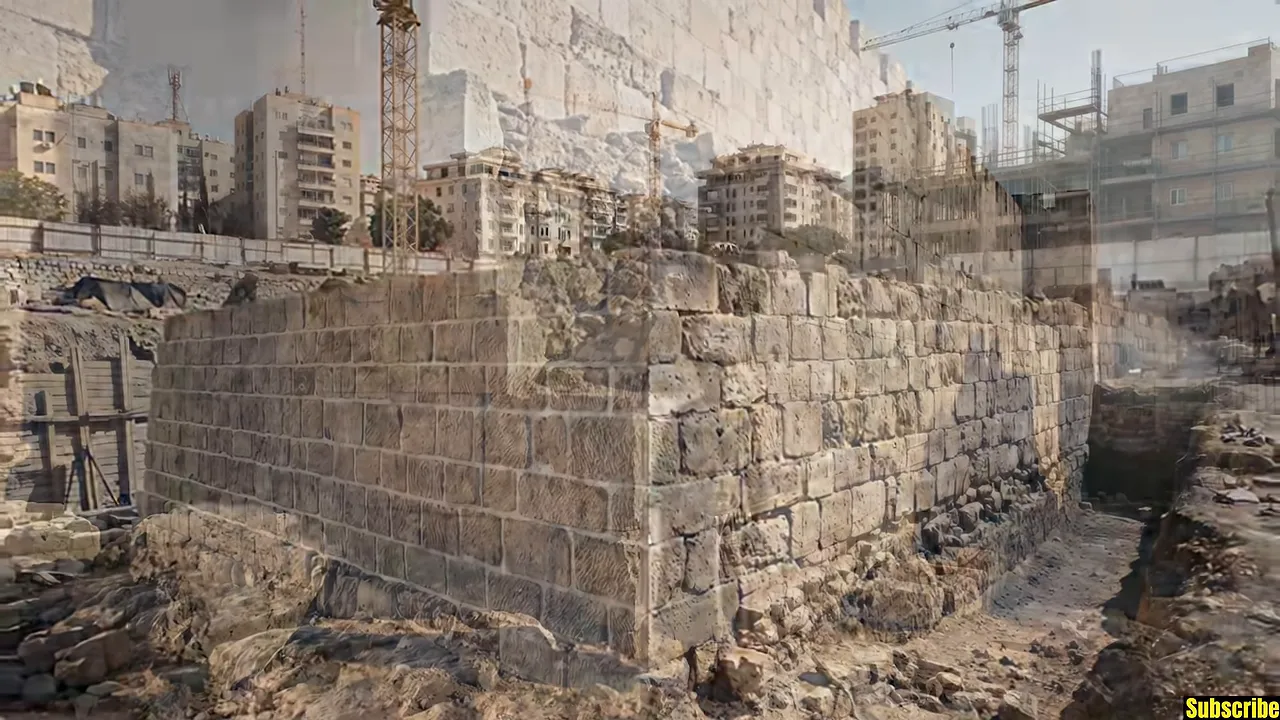
Then came the water problem. Jerusalem’s Gihon Spring lay outside the city’s protection. In a siege, that was a disaster waiting to happen. So Hezekiah ordered a tunnel to be carved through solid limestone, bringing the water into the city.
Two teams of workers cut from opposite directions through more than 500 meters of rock. In the dark, with picks ringing against stone, they listened for the other crew. Finally, the two paths broke through. The water ran.
It was a genuine engineering marvel. The ancient Siloam Inscription records the moment the workers met, and its surviving text remains connected with the tunnel’s extraordinary construction.
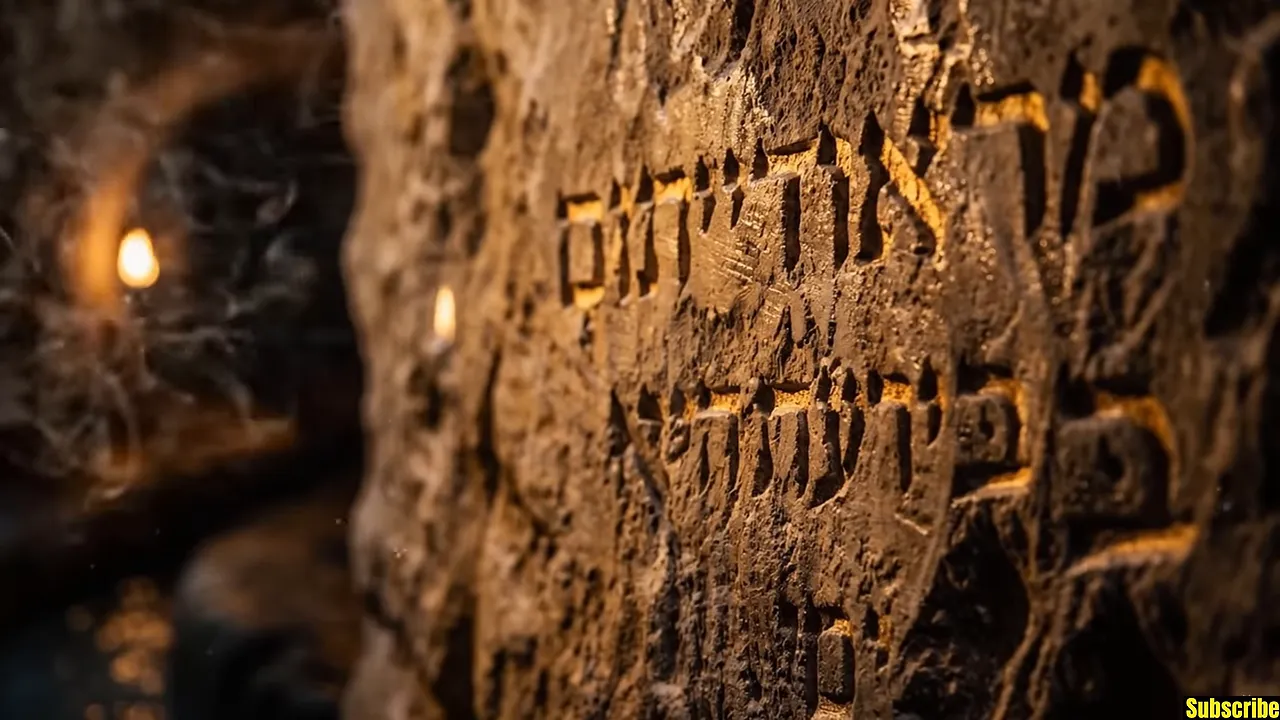
The wall held. The tunnel held. But success can make a heart quietly say, “Now I am safe.”
There is nothing sinful about planning ahead. There is nothing wrong with building, saving, protecting, learning, or working hard. Hezekiah’s tunnel was not the sin. The problem was that Judah began to trust the work more than the God who gave them the strength to do it.
The Valley of Vision
Isaiah saw a strange scene in Jerusalem. Assyrian forces had already crushed town after town in Judah. Smoke rose from ruined villages. Yet, behind their new wall and secure water supply, Jerusalem celebrated.
God was calling the city to mourn, repent, and seek him. But the people chose a party. Their attitude was grim and careless: eat, drink, and enjoy today because tomorrow may bring death.
That is not faith. It is not even honest fear. It is a shrug in the face of God.
Even the Assyrian official shouting outside the walls could see Judah’s weakness. Egypt, he mocked, was a broken reed. Lean on it, and it will pierce your hand.
At the same time, Hezekiah’s steward Shebna was carving a grand tomb for himself in the rock, a monument fit for royalty. While the kingdom shook, he was busy securing his name.
One man built a tomb for his glory. Another would be made a secure peg for the weight of the kingdom.
When Hezekiah Finally Looked Up
Sennacherib sent Hezekiah a letter designed to destroy hope. Its message was simple: every other nation had fallen, every other god had failed, and Jerusalem would be next.
Here, Hezekiah became the man he was meant to be. He took the letter to the house of the Lord, spread it before God, and prayed. No fresh appeal to Egypt. No proud speech about walls or water. Just dependence.
Hezekiah asked God to save Jerusalem so that the nations would know the Lord alone is God. And God answered through Isaiah: Assyria would not enter the city or build a siege ramp against it.
That night, Scripture says the angel of the Lord struck down 185,000 Assyrian soldiers. No Judean army won the victory. No human strategy took the credit. Jerusalem was saved by God.
In the crisis, Hezekiah stopped counting his defenses and started trusting the Lord.
The Key on the Shoulder
Isaiah’s word against Shebna also included a promise about Eliakim, the servant appointed to replace him. God would place “the key of the house of David” on Eliakim’s shoulder. He would open what no one could shut and shut what no one could open.
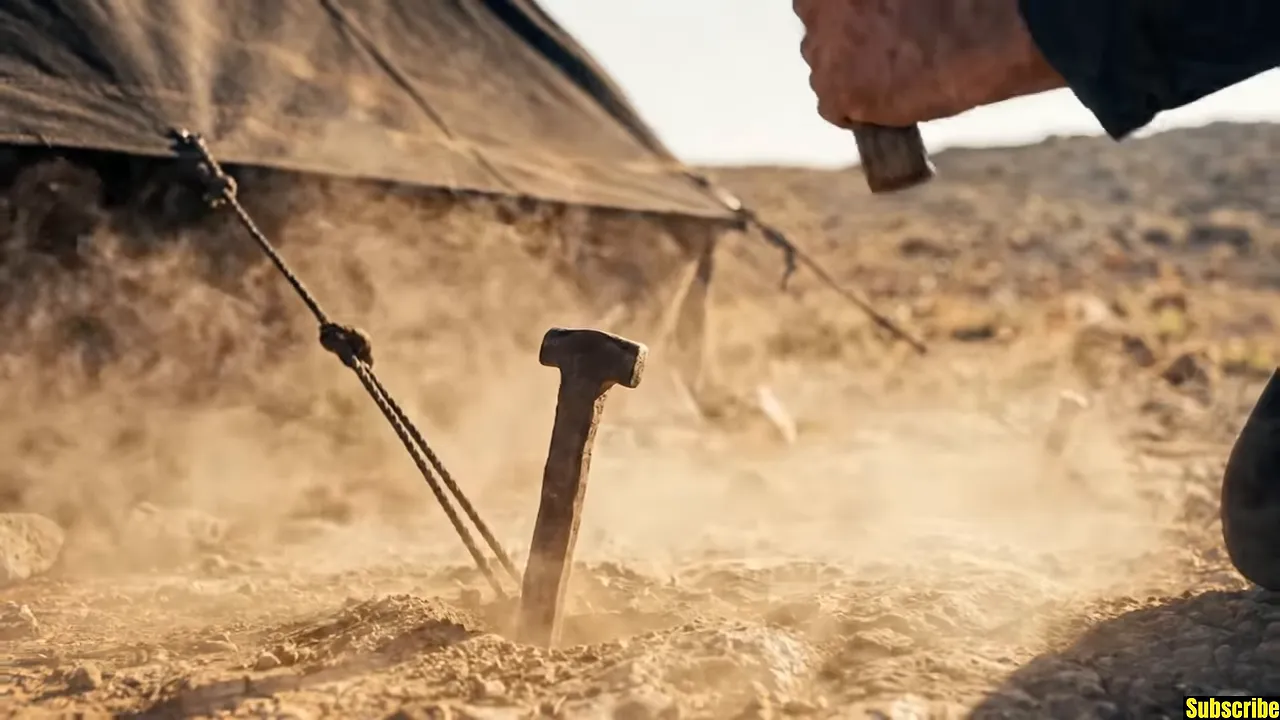
A key carried on the shoulder represented trusted authority over the royal household. And Isaiah called Eliakim a peg fastened in a secure place. Not a little decorative hook. More like a heavy tent stake driven deep into the ground, holding firm in the wind.
Fifteen More Years, One Quiet Test
After the Assyrian crisis, Hezekiah became deathly ill. Isaiah told him to set his house in order. Hezekiah wept and prayed, and God graciously added fifteen years to his life. As a sign, the shadow on Ahaz’s stairway moved backward.
What a gift. But extra time doesn’t automatically equal spiritual growth. Time is neutral. It can deepen humility, or it can give pride more room to grow.
2 Chronicles 32 gives the hard verdict: Hezekiah did not respond to God’s kindness as he should have, because his heart was proud.
Wealth grew. Fame grew. His storehouses overflowed. And the king who once spread an enemy letter before God began to feel impressive in his own eyes.
Pride rarely feels like rebellion. Most of the time, it feels like success.
The Men From Babylon
Babylonian envoys arrived after hearing about Hezekiah’s recovery and the sign involving the sun. They came asking about a miracle. What an open door to point them to the God of Israel.
But Hezekiah did not tell them about God. He gave them a tour.
Silver. Gold. Spices. Oil. Weapons. Treasures. Fortifications. He showed them everything. It was the grand tour of a king who wanted foreign powers to know Judah was no small thing, and he was no small king.
God allowed this moment to test what was in Hezekiah’s heart. The war had revealed his faith. This quiet afternoon revealed his pride.
Isaiah then delivered a devastating warning: one day Babylon would carry away the treasures Hezekiah had displayed. Even his descendants would be taken into Babylonian service.
Hezekiah’s response is painfully small. He was relieved there would be peace and security during his own lifetime.
Build Your Walls, But Don’t Worship Them
Hezekiah remains one of Judah’s greatest kings. That is exactly why his story cuts so deeply. He did not collapse because he loved idols like his father. He nearly fell because God blessed him, answered him, protected him, healed him, and gave him prosperity.
Then, slowly, he stopped looking up.
Maybe your wall is a career. Maybe it is savings, education, reputation, a relationship, a carefully controlled routine, or a plan for the future. These can all be good gifts. But none of them can carry the weight of ultimate trust.
“Unless the Lord builds the house, those who build it labor in vain.” – Psalm 127:1
The question is not whether you have built something. Of course you have. The question is what happens next. When you look at what you built, do your eyes stop there? Or do they lift beyond it to the One who has been keeping you all along?
Build your walls. Dig your tunnels. Make wise plans. But do not worship them. Remember.
RESOURCES:
Hezekiah’s Tunnel: The Greatest Engineering Feat of the 8th Century B.C. | https://www.youtube.com/watch?v=a6zdqTra3BQ
The Sin Hidden in Hezekiah’s Tunnel: Why His Greatest Work Grieved God | https://www.youtube.com/watch?v=IweqvZKFAlo
Seal Bulla החותם של המלך חזקיהו (פרק 13) – עיר דוד: מפיחים חיים בתנ”ך | https://www.youtube.com/watch?v=0J8JACGyqYI
Hezekiah’s Tunnel: The Engineering Miracle That Saved Jerusalem | https://www.youtube.com/watch?v=KeZ9SeJun4M&t=3528s
This article was created from the videos with the help of AI. | PHOTOS & VIDEOS Use According to Section 27 A
Watch More: Jewish History...
- Abraham – One Man Chose a Different Path
- Timeline of Jewish History
- Tower of Babel & the Origin of Languages
- 1177 BC: How the First Globalized World Fell Apart
- Nineveh: The Greatest City Erased from History
- Babylon in 570 BC: Inside the City That Shaped the World
- Nebuchadnezzar, Solomon’s Temple & the Fire that Changed Jerusalem
- Hezekiah’s Tunnel: Faith, Fear & Water Beneath Jerusalem
- “Rivers of Babylon” Written in Exile 2600 Years Ago
- Nebuchadnezzar: The King Who Built Babylon, Lost Everything & Returned
- Secret of Jewish Survival & Esther’s Courage
- Canaan to Rome: The Ancient History of Israel
- Arch of Titus: Rome’s Monument of Triumph & Jewish Heartbreak
- Roman Empire: The Rise, The Madness, The Fall of a Civilization
- Fall of Rome: How the Ancient World’s Greatest Empire Changed Shape
- When Nations Turn Against Israel, What Happens to Them?
- ‘All Things Are Mortal But the Jew’ – Mark Twain
- 7 Wonders of Jewish History: A Story That Should Not Be Possible
- Samaritans: Last 800 Guardians of Mount Gerizim
- Amalek Command: Why It's Misunderstood
- PART 1 | The Land of Israel & Ottoman Palestine (HEB)
- Part 2 | The Land Reached Its Peak & Byzantine Palestine’s Demographic High Point (HEB)
- PART 3 | Arab Conquest: How the Land Gradually Became Muslim (HEB)
- 5000 Years of Jewish History (5-Min Clips)