The fall of Rome is often told like a movie finale. A barbarian army storms the gates. Buildings burn. An emperor makes one last heroic stand.
But the real story is stranger, slower, and honestly more unsettling. In 476 AD, the last Western Roman emperor, the teenage Romulus Augustulus, was removed from power by the Germanic general Odoacer. There was no glorious final battle. No great defense of the palace. The crown was simply taken away.
The fall of Rome was not one dramatic collapse. It was generations of small cracks becoming impossible to ignore.
That is what makes the fall of Rome so powerful. Rome did not vanish in a single day. Its Western political structure came apart after centuries of civil war, financial stress, military dependence, political corruption, and pressure at the borders. Yet Roman civilization itself kept moving forward, changing hands, languages, and forms.
Takeaways
- The fall of Rome resulted from interconnected political, economic, military, and social pressures.
- Rome’s reliance on allied Germanic troops made Western imperial authority increasingly fragile.
- The Western Empire ended in 476, while the Eastern Roman Empire survived until 1453.
- Roman law, language, architecture, and institutions continued shaping Europe long after Rome’s political collapse.
Rome Once Looked Untouchable
Picture Rome at its height in the second century AD. The Colosseum could hold roughly 50,000 people. The baths were packed with citizens reading, bathing, arguing, exercising, and making deals. Roads connected Britain to Egypt, Spain to Syria, and the Roman Forum stood at the center of a world-spanning empire.
Rome’s military strength mattered. Its engineering was extraordinary. But its greatest talent was something even more impressive: it could absorb people.
A person from Gaul, Spain, Syria, or elsewhere in the empire could become Roman. They could gain citizenship, enter public life, serve in the legions, and sometimes rise to the very top. Rome did not merely conquer communities. It brought them into a larger Roman system.
Rome’s secret was not just conquest. It was turning former enemies into partners.
That flexibility helped build the empire. But over time, it also created a difficult problem. The army increasingly relied on recruits and allied soldiers whose connection to Rome was practical, not emotional. They fought for land, pay, and opportunity. When the state could no longer provide those things, loyalty could disappear fast.
The Crisis That Exposed Rome’s Weakness
The fall of Rome did not begin in 476. One major warning sign appeared during the Crisis of the Third Century, from 235 to 284 AD. For about fifty years, the empire lurched through chaos. More than fifty men claimed the imperial title. Many were killed by their own soldiers.
That is a brutal way to run a superpower.
Before that, the death of Marcus Aurelius in 180 AD had already marked a turning point. Ancient writers remembered him as the last of the “Five Good Emperors.” His son Commodus was very different. He preferred the drama of the gladiatorial arena to the hard work of governing, and after his assassination, Rome plunged into political conflict.
The deeper issue was simple: the throne was becoming something that could be won by force. If soldiers could make an emperor, soldiers could also remove one.
When power depends on swords rather than legitimacy, every ruler is standing on a trapdoor.
At the same time, Rome had an enormous frontier to defend. From Hadrian’s Wall in Britain to Mesopotamia, the empire needed vast armies. Vast armies needed vast amounts of money. And Rome’s economy was beginning to wobble badly.
Inflation, Armies & a Shrinking Margin for Error
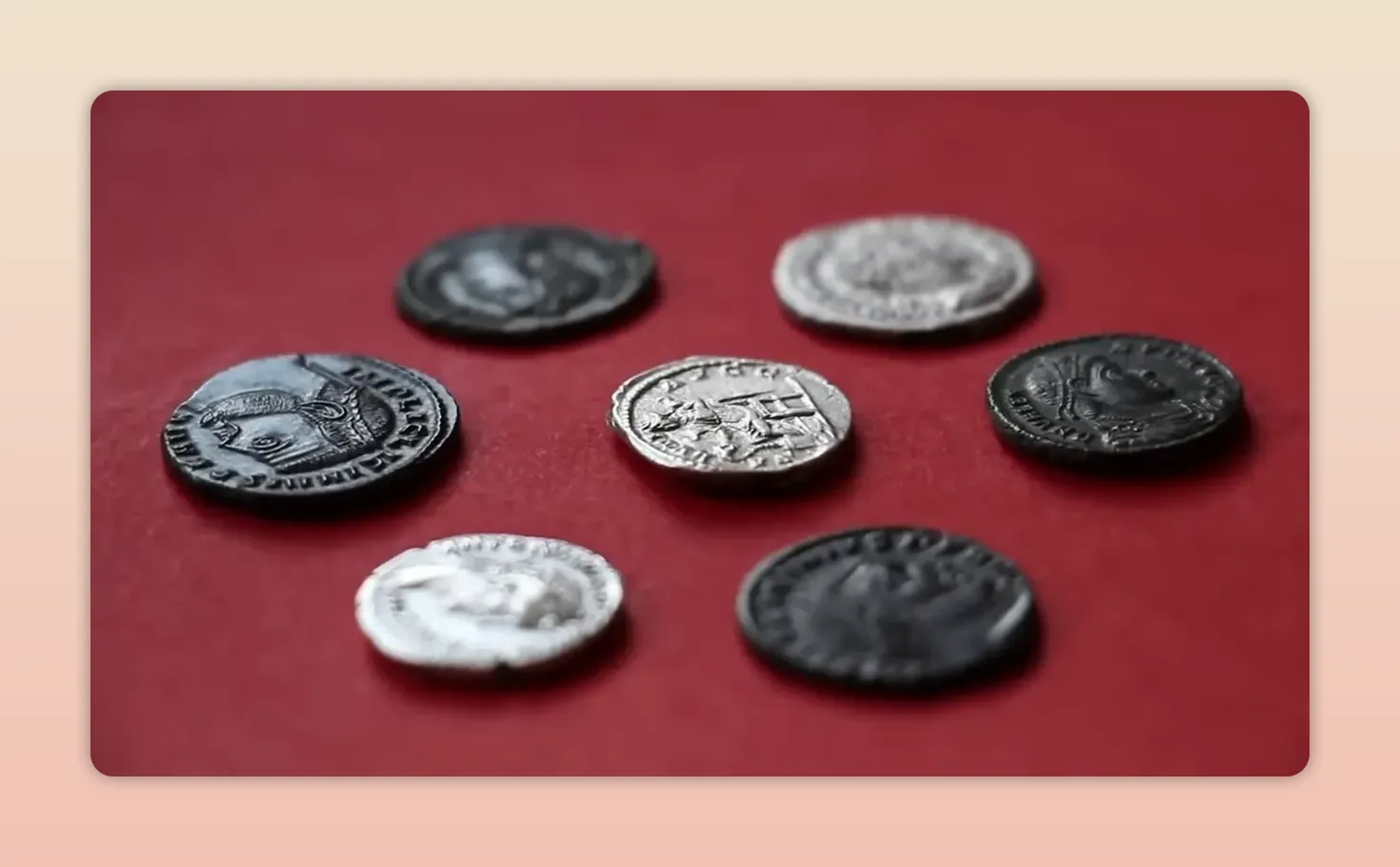
To pay troops, emperors increasingly debased the currency. A coin that had contained about 95 percent silver in the first century contained barely 5 percent by the third century. The result was runaway inflation. Prices rose. Trade slowed. Cities became poorer.
That financial pressure fed directly into the fall of Rome. The government needed soldiers, but soldiers were expensive. It needed taxes, but the economy was suffering. It needed stable leadership, but the army and political elite were trapped in constant power struggles.
Meanwhile, Rome’s rivals were getting stronger. Germanic groups north of the frontier formed larger confederations, including the Goths, Vandals, Franks, and Alemanni. In the east, the Sasanian Persian Empire pushed back hard.
Then, in 260 AD, Emperor Valerian was captured by the Persians. It was an extraordinary humiliation. Rome’s emperor, once treated as almost sacred, had become a captive of a foreign ruler. The empire’s image of invincibility had been shattered.
Division Saved Rome, Then Changed It Forever
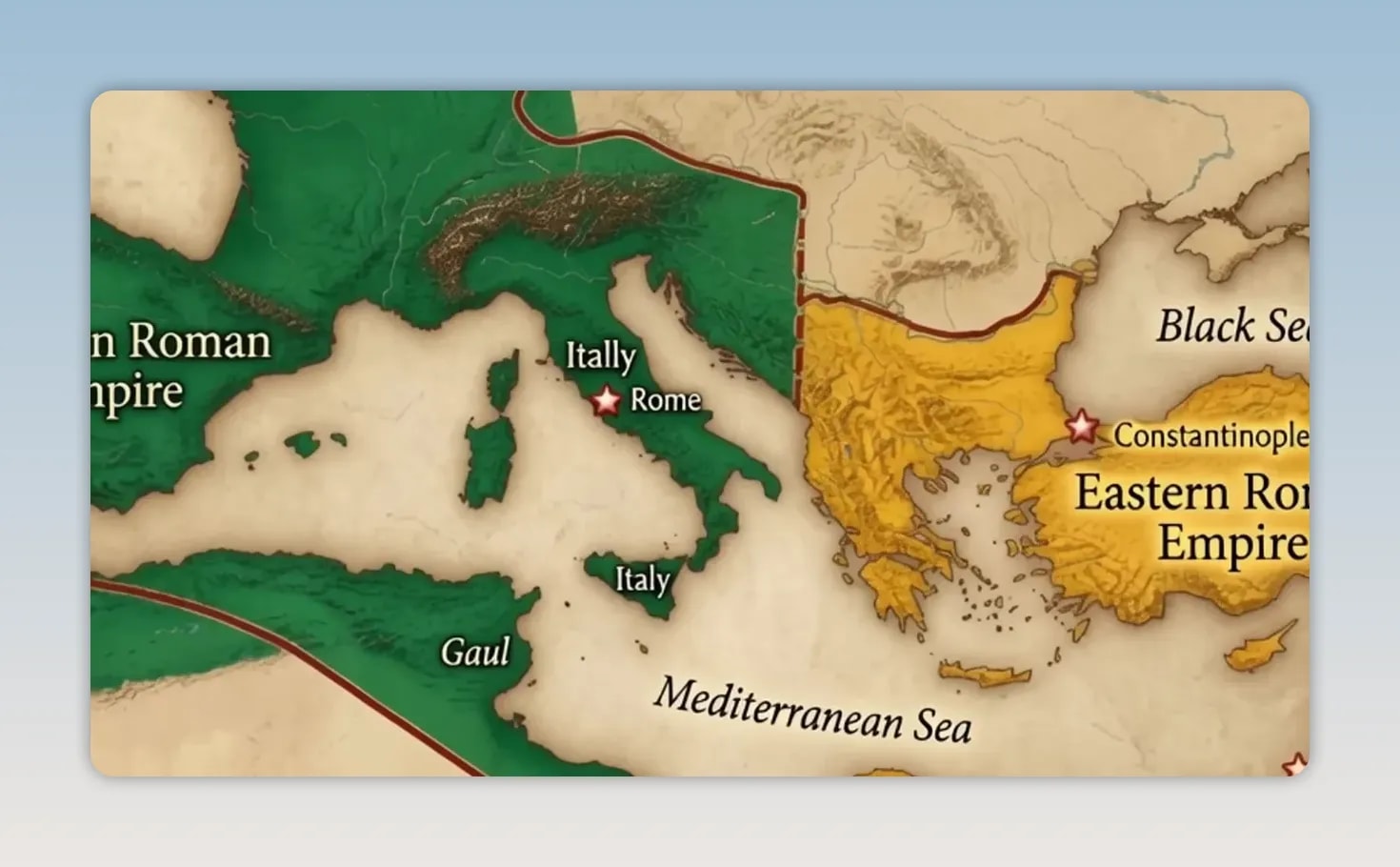
Diocletian took power in 284 AD and faced reality. The empire was too large for one person to manage effectively. His answer was the tetrarchy, a system dividing authority between eastern and western halves, with senior emperors and junior emperors sharing responsibility.
For a while, it worked. Diocletian brought more order to the army and administration. But the division also became permanent. Rome was now becoming two different worlds.
The Western Empire spoke Latin and faced increasingly difficult military and financial pressures. The Eastern Empire, centered on Constantinople after Constantine founded it as a new capital in 330 AD, grew richer and more secure. It spoke Greek, developed its own identity, and embraced Christianity deeply.
The West was weakening, but the East was not dying. It was preparing to outlive the Western Empire by nearly a thousand years.
This matters because the fall of Rome was really the fall of the Western Roman Empire. The Eastern Roman Empire, later called the Byzantine Empire, continued until Constantinople fell to the Ottoman Turks in 1453.
The Barbarians Were Already Inside
Here is the myth worth tearing down: the fall of Rome was not simply caused by savage outsiders smashing a healthy civilization.
By the late fourth century, Rome’s armies included many Germanic allied warriors, known as foederati. They were not slaves or prisoners. They served Rome in exchange for pay and land. Some of the most powerful figures in the final Western Empire were of Germanic origin.
Stilicho, who effectively ran the Western Empire for years, was half Vandal. Ricimer, a major kingmaker in the fifth century, had Visigothic roots. Odoacer, the man who deposed Romulus Augustulus, had spent his adult life serving in the Roman military.
Rome did not simply fall to an outside invasion. It became dependent on forces it could no longer fully control.
Then the Huns arrived from the eastern steppes. Their pressure drove Gothic groups toward Roman territory. In 376 AD, the Goths asked Emperor Valens for refuge inside the empire. He agreed, believing Rome could manage the situation.
It could not.
Roman corruption and mistreatment pushed the Goths into revolt. At the Battle of Adrianople in 378 AD, Gothic forces destroyed the Roman army, and Valens himself was killed. It was one of Rome’s worst defeats in centuries.
After Adrianople, the fall of Rome accelerated. The Visigoths under Alaric demanded land and recognition. Rome tried treaties, promises, and payments. Nothing held. In 410 AD, Alaric’s forces sacked Rome for three days, the first foreign sack of the city in roughly eight centuries.
The Final Western Collapse
Even after the sack of 410, Rome staggered onward. The general Aetius defeated Attila’s Hunnic forces at the Battle of the Catalaunian Plains in 451 AD. But that victory depended heavily on Visigothic, Frankish, and Burgundian allies, each with its own goals.
Rome could still win battles. It just could not rebuild lasting strength.
Then came another devastating blow. In 439 AD, the Vandals captured Carthage and cut off North Africa, a crucial grain-producing region. Italy lost a major source of food and revenue. A hungry empire was an empire in trouble.
By 476 AD, the Western imperial title had become a shell. Odoacer removed Romulus Augustulus, sent the imperial regalia to Constantinople, and called himself king of Italy.
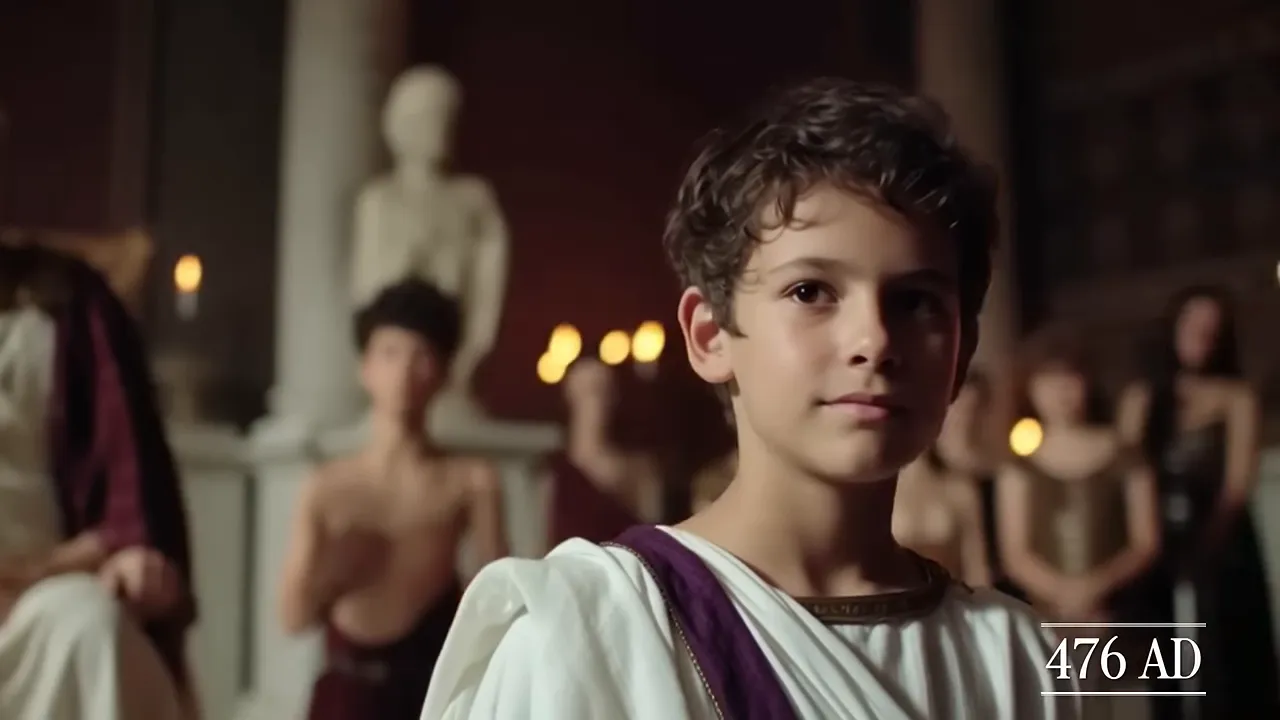
The fall of Rome in the West ended not with a roar, but with a bureaucratic shrug.
Why Did Rome Really Fall?
There is no single neat answer to the fall of Rome. Edward Gibbon famously blamed Christianity, arguing that it weakened Rome’s martial spirit. Other explanations focus on inflation, failing trade networks, exhausted mines, plagues, climate shifts, poor harvests, military failures, and migration.
But the strongest explanation is the combination of all of them.
- A weakening economy made it harder to pay soldiers.
- Unpaid or dissatisfied soldiers rebelled.
- Rebellions fueled civil wars.
- Civil wars weakened the frontiers.
- Weak frontiers made invasions and migrations harder to manage.
- More disruption damaged the economy again.
That is the real machinery behind the fall of Rome. Every problem made the next one worse. There was no single villain. There was a destructive cycle.
By 100 AD, Rome’s population had been about one million. By 500 AD, it had fallen to fewer than 20,000. Aqueducts broke. Baths were abandoned. Great public spaces emptied. The city that had conquered the Mediterranean world became a shadow of itself.
Rome Did Not Disappear
And yet, this is where the story gets beautiful. The fall of Rome did not mean the death of Rome.
In the East, Constantinople remained Roman in its own eyes. Its emperors called themselves Romans. Its legal and administrative systems carried Roman traditions forward for centuries.
In the West, the new Germanic kingdoms did not reject Roman civilization. They wanted its legitimacy. Theodoric the Great preserved Roman laws and institutions in Italy. Clovis, king of the Franks, converted to Catholic Christianity to strengthen his position among Roman populations in Gaul. The Visigoths adopted Latin and Roman customs in Spain.
Later rulers kept reaching for Rome’s prestige. Charlemagne was crowned Roman emperor in 800. The Holy Roman Empire claimed Roman inheritance. Even the title “czar” comes from Caesar.
The peoples who replaced Rome did not want to erase it. They wanted to inherit it.
Rome’s Legacy is Still Everywhere
The Catholic Church preserved much of Rome’s administrative structure and became a guardian of classical knowledge. Monasteries copied texts. Bishops took on civic duties once handled by Roman officials.
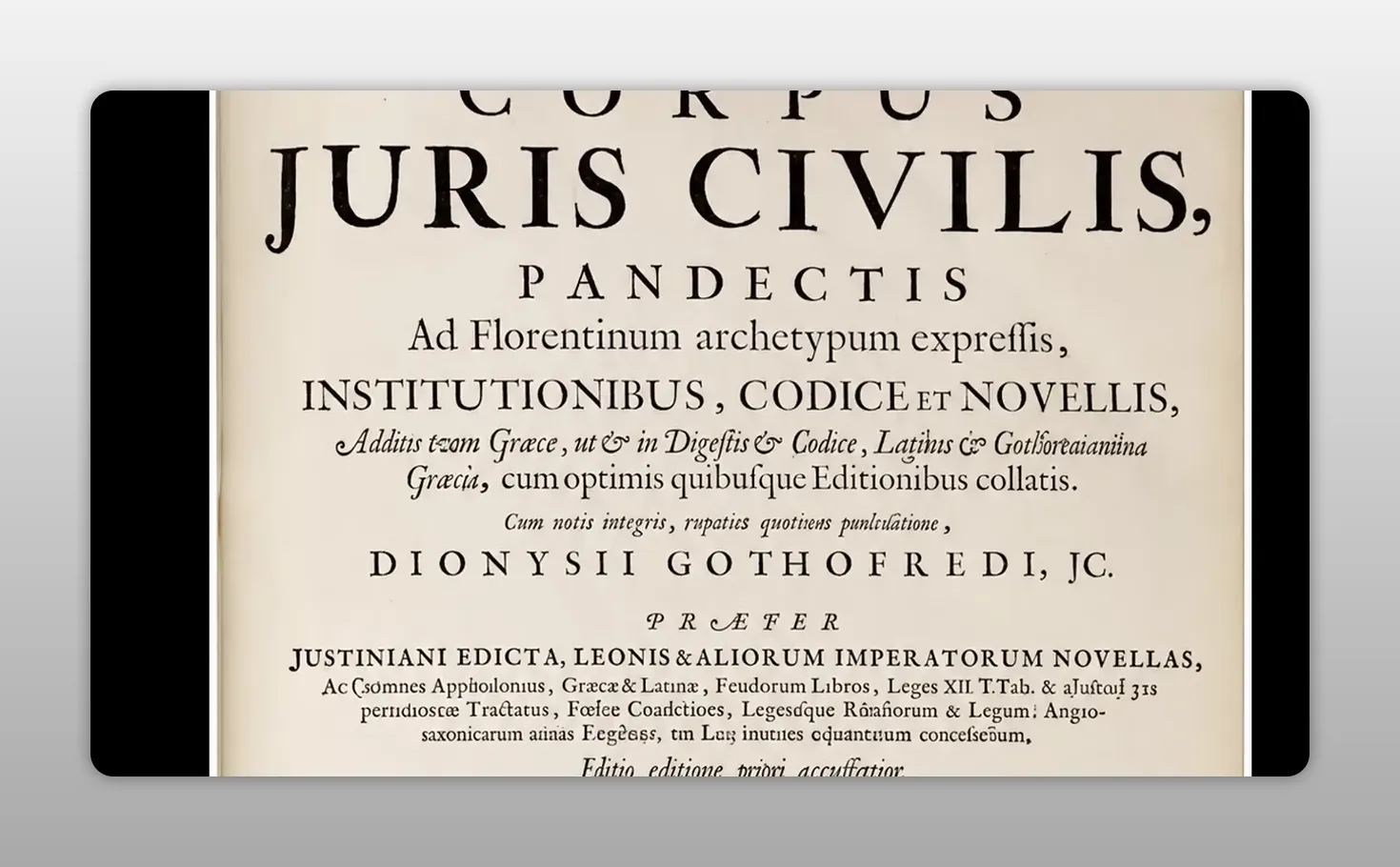
Latin transformed into the Romance languages: Spanish, French, Italian, Portuguese, and Romanian. Roman legal principles were preserved in Justinian’s sixth-century legal code and later shaped much of Western Europe’s law.
Roman arches, vaults, domes, roads, and city planning shaped later Byzantine, Islamic, medieval, and Renaissance builders. The Pantheon still stands as a reminder of what Roman engineering could do.
So did Rome fall? Politically, the Western Empire did. But culturally, legally, linguistically, and spiritually, Rome kept going. Medieval Europe was not a world without Rome. It was Rome in new clothes.
The Real Lesson of the Fall of Rome
The fall of Rome is a warning against easy stories. No empire is permanent. Strength can hide fragility. Grand monuments do not fix broken institutions. Armies cannot protect a state forever if its finances, politics, and shared sense of purpose are collapsing underneath them.
But there is another lesson too. Civilizations can survive political disaster. They can be carried through books, laws, languages, buildings, beliefs, and habits of thought.
Rome’s empire ended. Rome’s influence did not.
That is why the fall of Rome remains more than an ancient event. It is a story about decline, resilience, identity, and transformation. In 476, palace doors closed on the Western Empire. But other doors opened. The Middle Ages began. New kingdoms rose on Roman foundations. And the ideas Rome left behind continued their long journey into the modern world.
Rome did not simply die. It changed shape.
RESOURCES:
This article was created from the video This Is How the Greatest Empire in History Died | https://www.youtube.com/watch?v=fY1ZgEW0ooo with the help of AI.
Watch More: Jewish History...
- Abraham – One Man Chose a Different Path
- Timeline of Jewish History
- Tower of Babel & the Origin of Languages
- 1177 BC: How the First Globalized World Fell Apart
- Nineveh: The Greatest City Erased from History
- Babylon in 570 BC: Inside the City That Shaped the World
- Nebuchadnezzar, Solomon’s Temple & the Fire that Changed Jerusalem
- Hezekiah’s Tunnel: Faith, Fear & Water Beneath Jerusalem
- “Rivers of Babylon” Written in Exile 2600 Years Ago
- Nebuchadnezzar: The King Who Built Babylon, Lost Everything & Returned
- Secret of Jewish Survival & Esther’s Courage
- Canaan to Rome: The Ancient History of Israel
- Arch of Titus: Rome’s Monument of Triumph & Jewish Heartbreak
- Roman Empire: The Rise, The Madness, The Fall of a Civilization
- Fall of Rome: How the Ancient World’s Greatest Empire Changed Shape
- When Nations Turn Against Israel, What Happens to Them?
- ‘All Things Are Mortal But the Jew’ – Mark Twain
- 7 Wonders of Jewish History: A Story That Should Not Be Possible
- Samaritans: Last 800 Guardians of Mount Gerizim
- Amalek Command: Why It's Misunderstood
- PART 1 | The Land of Israel & Ottoman Palestine (HEB)
- Part 2 | The Land Reached Its Peak & Byzantine Palestine’s Demographic High Point (HEB)
- PART 3 | Arab Conquest: How the Land Gradually Became Muslim (HEB)
- 5000 Years of Jewish History (5-Min Clips)