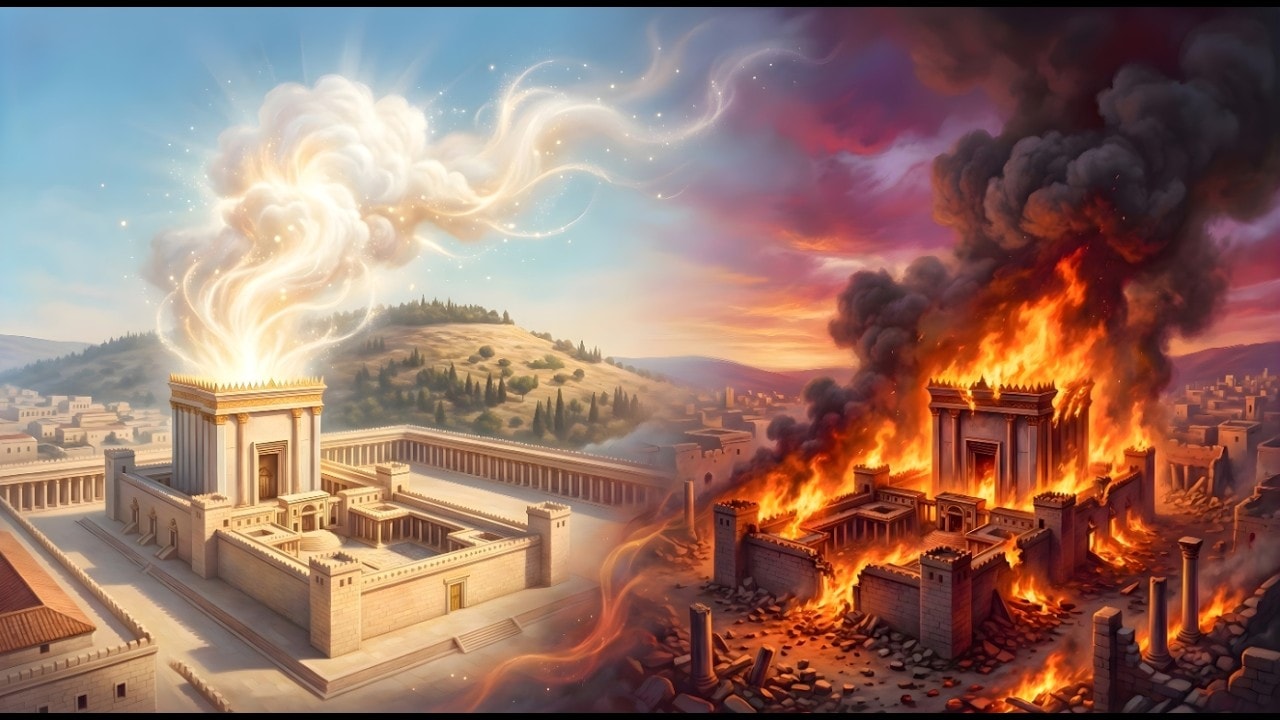
For four hundred years, Solomon’s Temple stood over Jerusalem as the most sacred building on earth. Its walls gleamed with gold. Lebanese cedar filled its chambers. Priests offered sacrifices morning and evening. It was the place where heaven seemed to touch earth.
Then, in 586 BC, Nebuchadnezzar’s army turned it into ash.
The destruction was not a quick military raid. It was the devastating end of an 18-month siege, a shattered kingdom, a broken covenant, and a people who had mistaken God’s holy presence for a permanent guarantee of safety.
The building was still standing. But that did not mean God approved of what was happening inside it.
And one haunting mystery rises from the wreckage: Nebuchadnezzar’s officials listed the temple treasures with stunning precision, yet the Ark of the Covenant never appears in the inventory.
>> CLICK TO WATCH THE VIDEO ON YOUTUBE
Takeaways
- Nebuchadnezzar destroyed Jerusalem after Judah repeatedly rejected God’s warnings and covenant.
- The temple’s presence never guaranteed God’s approval of idolatry, injustice, or empty ritual.
- The Ark of the Covenant is absent from Babylon’s detailed temple-plunder inventory.
- God preserved a remnant, the sacred vessels, and His promise despite Jerusalem’s destruction.
The Dangerous Confidence of Jerusalem
Jerusalem had developed a deeply dangerous kind of faith. The people believed that as long as the temple stood, God would protect the city. The temple had become a security blanket. A lucky charm. A religious insurance policy.
Jeremiah heard people repeat the same slogan in the temple courts: “The temple of the Lord.” They said it three times, almost like a spell. But repetition does not turn rebellion into righteousness.
They had confused God’s address with God’s approval.
Idolatry was happening in the courts. Injustice filled the streets. Prophets had warned the nation for generations, and the warnings were ignored, mocked, and despised. Second Chronicles describes God sending messenger after messenger because He had compassion on His people. But eventually, there was no remedy.
God is not a mascot for a nation, a building, or a religious routine.
That is the first hard truth behind Nebuchadnezzar’s invasion. The temple did not fail because it was weak. Jerusalem fell because the people treated holiness as decoration while rejecting the God they claimed to worship.
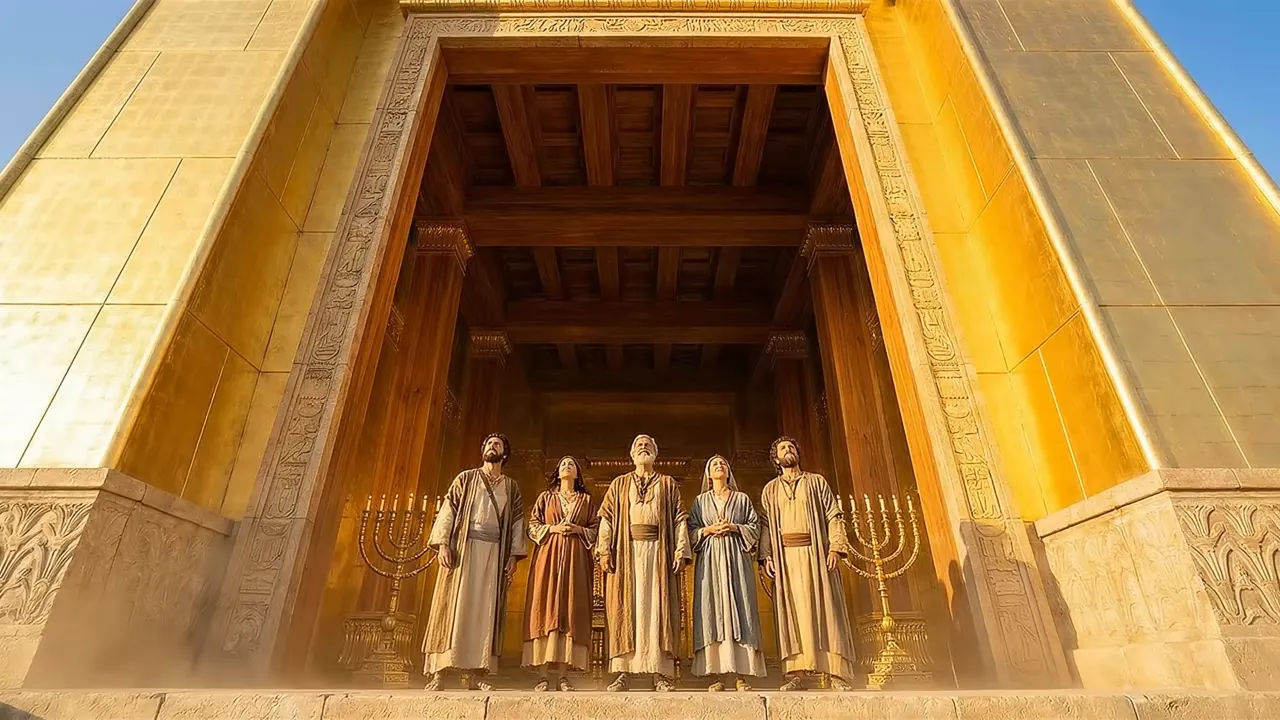
Nebuchadnezzar Becomes an Instrument of Judgment
Nebuchadnezzar II was not a minor ruler passing through history. He was the king of Babylon, commander of a terrifying military machine, builder of Babylon’s great walls, and ruler over an empire that had crushed nation after nation.
Yet Scripture gives this pagan emperor a shocking title. God calls Nebuchadnezzar “my servant.” Not because Nebuchadnezzar worshiped Yahweh. He worshiped Marduk. Not because he was morally righteous. He was an imperial conqueror.
But God can use kings, armies, empires, and even people who do not know Him to accomplish His purposes.
Nebuchadnezzar did not defeat God. He was employed by God.
Standing between Babylon and Jerusalem was Zedekiah, Judah’s final king. Nebuchadnezzar had put him on the throne after taking the previous king to Babylon. Zedekiah swore loyalty to Babylon in the name of Yahweh, which made his later rebellion more than a political decision. It was a covenant-breaking act.
Zedekiah had a tragic pattern. He would secretly call Jeremiah, ask for God’s word, hear the truth, then ignore it when his advisers applied pressure. He knew what he should do. He just would not do it.
In 589 BC, he broke his oath and appealed to Pharaoh Hophra of Egypt for help. It was a double betrayal, political and spiritual. Ezekiel’s question cut through all the diplomacy: Could someone break a covenant and still escape? The answer was no.
The Siege that Slowly Strangled Jerusalem
On the tenth day of the tenth month in 588 BC, Nebuchadnezzar came against Jerusalem with all his army. Jewish communities still fast on that date more than 2,500 years later.
Estimates place the Babylonian force somewhere between 50,000 and 100,000 soldiers. Jerusalem may have had roughly 10,000 defenders. This was not an even fight. It was a full-scale siege designed to erase resistance.
The Babylonians did not need to rush the walls. They surrounded Jerusalem from every direction, cut off travel and supplies, built siege ramps, raised towers, positioned archers, and waited.
Siege warfare has brutal math: you do not always need to break the walls. You only need to starve the people behind them.
For a brief moment, hope appeared. Egypt’s army marched north to help Zedekiah. Babylon withdrew to meet the threat, and Jerusalem celebrated. The people thought Egypt had rescued them. The false prophets who promised peace seemed right at last.
Jeremiah said otherwise. Egypt would return home, Babylon would come back, and Jerusalem would burn. For telling the truth, Jeremiah was thrown into prison.
Then Babylon returned. Egypt withdrew. The noose tightened again.
For 18 months, food vanished. Agricultural land lay outside the walls. Supply lines were gone. Water was limited. Rations became crumbs, then nothing. Lamentations describes people so ravaged by famine that they were barely recognizable. It records the kind of horror no one wants to imagine, yet siege warfare has produced again and again across history.
Jeremiah kept delivering the same impossible message: surrender to Babylon and live. Stay in the city and die by sword, famine, or plague. The leaders called him a traitor and lowered him into a muddy cistern, where he would have died if Ebed-melech, an Ethiopian official, had not rescued him.
The most hated man in Jerusalem was the one man telling them how they could survive.
The Fall of Zedekiah
In July 586 BC, the Babylonian army finally breached Jerusalem’s northern wall. The city that had endured so many enemies was overrun. Babylonian commanders took control at the middle gate. This was not random chaos. It was a methodical military occupation.
Zedekiah escaped through a gate near the king’s garden under cover of darkness. He fled east with his soldiers toward the Jordan Valley. But Babylonian cavalry caught him in the plains of Jericho. His army scattered. The king of Judah stood alone.
The location is bitterly fitting. Jericho was where Israel had won one of its first victories after entering the Promised Land. Now, at Jericho, Judah’s last king was captured in disgrace.
Nebuchadnezzar brought Zedekiah to Riblah for judgment. His sons were executed before him. Then Zedekiah was blinded, chained in bronze, and taken to Babylon, where he died in captivity.
Ezekiel had prophesied that Zedekiah would be taken to Babylon but would not see it. It sounded impossible until it happened.
The king who would not surrender when it could have saved lives fled when it was too late.
The Burning of Solomon’s Temple
About a month after Jerusalem fell, Nebuzaradan, Nebuchadnezzar’s captain of the guard, arrived with orders to complete the work. The fighting was done. Now came demolition.
The dates in Second Kings and Jeremiah differ slightly, likely because Nebuzaradan arrived first to assess the city before the destruction began. The fires were associated with the ninth of Av, Tisha B’Av, a day of grief on the Jewish calendar. Centuries later, the Second Temple would also be destroyed on the same date in 70 AD.
Nebuzaradan set fire to:
- Solomon’s Temple, the house of the Lord
- The royal palace
- The homes of Jerusalem’s leading families
- Every significant structure still standing
Picture cedar beams that had stood for centuries cracking in the flames. Picture gold melting over stone. Picture the place where incense had risen morning and evening, reduced to smoke, embers, and silence.
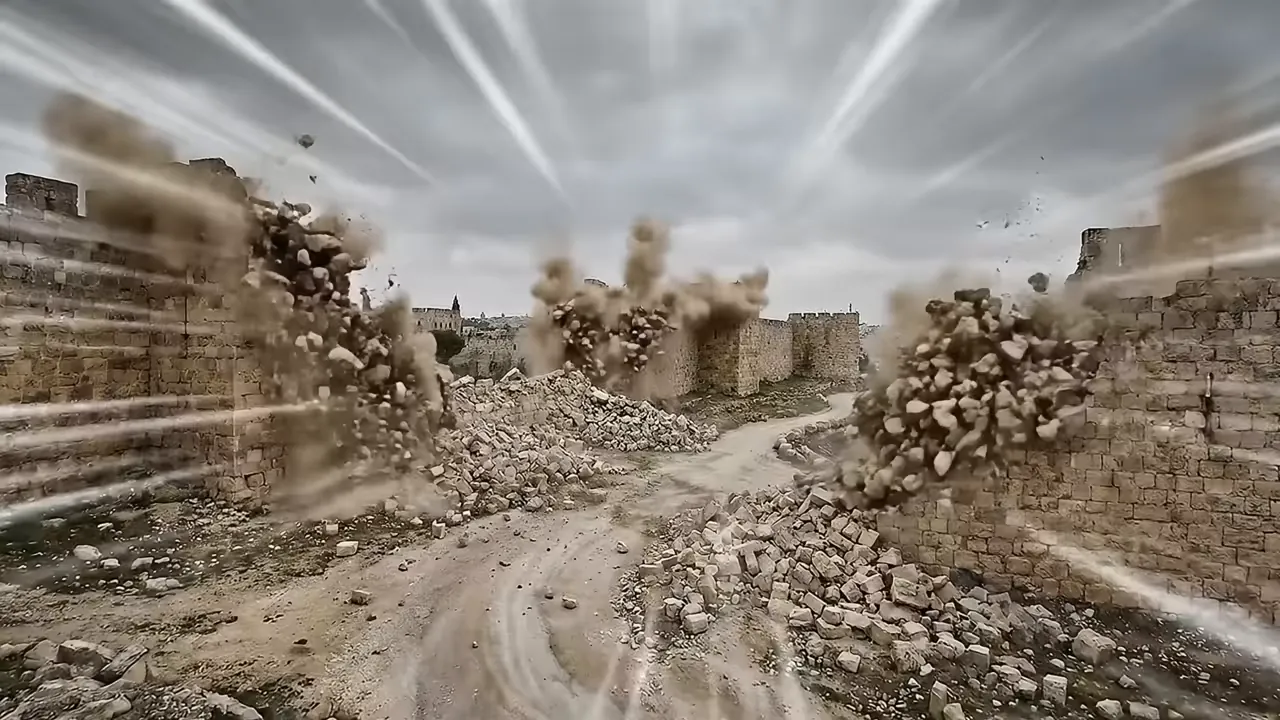
Then the Babylonians tore down Jerusalem’s walls stone by stone. The goal was not just to defeat the city. It was to make sure it could not rise quickly again.
They did not simply conquer Jerusalem. They tried to unmake it.
The leadership class was also eliminated. Priests, officers, royal advisers, temple officials, and prominent citizens were executed. Most survivors were marched into exile. Only some of the poorest people were left to work the land.
Nebuchadnezzar’s Temple Treasure Inventory
Before the fire finished its work, Nebuchadnezzar’s officials performed an inventory. And it is incredibly detailed.
Jeremiah 52 reads almost like an accountant’s ledger. The Babylonians recorded temple objects, separated precious metals, and hauled away everything valuable. The care in the record feels almost painful. Every sacred object mattered because every object had been part of Israel’s worship.
The two massive bronze pillars at the temple entrance, Jachin and Boaz, were especially memorable. Their names carried declarations of faith: “He establishes” and “In Him is strength.” Each pillar stood about 27 feet tall. Their capitals were decorated with chains and pomegranates.
Jeremiah even records the number of pomegranates visible on each capital: ninety-six exposed, one hundred total around the network.
They counted the pomegranates.
The pillars were too massive to transport whole, so Babylonian soldiers smashed them into pieces and hauled the bronze away like scrap. They shattered the bronze sea, the huge basin used by priests for washing, along with its twelve bronze oxen. There was so much bronze that the records say it was beyond weighing.
Then came the smaller treasures: gold bowls, silver pans, pots, shovels, forks, lamp tools, dishes, fire pans, and countless vessels used in worship.
The repeated idea is chilling in its simplicity: whatever was gold, they took as gold. Whatever was silver, they took as silver.
The treasures were carried to Babylon and placed in the temple treasury of Marduk, Babylon’s god. To Nebuchadnezzar, this looked like proof that Marduk had defeated Yahweh.
He could not have been more wrong.
The Missing Ark of the Covenant
One object is missing from every list: the Ark of the Covenant.
This gold-covered chest was the holiest object in Israel’s worship. It was associated with the tablets of the covenant, Aaron’s rod, and a jar of manna. Above it was the mercy seat, where God’s presence was described as dwelling between the cherubim.
Yet the Ark does not appear in the account of the destruction. It does not appear among Nebuchadnezzar’s plunder. It does not appear among the temple vessels later returned under Cyrus.
It simply disappears from the record.
Some traditions suggest it was hidden during the reign of Josiah. Others connect its disappearance to the idolatry under Manasseh. Second Maccabees, a text preserved in Jewish tradition but not part of the Protestant canon, says Jeremiah hid it in a cave near Mount Nebo.
But Scripture does not explain what happened. The mystery remains.
What we know is simple: the Ark was not displayed as one of Nebuchadnezzar’s trophies.
Why God Allowed the Temple to Burn
This is the question beneath every other question. Why would God allow His own house to burn?
Ezekiel gives the answer through a vision received before the final destruction. He saw the glory of the Lord rise from above the cherubim, move to the temple threshold, then to the eastern gate, and finally depart over the Mount of Olives.
The glory left before the flames arrived.
God had not been defeated by Babylon. He had vacated the temple.
Ezekiel also saw why. He saw elders worshiping detestable images. He saw women weeping for Tammuz. He saw priests turning their backs on the holy place to bow toward the rising sun. The people had filled God’s house with worship that rejected Him.
God will not be reduced to a rabbit’s foot, a lucky charm, or a religious mascot.
Nebuchadnezzar’s torches did not prove that Babylon was stronger than God. They proved that God keeps His covenant, including its warnings. Moses had spoken of siege, famine, exile, and devastation if Israel abandoned God for idols. The disaster came with terrifying precision.
But judgment was not the final word.
The Promise that Survived the Ashes
God preserved a remnant. Broken, grieving, and exiled, but alive. They carried the Scriptures, the memories, and the promises of God into Babylon.
He also preserved the temple vessels. About fifty years later, Babylon itself fell. Belshazzar used the stolen vessels at a feast and mocked the God of Israel. That night, judgment came to Babylon. The Persians entered the city, Belshazzar died, and Cyrus became ruler.
Cyrus then allowed the Jewish people to return home. Ezra records that 5,400 gold and silver articles were returned to Jerusalem.
Nebuchadnezzar thought he had humiliated God by taking His treasures. Instead, Babylon became an unlikely storage room for vessels that would one day return.
The Temple fell. The Promise did not.
The Second Temple rose, smaller than Solomon’s Temple but standing again. That temple would also fall in 70 AD.
Nebuchadnezzar destroyed a building. He could not destroy God’s purpose. He could carry away vessels. He could not carry away the Covenant. He could burn cedar and melt gold. He could not burn away the promise that a king would come from David’s line.
That is the strange beauty in this terrible story. Divine judgment is real. Persistent rebellion has consequences. But even in the ashes, God preserves what matters most.
RESOURCES:
This article was created from the video How did King Nebuchadnezzar destroy Solomon’s temple and seize God’s treasure? | https://www.youtube.com/watch?v=j0jzG1Wh08U with the help of AI.
Watch More: Jewish History...
- Abraham – One Man Chose a Different Path
- Timeline of Jewish History
- Tower of Babel & the Origin of Languages
- 1177 BC: How the First Globalized World Fell Apart
- Nineveh: The Greatest City Erased from History
- Babylon in 570 BC: Inside the City That Shaped the World
- Nebuchadnezzar, Solomon’s Temple & the Fire that Changed Jerusalem
- Hezekiah’s Tunnel: Faith, Fear & Water Beneath Jerusalem
- “Rivers of Babylon” Written in Exile 2600 Years Ago
- Nebuchadnezzar: The King Who Built Babylon, Lost Everything & Returned
- Secret of Jewish Survival & Esther’s Courage
- Canaan to Rome: The Ancient History of Israel
- Arch of Titus: Rome’s Monument of Triumph & Jewish Heartbreak
- Roman Empire: The Rise, The Madness, The Fall of a Civilization
- Fall of Rome: How the Ancient World’s Greatest Empire Changed Shape
- When Nations Turn Against Israel, What Happens to Them?
- ‘All Things Are Mortal But the Jew’ – Mark Twain
- 7 Wonders of Jewish History: A Story That Should Not Be Possible
- Samaritans: Last 800 Guardians of Mount Gerizim
- Amalek Command: Why It's Misunderstood
- PART 1 | The Land of Israel & Ottoman Palestine (HEB)
- Part 2 | The Land Reached Its Peak & Byzantine Palestine’s Demographic High Point (HEB)
- PART 3 | Arab Conquest: How the Land Gradually Became Muslim (HEB)
- 5000 Years of Jewish History (5-Min Clips)