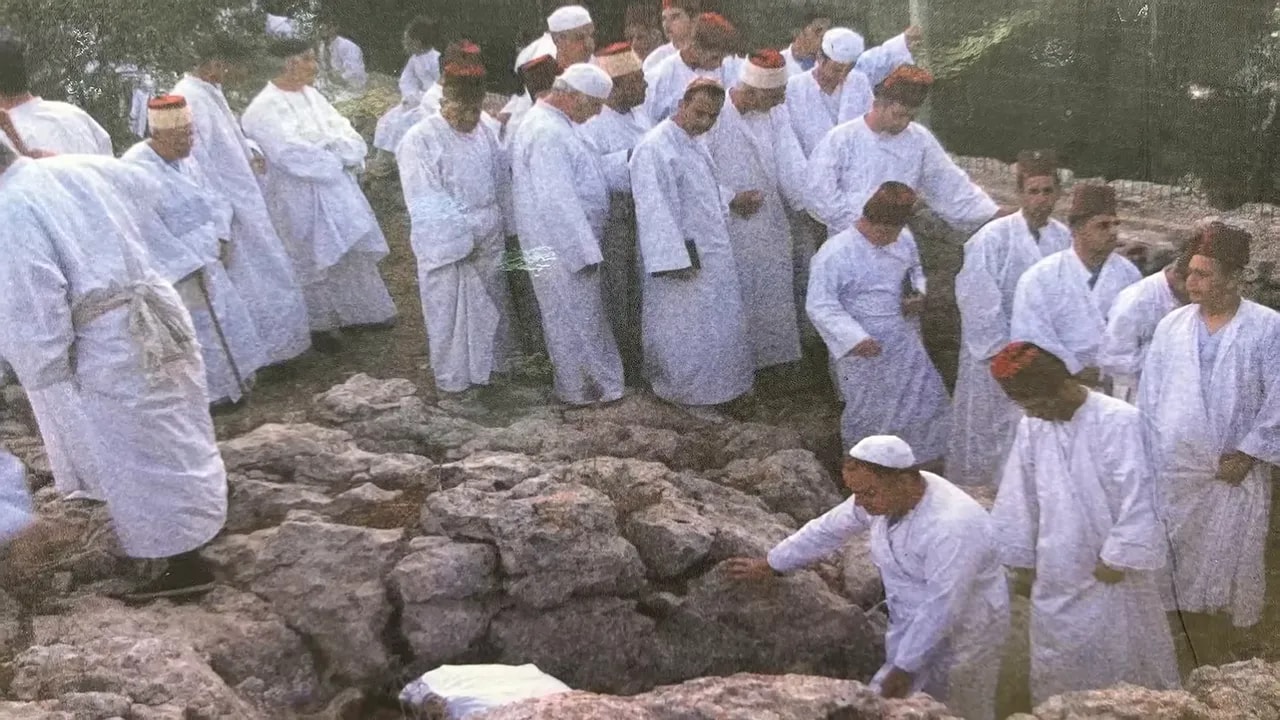
Every Passover, the Samaritans gather on Mount Gerizim, dress in white, chant ancient prayers, sacrifice lambs, roast them in underground ovens, and eat the meal as described in Exodus. Not in Jerusalem. Not at a rebuilt temple. Right here on a mountain above Nablus.
It is one of the most unusual living traditions in the Middle East. And it raises a big question: are the Samaritans the original Israelites, preserving the oldest version of the Torah?
The answer depends on whom you ask. But one thing is beyond debate: this tiny community has held onto its identity, rituals, language, and holy mountain through wars, empires, persecution, and near extinction. Today, only about 800 Samaritans remain.
“The story of the Samaritans is not just about one small community. It is about history, faith, identity, and what it means to preserve a tradition for thousands of years.”
Takeaways
- The Samaritans regard Mount Gerizim, not Jerusalem, as the place chosen for worship.
- Samaritans accept only the Five Books of Moses as sacred religious authority.
- The Samaritan Passover sacrifice continues annually on Mount Gerizim with ancient rituals.
- Only about 800 Samaritans remain, divided mainly between Mount Gerizim and Holon.
Why Mount Gerizim Matters So Much
Mount Gerizim rises about 880 meters above sea level. Below it sits Nablus, the biblical city of Shechem. Across the valley stands Mount Ebal. Together, these two mountains form one of the great biblical landscapes.
In Deuteronomy, Moses instructs the Israelites to place the blessing on Mount Gerizim and the curse on Mount Ebal. Later, Joshua leads the people in a ceremony between the mountains. Half the tribes stand on Gerizim and answer amen to blessings of peace, success, and prosperity. The other half stand on Ebal and answer amen to the consequences of abandoning the Torah.
For the Samaritans, that is not merely an old story. It is the foundation of their world.
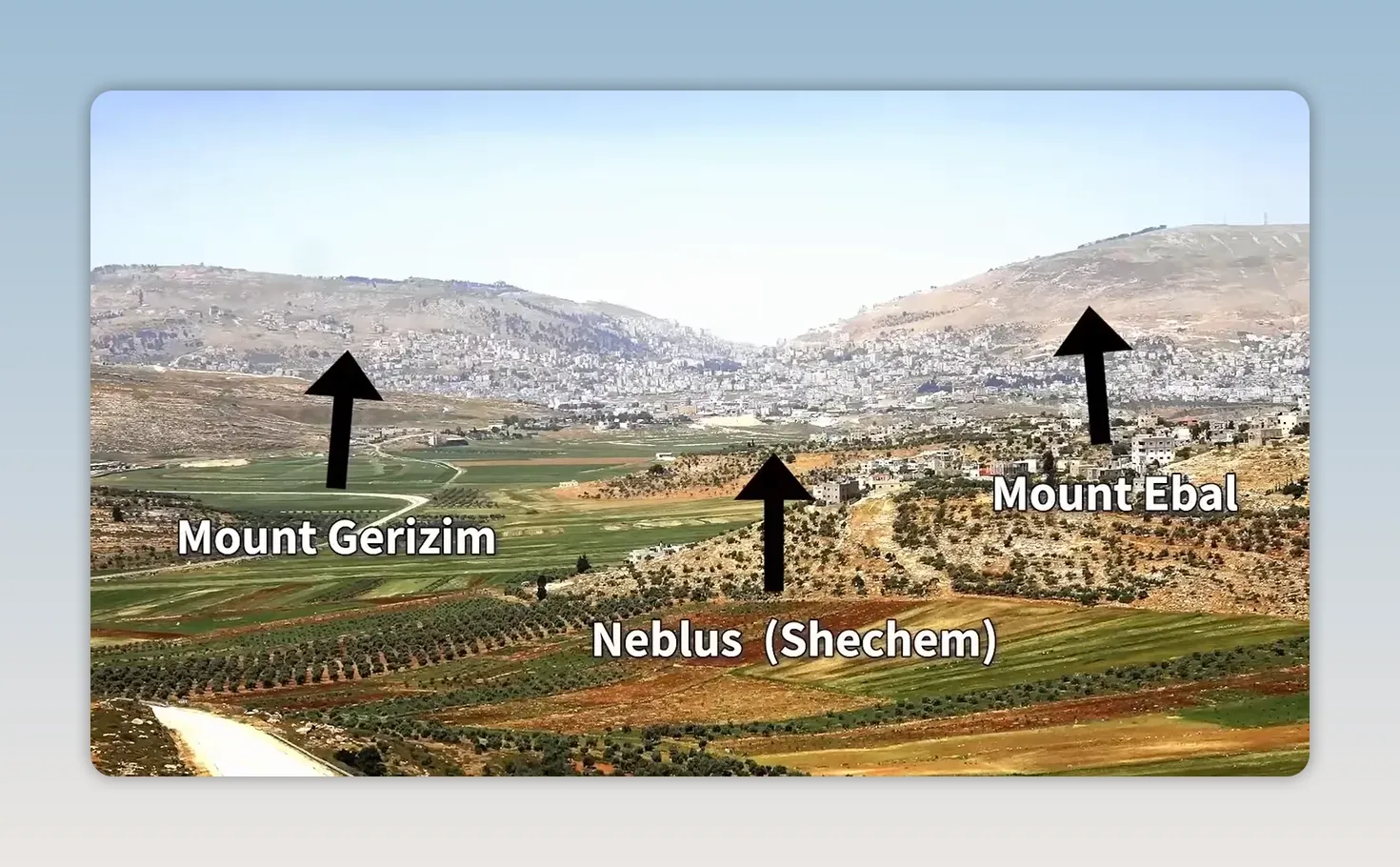
The area matters long before Joshua. Abraham arrives near Shechem and builds an altar. Jacob later buys land there and builds another altar. Before Jerusalem became the political and religious center of Judea under David and Solomon, this was one of the central landscapes of the biblical story.
“For the Samaritans, Mount Gerizim is not one holy place among many. It is the holiest place on earth.”
One Torah, Two Holy Mountains
The biggest difference between Jews and Samaritans comes down to a very simple question: where did God choose to be worshiped?
Judaism answers Jerusalem, on Mount Moriah, where Solomon’s Temple stood. The Samaritans answer Mount Gerizim.
This disagreement is tied to the books each tradition accepts as religious authority. The Samaritans accept only the Five Books of Moses. They do not treat the Prophets, the rest of the Hebrew Bible, the Talmud, or the New Testament as sacred authority.
That matters because Jerusalem is never named in the Five Books of Moses. Mount Gerizim, however, is directly connected to the covenant ceremony in Deuteronomy.
The Samaritan Torah is very close to the Jewish Torah. Most differences are small. But one difference changes the whole map: the Samaritan version of the Ten Commandments includes a commandment to build an altar on Mount Gerizim.
“Same Torah. Same ancient stories. But a completely different answer to where God chose for His sanctuary.”
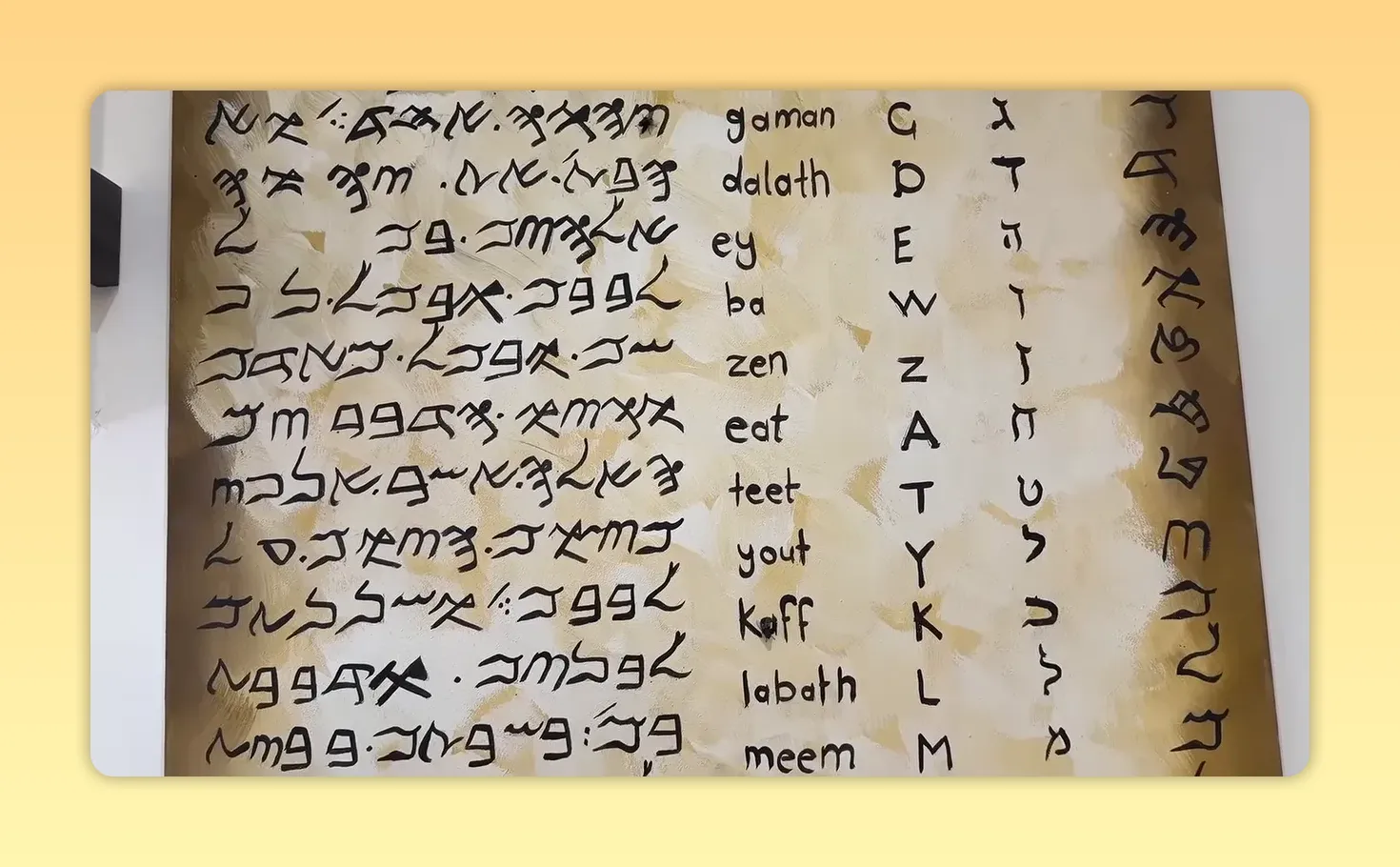
The Samaritans also preserve an ancient Hebrew script. It looks related to Hebrew, but it is visibly different from the square Hebrew letters used in Jewish texts today.
Who Are the Samaritans?
There are two very different origin stories, and both are important if you want to understand why the divide runs so deep.
The Samaritan account says they are direct descendants of ancient Israelites who remained in the land after the Assyrian conquest of the northern Kingdom of Israel in 722 BCE. In their view, the real split happened much earlier, when the priest Eli moved the tabernacle away from Mount Gerizim to Shiloh. That move, they believe, broke with God’s command.
Even their name carries that claim. They connect “Samaritans” with the Hebrew root “shamar,” meaning to keep or guard. In other words, they see themselves as guardians of the original Torah.
The Jewish account is very different. It describes the Assyrians deporting many Israelites and resettling people from elsewhere in the empire, including a place called Cuthah in present-day Iraq. Those settlers adopted elements of Israelite worship but were not accepted by Jews as Israelites.
The name can also be connected to Samaria, called Shomron in Hebrew. Interestingly, both explanations use the same Hebrew root letters. Hebrew loves doing this kind of thing.
“This was never only an argument about ancestry. It was an argument about worship, authority, and sacred geography.”
A Temple Destroyed, a Community That Survived
After the return from the Babylonian exile, the Samaritans built their own temple on Mount Gerizim. It became the heart of Samaritan religious life for generations.
Then, in 111 BCE, the Hasmonean ruler John Hyrcanus conquered the area and destroyed the Samaritan temple. The message was very clear: from the Jewish kingdom’s point of view, Jerusalem was the one legitimate place for a temple.
The building disappeared. The Samaritan faith did not.
Later, the Samaritans appear in the New Testament in surprisingly positive ways. The best known example is the Good Samaritan. In Jesus’ parable, a wounded man is ignored by a priest and a Levite. The Samaritan, despite the hostility between Jews and Samaritans, is the person who stops, treats him, brings him to an inn, and pays for his care.
That is why “good Samaritan” still means helping a stranger in need.
Another major story takes place near Mount Gerizim. In the Gospel of John, Jesus speaks with a Samaritan woman at a well. She raises the ancient argument directly: should people worship on Gerizim or in Jerusalem? Jesus answers that true worship will no longer depend on one mountain or city, but will be in spirit and truth.
“A mountain that divided communities for centuries became the setting for one of Christianity’s biggest conversations about worship.”
But history was not kind to the Samaritans. Under Byzantine rule, churches were built on Samaritan holy sites. Their population may once have reached nearly half a million, but revolts against Byzantine rule were crushed. Many were killed or dispersed. By the beginning of the twentieth century, only around 150 Samaritans remained.
Honestly, it is remarkable that the community survived at all.
Passover on Mount Gerizim
Today the Samaritan community is divided between Mount Gerizim and Holon, near Tel Aviv. But every year, on the eve of Passover, the whole community returns to the mountain for its most famous ceremony.
The Samaritans continue the Passover sacrifice described in Exodus. Jewish animal sacrifice ended after the destruction of the Second Temple nearly 2,000 years ago, when prayer replaced sacrifice. For the Samaritans, the commandment never ended.
The ceremony follows a powerful rhythm:
- The community gathers on the summit in white clothing.
- Prayers and Torah verses are chanted in ancient Hebrew and Aramaic.
- At sunset, lambs are sacrificed together.
- Blood is placed on the foreheads of community members and children, recalling the first Passover in Egypt.
- The lambs are cleaned, salted, and lowered into heated underground ovens.
- At midnight, the meat is eaten with unleavened bread.
- By sunrise, every remaining piece is burned.
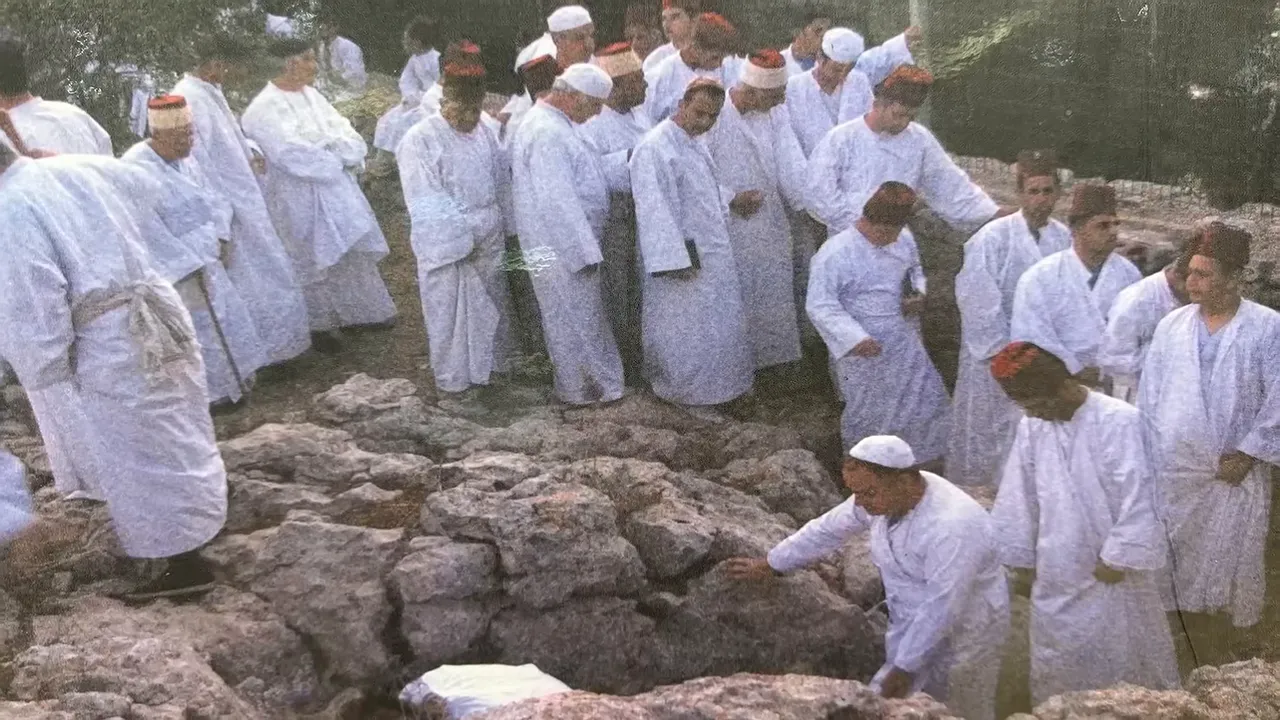
It can feel distant from modern religious life, where people often think of prayer, meditation, or quiet reflection as the main way to connect with God. But in the ancient world, sacrifice was central. Israelites, Greeks, Romans, and many other peoples offered sacrifices as a public expression of their relationship with the divine.
“Sacrifice was not some weird side note in the ancient world. It was at the center of religious life.”
Blood, Purity & Daily Life
Blood is everywhere in the Bible. It is connected to sacrifice, covenant, purity, forgiveness, atonement, death, and life itself. The Hebrew Bible uses the word for blood hundreds of times.
Among the Samaritans, the public blood of Passover stands beside a completely private issue: menstruation. Both Jewish and Samaritan traditions read the purity laws in Leviticus. But over centuries, they developed very differently.
Rabbinic Judaism built a huge body of legal interpretation around biblical commandments. In most Jewish communities today, the practical laws of menstruation focus mainly on marital intimacy rather than complete separation from household life.
The Samaritans generally follow a more literal reading. Traditionally, a Samaritan woman during menstruation separates herself from shared household objects and spaces. She does not prepare family food, use shared items, or sit on furniture used by the rest of the household.
Salwa Cohen, a Samaritan woman from Mount Gerizim, explained that this period is also a kind of rest. Her husband and extended family take over cooking, cleaning, and caring for the household.
“For seven days, she is offline. The family takes care of her, and the husband gets a real lesson in appreciating everything she does.”
Women also follow periods of separation after childbirth, traditionally 40 days after the birth of a boy and 80 days after the birth of a girl. These practices may feel surprising or difficult from the outside, but they make sense inside a community committed to following the Five Books of Moses as literally as possible.
The point is not that one tradition is “more biblical” than another. The fascinating thing is how two communities, starting from nearly the same text, can build very different religious lives.
A Calendar, a Museum & Three Passports
The Samaritan Museum on Mount Gerizim tells the story from the community’s own perspective. It was founded by the father of Salwa Cohen, and it preserves history, traditions, holidays, manuscripts, and community memory.
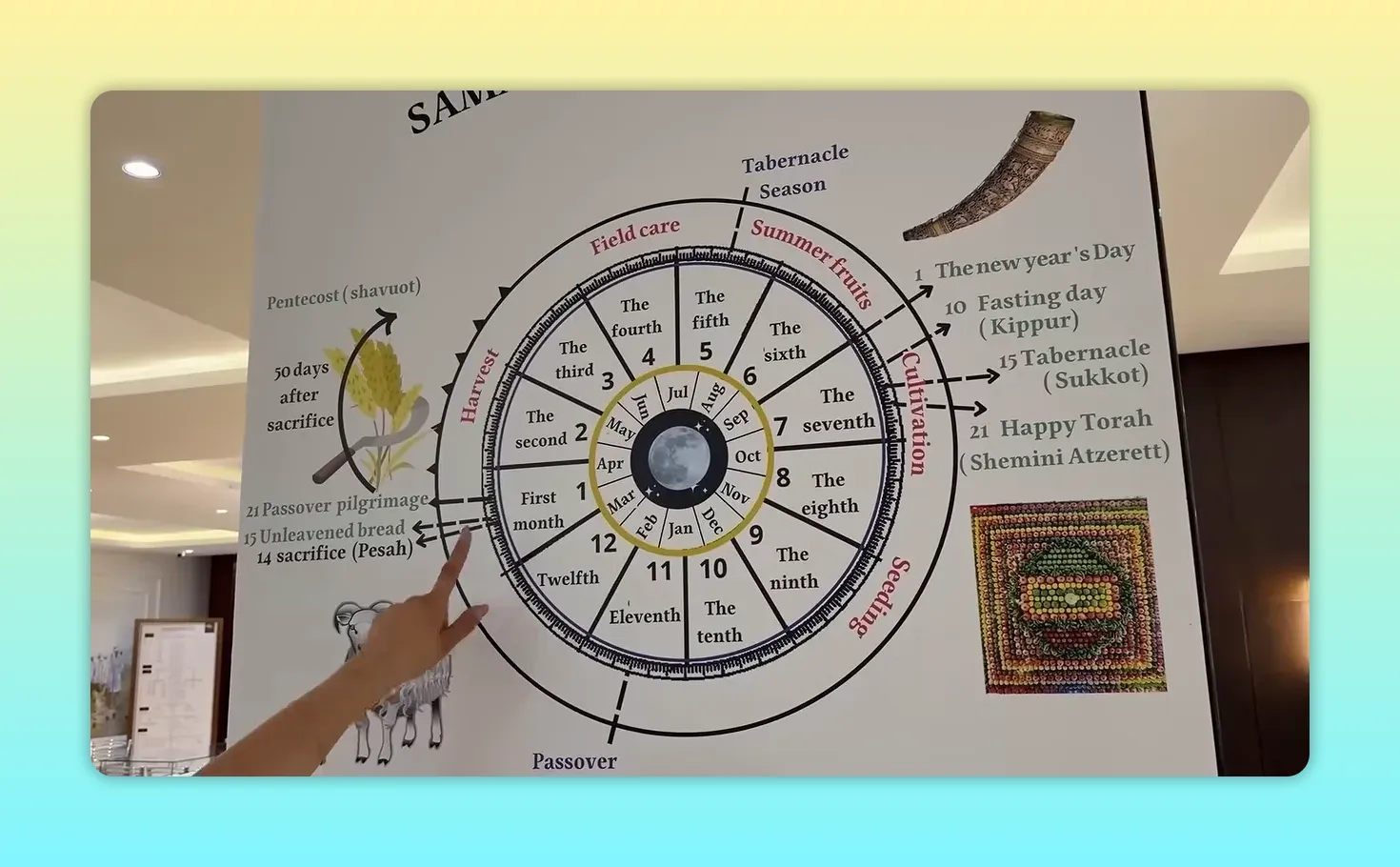
The Samaritans have their own lunar calendar, calculated from their traditional date of entering the Holy Land. It has 12 months, with a thirteenth month added in leap years. Their major holidays include Passover, Unleavened Bread, Pentecost, New Year, Yom Kippur, Sukkot, and a final communal prayer gathering.
The community also sits in a very unusual political reality. Samaritans on Mount Gerizim may hold Palestinian and Israeli citizenship documents, while some also retain older Jordanian passports. The community in Holon is connected to Israel, while Mount Gerizim stands near Nablus in a politically sensitive area.
That makes the Samaritans feel like a bridge, or maybe a border zone, between identities that are often presented as completely separate.
Keeping a Tiny Community Alive
With only around 800 people, survival is not automatic. The Samaritans traditionally marry within the community to protect their identity. About a century ago, their religious leadership permitted Samaritan men to marry women from outside, including Jewish, Muslim, or Christian backgrounds, provided the women converted and raised their children as Samaritans.
It is a small community facing very practical pressures: marriage, family, language, religious continuity, and the risk of simply disappearing into larger societies.
And yes, there is also tahini. The Samaritans own a well-known tahini factory, and plenty of Israelis have very strong opinions about whether its product is the best in the country. Because of course they do. This is the Middle East. Hummus and tahini are serious business.
“You go looking for a tiny ancient community, and somehow you end up discussing Torah, empires, Jesus, blood, passports, and tahini.”
What the Samaritans Keep Alive
The Samaritans do not offer an easy answer to the question of who is the “true” Israelite community. Their story is full of competing claims, sacred memories, painful history, and deeply held beliefs.
But their existence is a living reminder that the biblical world did not flow in one neat, simple line toward the present. History is messier than that. It is full of branches, arguments, survivors, and communities that refuse to vanish.
On Mount Gerizim, the ancient questions are still alive. Which text has authority? Which mountain is holy? What does it mean to obey a commandment? How much can a tradition change before it stops being itself?
The Samaritans have answered those questions in their own way for thousands of years. And somehow, against every historical odd, they are still here.
RESOURCES:
This article was created from the video Are the Samaritans the True Israelites | https://www.youtube.com/watch?v=cE3mHjLK1FI with the help of AI.
Watch More: Jewish History...
- Abraham – One Man Chose a Different Path
- Timeline of Jewish History
- Tower of Babel & the Origin of Languages
- 1177 BC: How the First Globalized World Fell Apart
- Nineveh: The Greatest City Erased from History
- Babylon in 570 BC: Inside the City That Shaped the World
- Nebuchadnezzar, Solomon’s Temple & the Fire that Changed Jerusalem
- Hezekiah’s Tunnel: Faith, Fear & Water Beneath Jerusalem
- “Rivers of Babylon” Written in Exile 2600 Years Ago
- Nebuchadnezzar: The King Who Built Babylon, Lost Everything & Returned
- Secret of Jewish Survival & Esther’s Courage
- Canaan to Rome: The Ancient History of Israel
- Arch of Titus: Rome’s Monument of Triumph & Jewish Heartbreak
- Roman Empire: The Rise, The Madness, The Fall of a Civilization
- Fall of Rome: How the Ancient World’s Greatest Empire Changed Shape
- When Nations Turn Against Israel, What Happens to Them?
- ‘All Things Are Mortal But the Jew’ – Mark Twain
- 7 Wonders of Jewish History: A Story That Should Not Be Possible
- Samaritans: Last 800 Guardians of Mount Gerizim
- Amalek Command: Why It's Misunderstood
- PART 1 | The Land of Israel & Ottoman Palestine (HEB)
- Part 2 | The Land Reached Its Peak & Byzantine Palestine’s Demographic High Point (HEB)
- PART 3 | Arab Conquest: How the Land Gradually Became Muslim (HEB)
- 5000 Years of Jewish History (5-Min Clips)