In 1989, the Tibetan Buddhist leader known as the Dalai Lama met with a group of six Jewish scholars. During the series of meetings, the Dalai Lama asked many questions, but one was clearly the most pressing. He said he wanted to learn about the technique of Jewish survival.
Obviously, the Dalai Lama saw parallels in the experience of his own people, who were exiled by the Chinese communists in the second half of the 20th century, similar to the experience of the Jews.
- He was worried about how his people would survive and maintain their identity. After all, most people removed from their land disappear before long.
- But he also recognized the extraordinary challenges faced by the Jewish people in the Diaspora.
When Jerusalem and the southern kingdom of Judah were conquered by the Babylonians in 586 BCE, Jews lost all sovereignty in the land of Israel. The temple was destroyed, and much of the population was either killed or driven into exile.
Every level of society, from the poor farmer to the priests and the king, was profoundly disrupted by the Babylonian conquest.
What could get people through such destruction and social upheaval?
After a great run of almost a thousand years, it looked like the Jewish people would go the way of so many ancient peoples, into the memory of the history books. How could a nation possibly remain intact under these conditions?
Torah As A Portable Homeland
In a word, Torah. In all of the different meanings that word contains. It turned out that it was portable, and the Jewish nation took it on the road with them. The Bible contained the Jews’ history and their national identity.
- It gave them laws for daily living.
- It reminded them of the holy festivals and contained the texts that they would read publicly in the synagogue, which would become their miniature temple.
- The Torah provided them with sacred language for prayers.
- By reading, studying, and praying in the original language, they ensured that the Hebrew language would not disappear.
The Bible also spoke to the unity and unique mission of the Jewish people, providing the glue that kept the people together during these troubled times.
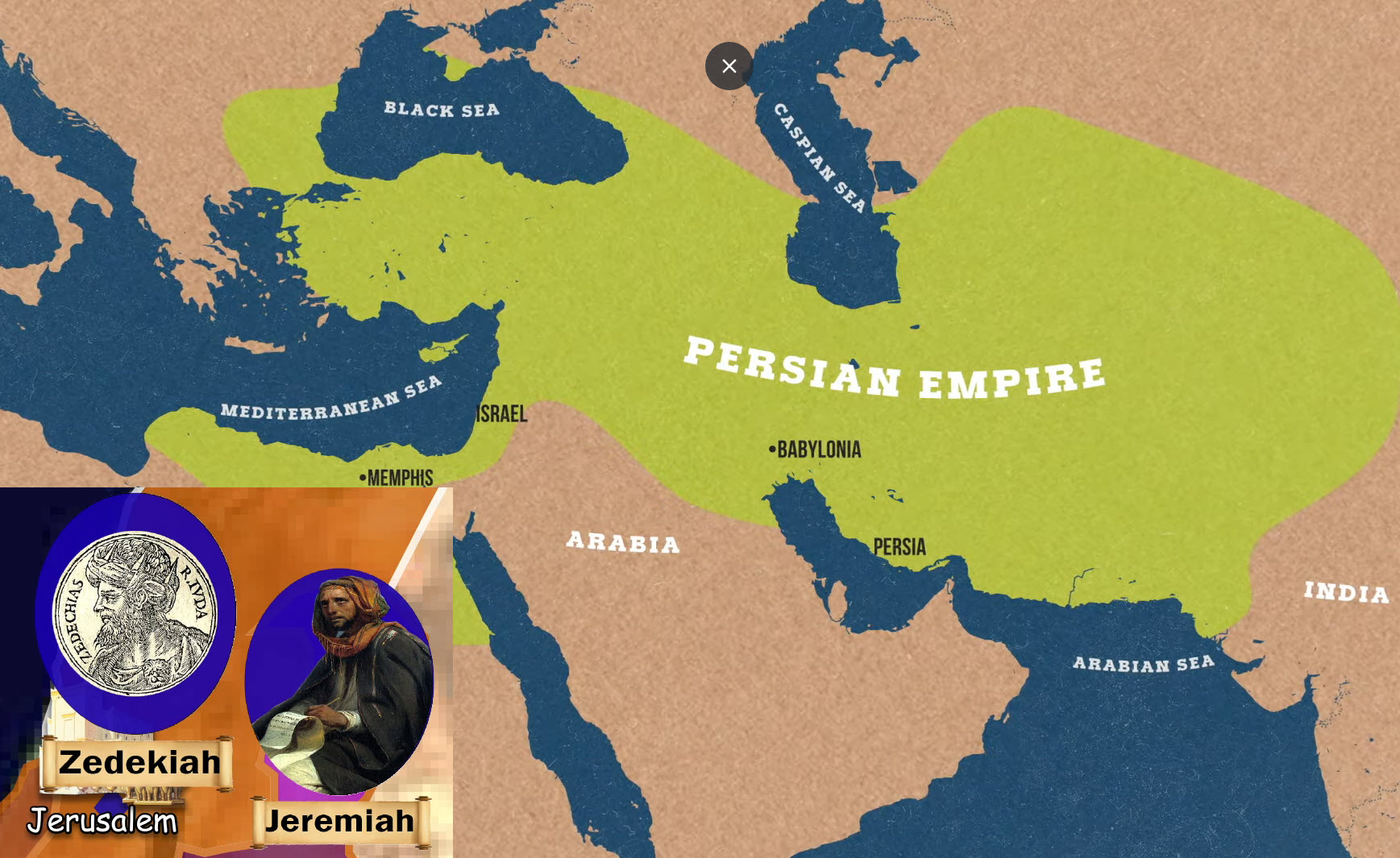
It offered the promise of redemption from exile, which came to pass, as Jeremiah had predicted, after 70 years. That is when the Persians entered the scene, after their conquest of Babylon in 539 BCE. Let’s see where the Jews were when the Babylonian exile came to an end.
Scattered Tribes & New Communities
First, the 10 tribes lived in the Northern Kingdom before it was conquered by Assyria. They were forcefully deported and separated from their countrymen, and had to assimilate with the people around them.
Small groups may have left the region altogether for East Asia and Africa, remaining together while also taking on new national identities. Traces of such populations have cropped up throughout history, especially in recent years, with ramifications for the modern state of Israel.
For example, a group of Jews in eastern India call themselves B’nai Menashe and trace their lineage to Menashe, one of B’nai Phinehas’s sons and one of the lost tribes of Israel. In recent years, they have fulfilled their dream of moving to the land of Israel.
For the most part, though, the Jews of the Northern Kingdom became lost to the rest of the Jewish people.
- In the Southern Kingdom, the refugees from the Babylonian conquest of Judah included the tribes of Judah and Benjamin, as well as a portion of the Levites.
- Some went to Egypt, especially to Alexandria.
- The largest number went to Mesopotamia, the birthplace of the most significant figure in history, Abraham.
The dispersion left the Jews a fragmented people scattered throughout the Eastern Mediterranean and Persia. Despite the hardships and persecution they faced, Jews everywhere rebuilt their lives and communities as best they could.
- Jewish traditions provided structure for family life, the education of children, and the responsibilities of each family member.
- Even mealtimes were regulated to some degree by Jewish law.
- That same law guided the family in its relationships with the larger community. The people had to pay taxes and give charity.
- When Shabbat was observed on Friday nights, it brought all commercial life to a stop, and families came together.
According to the traditions recorded by the rabbis, when the holidays arrived, the community joined in prayer at the synagogue and prepared festive meals for their families and guests.
Torah study gave the Jews knowledge of their past and the roadmap for their future.
And of course, the inner spiritual life of the Jew in exile was inspired by the prophecies and belief in the one true God, who would surely bring them out of exile and back to their homeland when the time was right.
Without their portable Judaism and God’s promise, it seemed likely that the Jews would have disappeared from the face of the earth entirely.
Persia, Power & A Hidden Heroine
As we mentioned, many Jews eventually ended up in the Persian Empire. The descendants of the Jews seized and deported from Judea by Nebuchadnezzar became who were a large and flourishing community.
Over time, Jewish learning centers flourished there, and many scholars and prophets were prominent in the royal palace, like Daniel, advisor to the Persian kings.
The most important Persian ruler, from a Jewish perspective, was Cyrus the Great.
- When the Persians defeated the Babylonians, they also inherited their territory, which included the land of Israel.
- Cyrus issued a proclamation that allowed the Jewish exiles to return to their land and rebuild the temple.
It’s true Cyrus adopted a similar policy toward other nations that had been vassal states of Babylon, but he still earned considerable goodwill among Jewish leaders. In fact, they looked back at the Persians as being the best of the foreign rulers over Israel and even spoke highly of them.
About 45 years after Cyrus left the scene, in 486 BCE, a far less competent king began to rule Persia. Historians typically know him as Xerxes, but in the Bible, he is called Ahasuerus.
According to the Book of Esther, he became part of Jewish history through his marriage to Esther, a Jewish woman known as one of the greatest heroines of all time. Jews know about Esther through the biblical book that bears her name.
It is read twice on the holiday of Purim, an exuberant and joyous day which is celebrated with lavish feasting, drinking, wearing costumes, and giving gifts to the poor and food to friends. The Scroll of Esther, or Megillah Esther as it is commonly known, tells the story of how Esther saved her people from annihilation at the hands of a hate-monger known as Haman. Beginning in the 19th century, people like him would be labeled Antisemites. Esther showed great bravery and wisdom and stood up for her people when no one else could.
Here is what we know about Esther at this crucial time in Jewish history:
- She was an orphan, adopted by her cousin Mordechai.
- Mordechai was a descendant of Kish from the tribe of Benjamin. He was exiled from Jerusalem over 100 years earlier.
- Esther and Mordechai lived in Shushan, the Persian kingdom’s capital. The city housed the Persian government, and Mordechai worked in the king’s palace.
King Ahasuerus ruled his country in the most unusual way. When we meet him at the beginning of the story, he is hosting a six-month-long kegger for his servants, the nobility, the army, and all the commoners to show off his wealth. Maybe this was the ancient equivalent of buying people’s votes by handing out free stuff. To impress his people, he called on his queen, Vashti, to appear before them and display her beauty.
When she refused, the king did not know what to do. He asked his close advisors, who told him that her personal insult of the king was really a matter of national concern. In Ahasuerus’s kingdom, it seemed that no one was actually in control. This was a dangerous situation because someone with an agenda could easily have influenced policy to fill the power void.
More on that later. At the suggestion of advisors, Ahasuerus executed Vashti, and the king searched for the most beautiful virgin in the country to be queen. Esther was taken to the palace to be presented to the king and eventually became his wife. Esther told noone, including the king, that she was Jewish.
For that matter, Mordechai seemed to have kept his Jewish background a secret from his coworkers at the palace as well. But he could not keep it a secret forever. The king’s servants eventually wanted to know why Mordechai, the king’s chief advisor, bowed down to the king’s chief advisor, Haman, and Mordechai then told the king that he was a Jew. Haman became enraged at Mordechai when he learned this, and he plotted to destroy all the Jews of Persia.
Since Persia was a vast empire of 127 countries and provinces, Haman’s plan effectively meant he was against every Jew on the planet. To determine when he should attack, he cast lots, or purr in Persian. That is how the holiday of Purim got its name, and the date was set for 11 months later. Haman even built a special gallows on which to hang Mordechai. Haman also did not have a hard time selling his genocidal plan to the king.
He began by giving Ahasuerus a truthful and harmless description of the Jews: there is a certain people scattered and dispersed in the kingdom, and their laws are different from those of every people. But he put a dual-loyalty twist on it that Antisemites throughout history have continued to use: and they do not keep the king’s laws, therefore it does not benefit the king to keep them around.
With the king’s agreement, Haman sent out a decree to annihilate the king’s subjects throughout the entire Persian Empire. Mordechai begged Esther to intervene in order to save the Jews. She was reluctant because an appointment with the king uninvited would put her in great danger, possibly even the death penalty. Mordechai helped her realize that perhaps it was for this very moment that she was made queen.
Courage, Reversal & A Joyful Feast
Thus, Esther heeded her call to action. In a brilliant move, Esther invited Ahasuerus and Haman to a banquet in the royal palace. At the meal, she made a request: to have another banquet the next day with the same dinner guests. The king must have been wondering what was going on.
He could see she was troubled and told her that she could have anything she wanted. Maybe he wondered why Haman was there. Was there a palace coup in the works? Was there something romantic going on between Esther and Haman? At the second banquet, Esther finally burst out with the truth. She was Jewish, and her entire nation was to be annihilated at Haman’s command.
She asked Ahasuerus to reverse the decree. The king first ordered that Haman be hanged on the very gallows he had prepared for Mordechai. Then letters were sent out to all the provinces, giving the Jews the right to defend themselves against their enemies. Now, that seems a little odd.
If the goal is to protect the Jews, why not just rescind Haman’s decree? It turns out that once a law was on the books, it could not be retracted. So the king had to make a new, special law for the benefit of the Jews. Consequently, the Jews defeated their enemies, and the day on which the Jews were to be destroyed turned into a day of victory and joy.
It is as they say: they tried to kill us, we won, let’s eat. It is Jewish history in a nutshell. Not really, but the cycle of oppression and salvation has repeated itself many times throughout Jewish history. It is also why, on Passover, we read in the Haggadah.
- The Jewish people were sustained in exile by their religious and national identities.
- Their prophetic scriptures and faith taught them that they were expelled from the land for a reason and that they would return to the land of Israel.
- Their laws and culture created a community that could even endure outside the land of Israel.
- With strong leaders like Esther, who confronted their moments of truth with courage and wisdom, the Jewish people persevered even in the face of genocidal enemies.
Around the same time Esther was queen, other leaders like Ezra and Nehemiah would return to Israel to rebuild the community there. Jewish continuity never seemed more improbable than in these early days of exile, but the secret technique of Jewish survival would prove that the Jews were up to the challenge.
Timeline of Key Events
- 586 BCE: Babylonian king Nebuchadnezzar II destroys Jerusalem and the First Temple, starting the Babylonian Exile.
- 550 BCE: [Cyrus the Great] founds the Achaemenid Persian Empire.
- 539 BCE: Persian forces capture Babylon without a major battle.
- 538 BCE: Cyrus issues his decree allowing exiles to return to Jerusalem and rebuild their temple.
- 516 BCE: The Second Temple is completed in Jerusalem.
- 332 BCE: Greek conqueror Alexander the Great takes control of the Levant, introducing Hellenistic rule to the former Persian territories.
RESOURCES:
The Judean Exile to Babylonia – The Jewish Story – Unpacked | https://www.youtube.com/watch?v=XqDUEZ3q6oY
The Babylonian Exile and the Creation of Judaism – Casual Historian – Jewish History | https://www.youtube.com/watch?v=8sgVDVMC3F0
Cyrus the Great and Building the Second Temple | Casual Historian | Jewish History Documentary | https://www.youtube.com/watch?v=pJU_7HQ4MEQ
The Hellenist Period and the Hasmonean Dynasty of Judah | Casual Historian | Jewish History | https://www.youtube.com/watch?v=tO_JN3rocfQ
Watch More: Jewish History...
- Abraham – One Man Chose a Different Path
- Timeline of Jewish History
- Tower of Babel & the Origin of Languages
- 1177 BC: How the First Globalized World Fell Apart
- Nineveh: The Greatest City Erased from History
- Babylon in 570 BC: Inside the City That Shaped the World
- Nebuchadnezzar, Solomon’s Temple & the Fire that Changed Jerusalem
- Hezekiah’s Tunnel: Faith, Fear & Water Beneath Jerusalem
- “Rivers of Babylon” Written in Exile 2600 Years Ago
- Nebuchadnezzar: The King Who Built Babylon, Lost Everything & Returned
- Secret of Jewish Survival & Esther’s Courage
- Canaan to Rome: The Ancient History of Israel
- Arch of Titus: Rome’s Monument of Triumph & Jewish Heartbreak
- Roman Empire: The Rise, The Madness, The Fall of a Civilization
- Fall of Rome: How the Ancient World’s Greatest Empire Changed Shape
- When Nations Turn Against Israel, What Happens to Them?
- ‘All Things Are Mortal But the Jew’ – Mark Twain
- 7 Wonders of Jewish History: A Story That Should Not Be Possible
- Samaritans: Last 800 Guardians of Mount Gerizim
- Amalek Command: Why It's Misunderstood
- PART 1 | The Land of Israel & Ottoman Palestine (HEB)
- Part 2 | The Land Reached Its Peak & Byzantine Palestine’s Demographic High Point (HEB)
- PART 3 | Arab Conquest: How the Land Gradually Became Muslim (HEB)
- 5000 Years of Jewish History (5-Min Clips)