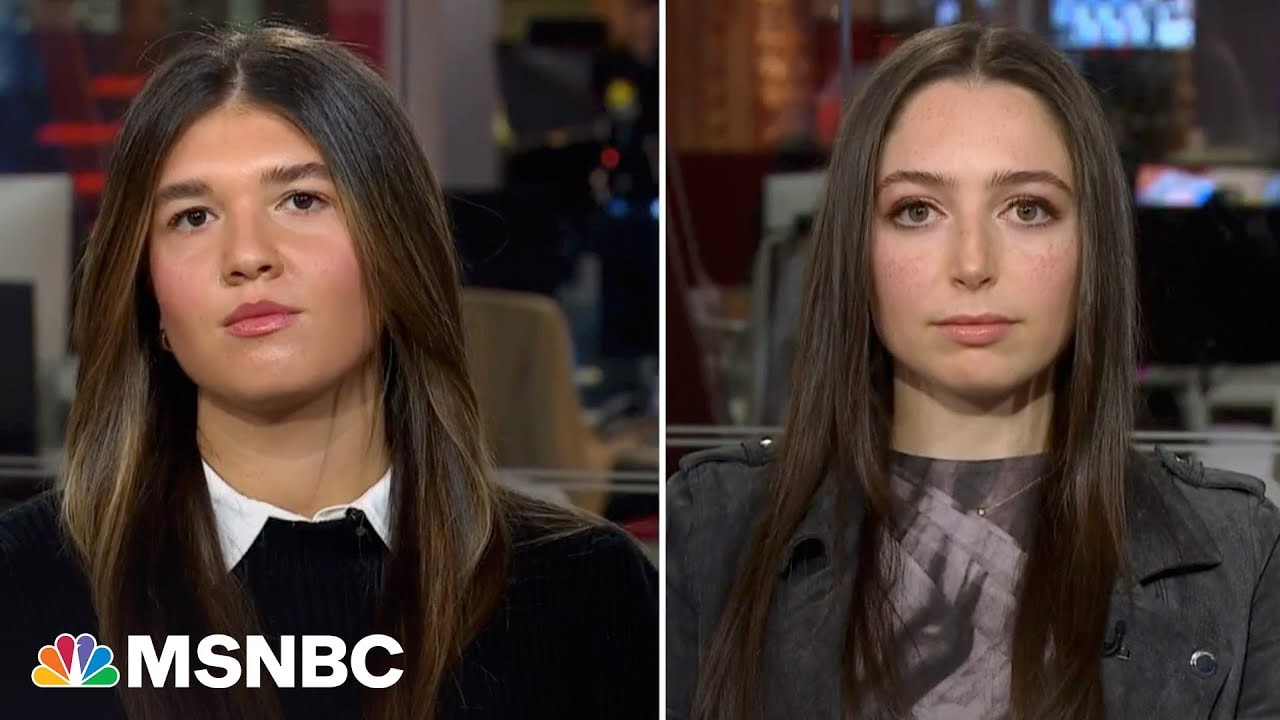
The war between Israel and Hamas is thousands of miles away, but its impact is being felt painfully close to home. Across American universities, Jewish students say they are terrified on campus, grieving the October 7 attacks while also facing threats, hostile rhetoric, protests, and a deep sense that their safety is being treated as a political debate.
This is not about shutting down hard conversations. College should be a place for questions, disagreement, learning, and serious debate. But students are drawing a clear line between advocating for Palestinian people and calling for violence against Jews.
“Antisemitism is not okay. That’s it.”
That should not be controversial. Yet for many Jewish students, that simple statement has become surprisingly difficult to say out loud without backlash.
Takeaways
- Jewish students report fear, grief, harassment, and direct threats at several American universities.
- Free speech does not protect threats, Antisemitic harassment, or praise for violence against civilians.
- Universities must enforce safety policies while preserving space for serious, respectful debate.
- Jewish student communities are responding to fear with unity, visibility, and resilience.
A Climate of Fear at American Universities
At Tulane University in New Orleans, Jewish students gathered for a unity rally after a frightening confrontation near campus. During the earlier clash between pro-Israel students and a pro-Palestinian group, an Israeli flag was burned. A Tulane student was injured, and several people who were not affiliated with the university were arrested.
University leaders condemned the violence and said outside people had come to provoke it. Still, that does not erase what students felt in the moment.
“It was terrifying.”
For students who already feel terrified on campus, incidents like this do not stay contained to one sidewalk or one afternoon. They change daily decisions. Should I wear a Jewish symbol? Should I go to Shabbat dinner? Should I speak in class? Should I walk home alone?
Those are questions no student should have to carry while trying to study, build friendships, plan a future, and simply enjoy college.
Grief Did Not Stay Outside the Classroom
Jewish and Israeli students describe October 7 as intensely personal. Many know someone who was killed, taken hostage, or directly affected. Others are only one connection away from a family living through unimaginable loss.
That grief is real. It is immediate. And it follows students into lecture halls, dorms, campus events, and public spaces.
“We are all mourning. We are all hurting.”
For some students, the shock is not only about the violence overseas. It is also about coming back to campus and hearing chants or comments that they believe cross into outright Antisemitism.
Students at New York University described hearing rhetoric such as praise for Hitler, calls to gas Jews, and threats of violence. These are not ordinary political disagreements. They are hateful statements with a long, brutal history.
For the granddaughter of Holocaust survivors, hearing language like that treated casually is especially painful. Antisemitic propaganda and dehumanizing speech are not harmless. History has shown what happens when they are normalized.
“These are not calls for peace. These are calls for the blood of Jews to be shed.”
When Diversity & Inclusion Feels Selective
Many students choose colleges because they believe those communities will value diversity, inclusion, and social justice. They expect classmates to stand up for people who are threatened because of their identity.
But Jewish students who feel terrified on campus are asking a painful question: Does that promise include us, too?
One student described feeling devastated when peers who regularly advocate for minority communities did not speak out when Jews were being threatened. To her, it felt like selective advocacy. Support was available for some groups, but silence arrived when Jewish students needed it.
“When it’s the Jews that are being persecuted, that are being threatened for their lives, there is silence.”
That silence can be isolating. It can make students question whether the people around them see their fear as legitimate, or whether it gets dismissed because of assumptions about Israel, politics, or identity.
Two things can be true at once. There can be a serious humanitarian crisis in Gaza. And there can also be grief, trauma, and fear among Jewish people after a brutal terrorist attack. Caring about one does not require ignoring the other.
Threats at Cornell Raised the Stakes
At Cornell University, the atmosphere became even more alarming after a student was arrested and charged in connection with online threats against Jewish students. The threats reportedly included violent language about harming Jews, attacking Jewish facilities, and targeting campus spaces.
For Jewish students, the danger was no longer abstract. It was not only about posters, chants, or difficult arguments. It was about explicit threats directed at their community.
“We are scared to walk outside. We are scared to go to Hillel on Shabbat. We are scared to be ourselves.”
That is what it means to be terrified on campus. A place that was supposed to feel like a dream school can start to feel uncertain. Students may wonder whether they should transfer, stay quiet, or step away from Jewish life entirely.
But there is another response taking shape, too: unity. Students described stronger Jewish communities on campus, people checking on one another, and a determination not to disappear.
“Having fewer Jews on these campuses is giving in.”
That resilience matters. It is not easy. It does not mean students are not afraid. It means they refuse to let hate decide whether they belong.
Free Speech Has Limits When It Becomes a Threat
Free speech is a foundational American value. Students strongly defended that idea. Universities should make room for difficult conversations about war, government policy, history, human rights, and competing political visions.
But students say they are terrified on campus because too many people are blurring the line between speech and intimidation.
There is a difference between criticizing the Israeli government and threatening Jewish students. There is a difference between supporting Palestinian rights and praising the murder, rape, kidnapping, or torture of civilians. There is a difference between protest and harassment.
“The line between free speech and hate speech is becoming extremely blurred.”
Universities have a responsibility to uphold free expression while enforcing their own rules against threats, harassment, and targeted discrimination. Safety policies mean very little if students do not believe they will be applied when Jewish students are the targets.
A campus can support debate without tolerating calls for violence. In fact, protecting students from threats is what makes genuine debate possible.
Why Misinformation Spreads so Quickly
Students also pointed to misinformation as a major part of the problem. College classrooms are built on trust. When a professor speaks, students often assume they are hearing an informed expert.
That makes it especially serious when professors present unsubstantiated claims as fact, share one-sided material without evidence, or pressure students to see Israeli civilians as deserving of violence.
At NYU, students raised concerns about faculty statements that, in their view, attempted to contextualize or justify Hamas’s October 7 attack. At Cornell, a professor was criticized for publicly praising Hamas’s actions. These allegations left students asking how they could learn in an environment where they felt their trauma was being minimized.
“There is no context that can justify the rape of women or the slaughter of babies.”
People can debate policy. They can debate military responses. They can debate history and the humanitarian crisis in Gaza. But deliberately targeting civilians is not something to celebrate, excuse, or package as “resistance.”
When people in positions of authority normalize that logic, students who are already terrified on campus can feel even more alone.
What University Leaders Need To Do
Some schools have begun responding. Barnard’s president created a task force to combat Antisemitism. Students welcomed the step, even as they pointed out how striking it was that a simple condemnation of Antisemitism had prompted public protest.
Task forces and statements are a start. But students need more than carefully written emails. They need consistent action.
Universities can begin by doing the following:
- Enforce existing rules against threats, harassment, intimidation, and violence.
- Protect Jewish spaces so students can attend religious services, meetings, and events safely.
- Respond clearly to Antisemitism without turning basic safety into a partisan argument.
- Hold faculty accountable when classroom conduct becomes discriminatory or unsupported propaganda.
- Make room for complexity by recognizing Palestinian suffering without denying Jewish trauma.
None of this requires a university to abandon free speech. It requires leadership. It requires moral clarity. And it requires schools to recognize that Jewish students deserve the same protection, compassion, and sense of belonging as every other community.
Choosing Strength Over Hate
Students who are terrified on campus should not have to become public spokespeople for their own safety. They should not have to defend their humanity before they can open a textbook or sit through a class.
Still, many are speaking up because silence feels worse. They are sharing their stories, supporting one another, and refusing to allow fear to erase Jewish life from the places they worked so hard to enter.
“We’ve proved before that we are resilient.”
That resilience is powerful. But it should never be used as an excuse for universities to do less. Students deserve more than survival. They deserve college years filled with learning, joy, friendship, faith, curiosity, and safety.
No one should be terrified on campus because they are Jewish. Not at Tulane. Not at NYU. Not at Cornell. Not anywhere.
RESOURCES:
This article was created from the video ‘Terrifying’ clashes and dueling campus protests amid Israel-Hamas war | https://www.youtube.com/watch?v=OOBSFlo9rgA with the help of AI.
PHOTOS & VIDEOS Use According to Section 27 A
Watch More: Academia...
- US Universities, Harvard & the Hogwarts Code of Conduct
- ACADEMIC COLLAPSE: Jason Arday & the Cambridge’s Crisis
- Jewish Students Harassed on Campus
- Cornell Prof. Praises Hamas October 7 Attack
- Massacre Scholarships: Prank Call to Harvard University
- Columbia University is Pro-Palestine | Prof. Speaks Out
- Survey: American Youth Favors Hamas Taking Over Israel
- Game: Hamas Supporters—What Do They Really Support?
- Professor: Don’t Hire My Antisemitic Law Students
- Why Jewish Students Feel Terrified on Campus