Violence and hatred become routine when a society trains itself to stop naming the ideologies that produce them. When outrage is silenced by moral labels, civilized repair mechanisms, is when honest diagnosis, debate, and correction atrophy.
- That is the core argument: good intentions, untethered from clear thinking, can turn into moral blindfolds.
- The consequence is not just policy missteps. It is civilizational decline.
Shock, Numbness & the Data That Should Wake Us
Horrific acts of violence provoke immediate moral pain. But repeated exposure breeds a quieter, more dangerous reaction: numbness. The right response is not only feeling but also clear-eyed analysis. We cannot fix what we refuse to describe honestly.
Two facts illustrate the scale of the problem. First, a very large number of Islamist-linked terror attacks have occurred globally since 2001. Second, when people refuse to let ideas about religion or identity be criticized, a shield forms that prevents corrective action. That shield often takes the form of moral accusations that instantly end debate.
Suicidal Empathy: When Compassion Becomes Self-Destruction
Empathy is a biological and social tool.
- It helps us cooperate, form relationships, and bind communities.
- But like any tool, it can be misapplied.
- Empathy can become unbounded and unmodulated.
When empathy is applied equally to perpetrators and victims, to alien ideologies, and to the defenders of a society, it becomes suicidal.
Think of two distinct systems in the human mind: cognition and affect. Cognition helps evaluate evidence and run cost-benefit analyses. Affect drives quick, intuitive responses. Both are essential, but each has its own moments. Suicidal empathy is the phenomenon that hijacks the affective system to override necessary cognitive checks: an emotional reflex to forgive, to absolve, and to prioritize not offending or alienating others above protecting your own society.
“If you have too little empathy you are called a psychopath. If you have too much empathy, you are called the West.”
The Parasitic Mind: How Ideas Hijack Reason
There is a biological metaphor worth keeping in mind. Certain parasites alter animal behavior to benefit themselves—for example, making an insect jump into water to complete its life cycle. Ideologies can act similarly, hijacking human minds and redirecting energies away from the survival and flourishing of the host society.
When an ideology becomes parasitic, it does three things:
- It narrows acceptable argumentation and labels dissent as immoral.
- It co-opts emotional responses—shame, guilt, and fear of ostracism—to silence criticism.
- It blocks institutional correction by making honest analysis taboo.
Islamophobia as a Silencing Weapon
Terms like “Islamophobia” function less as neutral descriptions and more as a conversational halt. Once the accusation lands, most people stop arguing because the cost of defending a position is reputational and social exile. The effect mirrors other modern taboos—accusations of racism, sexism, or transphobia have the same rhetorical power—and when deployed strategically, they place a metaphorical gun to the head of debate.
That rhetorical move creates an epistemic shield: if an idea cannot be criticized because criticism is branded immoral, there is no mechanism left to correct dangerous beliefs or practices. When that happens at scale, societies become vulnerable to trends they cannot even name, let alone resist.
Why a “Peaceful Majority” Can Still Be a Civilizational Risk
Some arguments posit that because the overwhelming majority of members of a religious or ethnic group are peaceful, the risk is negligible. That is a statistical misread when the peaceful majority includes large numbers who tacitly tolerate or do not oppose violent doctrines or rhetoric heard in religious institutions or community spaces.
When you begin to trace concentric circles of culpability—active perpetrators, passive approvers, silent listeners—the number of people enabling harmful ideologies grows well beyond the violent minority. Effective policy must weigh not only the actors who pull the trigger but also the social networks that normalize, excuse, or fail to counteract extremist rhetoric.
Vetting Immigrants: A Practical Problem, Not a Moral Failing
Vetting looks good on paper. But genuine vetting demands more than asking scripted questions that are easy to game. If belief systems include sanctioned deception or if respondents can say what pleases an interviewer, then self-reported answers are unreliable. Screening must rely on robust, multilayered methods—background checks, community assessments, and an appreciation of cultural signaling—because there is no magic questionnaire that reveals private convictions.
Policy choices about immigration are ultimately trade-offs. The benefits of openness must be weighed against potential social costs. Societies that refuse to perform that calculus because of guilt, moral vanity, or fear of offending will find themselves on a trajectory where unintended consequences accumulate.
When Western Policies Are Driven by Suicidal Empathy
Examples of policymaking led by excessive compassion are easy to spot:
- Open-door immigration policies with insufficient safeguards and resource planning.
- Criminal justice reforms that remove deterrence without addressing underlying pathology or accountability.
- Fiscal policies that socialize costs in ways that reward irresponsible choices while penalizing productive contributors.
These are not arguments against compassion. They are arguments for properly calibrated compassion—one that protects human dignity without abandoning prudence, security, and truth-telling.
Personal History: Why Some Warnings Come from Experience
Firsthand experience with endemic hatred sharpens perception. Growing up Jewish in a majority Arab country in the modern Middle East provided repeated lessons about how normalized hostility takes root: public chants, schoolyard declarations, social marginalization, and eventually institutionalized exclusion or persecution.
These experiences are not abstractions. They reveal patterns: early normalization of hate, incremental steps toward exclusion, and the exploitation of liberal tolerances by actors who will not reciprocate those freedoms on equal terms.
Is the Conflict About Land or Identity & Theology?
When ideology frames territory not as real estate but as sacred inheritance, the dispute transcends a mere land conflict. Certain interpretations treat lands that were once under Islamic rule as perpetually subject to reconquest. Under that framework, coexistence is conditional and hierarchical rather than genuinely equal. Recognizing the doctrinal dimension is essential to crafting policies that address not only material claims but also existential aspirations.
One Message in Arabic, Another in English
Political actors often deliver different messages to different audiences. Moderates and diplomats speak conciliatory language to Western media; religious and local audiences hear a far harsher, more absolutist rhetoric. This dual messaging is a deliberate strategy: it preserves international legitimacy while mobilizing domestic supporters.
Western policymakers and citizens must learn to read these divergent signals with cultural theory of mind. Generosity can be mistaken for weakness when interpreted through a countercultural lens that prizes honor and strength. Failing to anticipate how actions are perceived abroad produces predictable—and avoidable—backlash.
Where to Start Fixing It
Repair requires three things:
- Restore the right to name and criticize ideas. Honest debate is not bigotry; it is the precondition for reform.
- Recalibrate empathy. Compassion must be balanced with prudence and the hard work of trade-off analysis.
- Design policies that account for cultural signaling. Immigration, integration, and counter-radicalization programs must be informed by realistic assessment, not wishful thinking.
These steps are difficult. They require courage, intellectual honesty, and an appetite for uncomfortable facts. But without them, societies will continue to inflict wounds on themselves under the banner of moral superiority.
Empathy and tolerance are virtues when grounded in truth and paired with reason. When they are detached from reality, they become instruments of decline. The corrective is not less compassion but smarter compassion, courageous enough to name threats, clear enough to analyze trade-offs, and honest enough to prioritize the protection and flourishing of future generations.
RESOURCES:
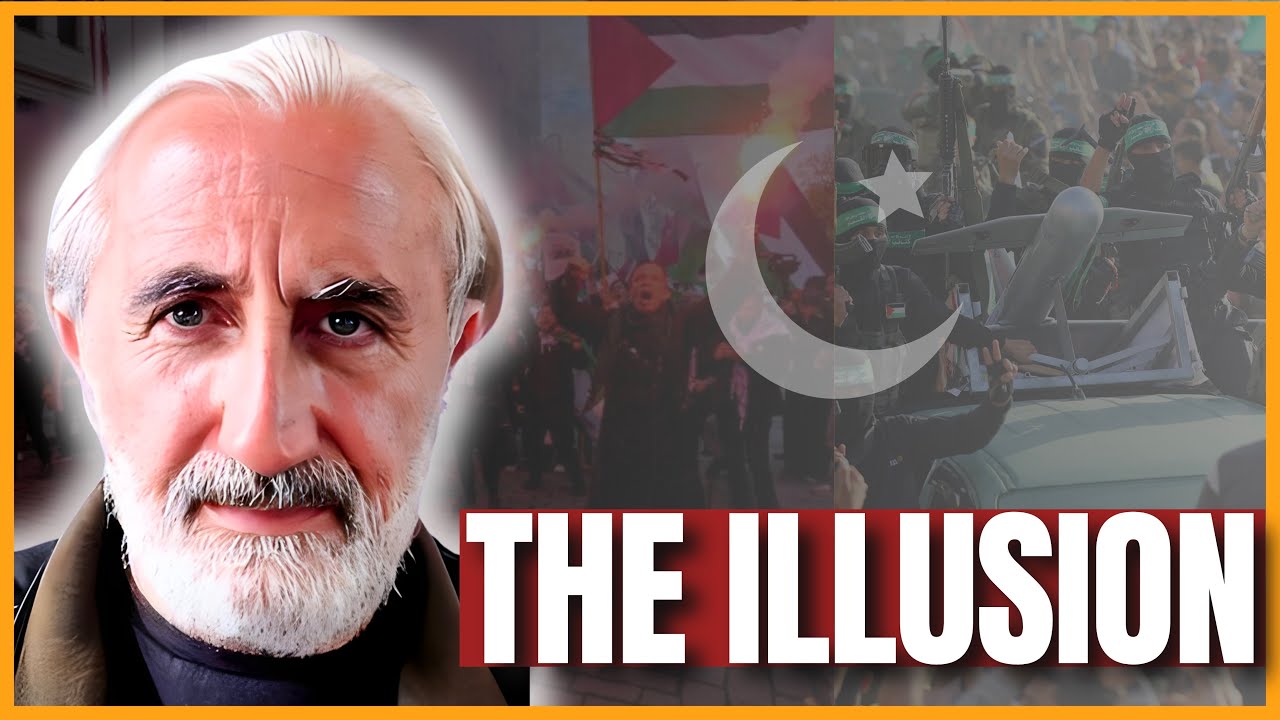
This article was created from the video Gad Saad: What Happens When a Civilization Can’t Tell the Truth | https://www.youtube.com/watch?v=goILWIw-kYk with the help of AI.
PHOTOS & VIDEOS Use According to Section 27 A
Watch More: WEST COLLAPSE - Death Wish Meets Death Cult...
- Muslims, Jews & the West’s Self-Hatred – Benedict Beckeld
- Why Israel Rejects Western Guilt | Dan Schueftan
GAD SAAD
-
- 'Suicidal Empathy': When a Civilization Can’t Name the Threat | Gad Saad
- Suicidal Empathy & Mind Viruses | Gad Saad
- Woke–Islamic Alliance? Immigration, Suicidal Empathy & Future of Western Culture | Gad Saad
- Gad Saad Destroys Piers Morgan’s Islam Narrative with Facts!
- Psychology of Irrational Empathy: Fueling Cultural Chaos | Dr. Scott Atlas & Gad Saad
- The West's Suicidal Empathy | Gad Saad
- Raymond Ibrahim—Islam, Islamic Conquests & Christendom | Gad Saad | MUST WATCH!
- Israel, Islam, the Jews & the West | Gad Saad
- Americans Have No Idea What the Islamic World is Planning… | Gad Saad | URGENT MESSAGE TO THE WEST
- 'Islam, Israel & the West': Truth, Freedom & the Fight for Civilization | Ex-Muslim
MORE