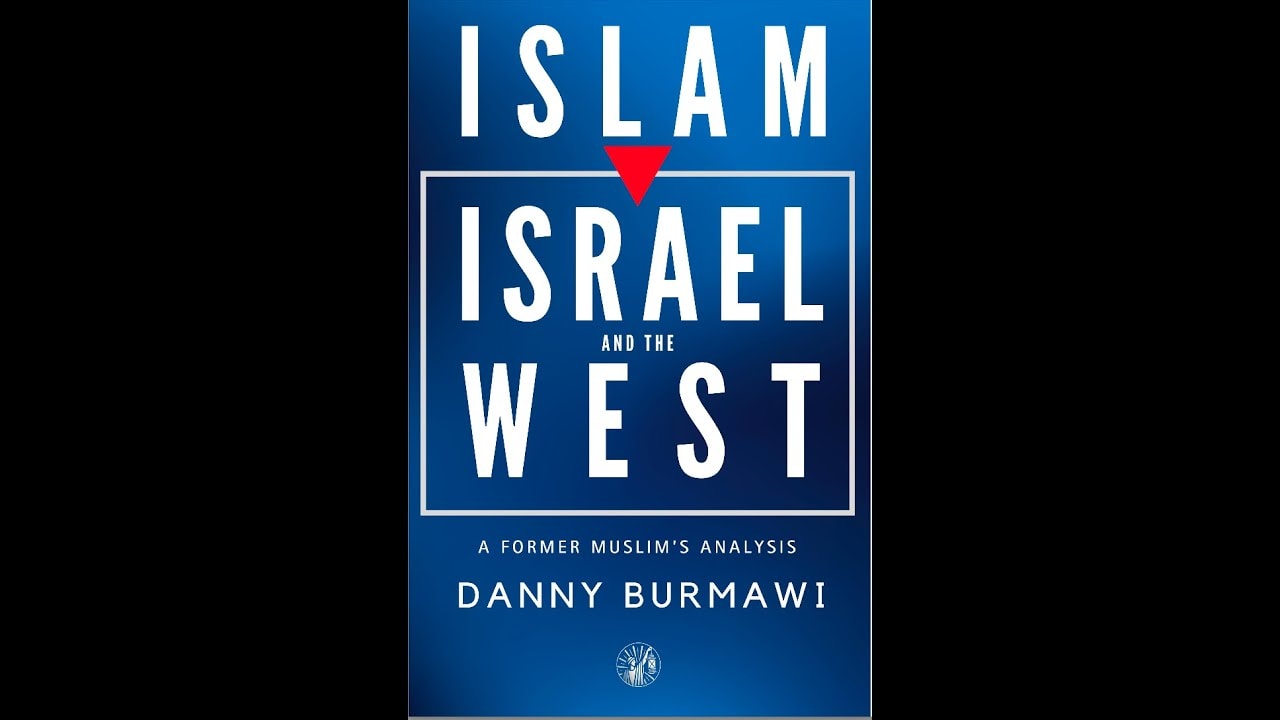
Islam, Israel, and the West is not just the title of my book. It is the story of three worlds colliding: the Islamic world I was born into, Israel and the Jewish people I was taught to fear, and the Western civilization that gave me the freedom to speak honestly.
It is also a deeply personal story. I was born in Jordan, raised in a Muslim family, and taught the familiar narratives of the Middle East. Jews were enemies. Israel was evil. Islam was perfect. And anyone who challenged those ideas had to be either ignorant, immoral, or paid by some shadowy force.
But truth has a funny way of showing up. Sometimes it arrives through a book. Sometimes, through a painful question. And sometimes through a kind stranger who does not fit the hateful picture planted in your mind.
“A belief can survive for generations when nobody is allowed to examine it honestly.”
The conversation around Islam, Israel, and the West must begin with honesty. Not hatred. Not panic. Not slogans. Honesty.
Takeaways
- Leaving Islam can carry serious social, family, and personal security consequences.
- Anti-Jewish conspiracy theories can shape entire communities by replacing truth with suspicion.
- Political Islam challenges free societies when religious authority seeks control over public law.
- Truth and compassion must work together to protect freedom without demonizing individual Muslims.
From Jordan to Lebanon to America
I spent the first 19 years of my life in Jordan. Like many young Muslims, I was emotionally shaped by events that seemed to demand loyalty and action. In 2006, during the Danish cartoon controversy, I heard a sermon from a Kuwaiti imam calling on the “nation of Muhammad” to defend Islam and its prophet.
I was 18. I was sincere. And I was fired up.
For about a year, I devoted myself to Islam with real passion. I went to the mosque five times a day. I read Islamic history. I read the Quran. I wanted to serve God. I wanted to defend what I believed was true.
Then I encountered the Gospel and the New Testament. That encounter changed my life. I became a Christian, and because I have never been great at hiding what I think, I told people.
That did not go over well.
At first, people did not take me seriously. Then they began to see me as a threat. I was called into the Jordanian intelligence office and told not to speak publicly about Christianity, Christ, or Islam. I was given a warning, partly because of my tribal background. But the message was clear.
“Believe whatever you want privately. Just do not challenge the system publicly.”
I tried to attend churches in Jordan. My first experience was not exactly warm. One priest threw me out and yelled at me. Many Christians in the region live relatively comfortable lives as long as they stay quiet, avoid politics, and do not openly challenge the religious order around them.
Eventually, I moved to Lebanon, where I spent 15 years. I studied theology and worked with a global Christian organization across eight Arabic-speaking countries. In 2023, shortly before October 7, my wife and I decided that we did not want our newborn son to grow up in an atmosphere of fear and limitation. We moved to the United States.
That journey is one reason Islam, Israel, and the West are personal. This is not abstract theory for me. It involves family, faith, fear, language, history, and the future of my child.
The Price of Leaving Islam
When someone leaves a child, the future is not “Maybe he found something true.” It is almost always, “Who paid him?”
At first, I was accused of being paid by missionaries or evangelicals. Later, after speaking more openly about Israel and Jewish history, the story changed. Now the claim is that Mossad recruited me, handed me piles of money, and sent me out to spread propaganda.
It is almost funny. Almost.
People imagine that anyone who says something outside the approved narrative must be bought. The possibility that someone might take risks because he believes he is telling the truth is almost impossible for them to accept.
“What exactly is the value of money if telling the truth puts your life and your family at risk?”
I do not say that for drama. I live with anxiety. I think about security. I am careful in Arabic grocery stores. I wear a cap or sunglasses because I do not always want to be recognized. That is a sad reality, but it is part of the reality.
My immediate family did not react in the same way as every family in the region. My father has always loved books and was more open than many people. My mother became more religious, perhaps trying to compensate for my departure from Islam. One of my brothers became radical at one point and threatened me. Thankfully, he later changed.
Still, I must be cautious whenever I return to Jordan. It only takes one person who believes he has a sacred duty to punish an apostate.
This is one of the uncomfortable questions at the center of Islam, Israel, and the West: Can a society be free if leaving a religion can make someone a target?
Growing Up With Anti-Jewish Conspiracies
Jew-hatred in the Middle East is not always presented as hatred. It is often served as common sense, humor, religion, history, and “what everybody knows.”
I grew up surrounded by wild conspiracy theories. Pepsi supposedly meant “Pay Every Penny Saving Israel.” Coca-Cola was said to contain anti-Islamic messages if you looked at the logo in a mirror. A belt with a magnet was rumored to be an Israeli plot to stop Arabs from having children.
These stories sound ridiculous when written out. But they can ruin businesses, shape imaginations, and build a worldview where Jews are behind every failure, every conflict, and every strange event.
In that environment, “Jew” can become a word for evil itself.
“When every bad thing is explained through a Jewish conspiracy, people stop asking serious questions.”
I remember visiting Petra in Jordan as a teenager with a Palestinian friend. My friend was climbing a dangerous rock, and people walked by without helping. Then a group stopped. A woman refused to leave until he climbed down safely. She was concerned for his life.
Later, I learned that the group was Israeli.
That moment created a crack in the narrative. I had been taught that if Jews showed kindness, it must be manipulation. But there was no manipulation. Just a woman worried about a reckless teenager on a dangerous cliff.
That is how cognitive dissonance begins. Your inner story says one thing. Reality says another. And then you must choose: protect the story or follow the truth.
The core concern in Islam, Israel, and the West is not that every Muslim hates Jews. That is plainly false. The concern is that anti-Jewish hostility can be sanctified through religious teaching, political propaganda, and historical myths.
Why Israel Became the Target
One major question is why Jewish sovereignty became so explosive in the Middle East. Jewish communities, migrations, institutions, and cities existed long before the modern conflict reached its present form. Tel Aviv, for example, was founded in 1909.
The bigger change came when the Ottoman caliphate collapsed in 1924, and Jewish political sovereignty became a serious possibility. As long as Jews were understood as living under the umbrella of Islamic rule, they could be tolerated as a subordinate minority. But sovereignty was different.
Lebanon, Syria, Jordan, and other states could exist. But a Jewish state? For many, that was unacceptable.
“The issue was not simply Jewish presence. The issue was Jewish independence.”
That is why Islam, Israel, and the West examine the political manufacturing of the Palestinian cause. Different players have used it for their own interests: Arab nationalists, Islamist groups, the Muslim Brotherhood, Iran, leftist movements, and political actors in the West.
Each group rides the same donkey in a different direction.
The problem is not compassion for Palestinians. Human suffering deserves compassion. The problem is a narrative that erases Jewish history, turns Israel into the world’s ultimate villain, and blocks any serious discussion of peace, coexistence, or responsibility.
After October 7, this became even clearer. The attack came as Saudi Arabia appeared to be moving closer to normalization with Israel. Hamas, backed by Iran, helped sabotage a possible regional shift toward peace.
That is not an accident. Chaos serves those who need the conflict to continue.
The Challenge of Reforming Islam
People often say Islam can simply reform in the same way Christianity or Judaism experienced reform movements. It is a hopeful idea. But hope should not replace analysis.
Islam has a structural problem that makes reform extremely difficult. The Quran is understood by many Muslims as the final, perfect, unchanging word of God. More importantly, Muhammad is seen as the ultimate moral example.
That means reform is not only about reinterpreting a verse. It requires confronting the model of Muhammad himself.
“If the perfect moral example sets the ceiling, then moral improvement becomes nearly impossible.”
In Islam, Israel, and the West, I describe this as the moral ceiling. If Muhammad is the complete and final model of morality, Muslims are not encouraged to surpass him. They are encouraged to imitate him.
That changes the meaning of many important words. Peace can mean submission rather than reconciliation. Justice can mean enforcing religious hierarchy rather than equal treatment. Tolerance can mean allowing non-Muslims to survive as second-class subjects, not recognizing their equal freedom.
This does not mean every Muslim lives this way. Most Muslims are ordinary people dealing with jobs, families, school, bills, and daily life. But ideas matter. Sacred ideas matter even more.
When hatred is rooted in a religious framework, it is harder to challenge because criticism can be treated as blasphemy.
Truth & Love Must Stay Together
I do not want anyone to use Islam, Israel, and the West as an excuse to hate Muslims. That would betray the whole purpose.
Hatred does not produce freedom. It produces more hatred. And if we build our response on rage, we will become destructive ourselves.
But love without truth can also become destructive. It can become suicidal.
“Compassion without clarity protects the very ideas that keep producing suffering.”
The West often insists that Islam is a religion of peace and that jihadist violence has nothing to do with Islamic texts, history, or theology. That response may feel kind. But it does not encourage Muslims to examine difficult teachings.
If the outside world says, “Everything is perfect; nothing needs scrutiny,” why would anyone reconsider anything?
Truth is not cruelty. Asking whether apostasy laws are compatible with freedom is not hatred. Asking whether blasphemy laws can coexist with free speech is not bigotry. Asking whether political Islam threatens pluralistic societies is not racism.
These are necessary questions for Islam, Israel, and the West, for Muslims, for Jews, for Christians, and for anyone who values liberty.
Why the West Is Becoming a New Center of Political Islam
There is a strange reversal happening. In countries such as Saudi Arabia, Jordan, Egypt, and the United Arab Emirates, governments restrict the Muslim Brotherhood and other political Islamist movements. They allow personal religious practice, but they limit political Islam because they understand its destabilizing potential.
Meanwhile, parts of the West are becoming more welcoming to the same ideas.
Some Western activists, academics, and politicians treat political Islam as merely another oppressed identity. They defend Islamist movements without understanding their aims, their theology, or their long-term political ambitions.
And some Western non-Muslims now lecture Arabs and former Muslims about Islam, even though they have never lived under its political system.
“The people who escaped political Islam are being told by outsiders that political Islam is harmless.”
That is upside down.
Many Arabic-speaking people are questioning Islam openly today. Social media has created space for former Muslims, Christian converts, reform-minded Muslims, and Arab critics to speak. The number of people expressing disenchantment is much larger than many Westerners realize.
But Arabic-language access to serious historical material remains limited. If people do not know what to search for and cannot read English, they are often trapped inside a closed narrative.
That is why I chose to speak in English. Arabic voices need to reach the West directly. It is much harder to dismiss someone who knows the language, has lived the culture, understands the theology, and can provide evidence.
Freedom Cannot Survive Fragmented
The concern is not that Muslim immigrants will suddenly impose public beheadings or morality police on every street. That is not how social change works.
The concern is slower. It is about institutions, voting blocs, activist organizations, speech restrictions, religious pressure, and the gradual reshaping of public norms.
When one group successfully demands that its prophet, scripture, or religion be immune from criticism, other groups will eventually demand the same privilege. Freedom becomes fragmented. Then it fades.
Lebanon offers a warning. Once religious communities begin treating political power, law, and public identity as sectarian property, society becomes fragile. Every issue is filtered through religious belonging. Every disagreement becomes existential.
“When one group gets legal power to silence criticism, every group learns the same dangerous lesson.”
The West should not copy Lebanon’s path.
Political theorists speak about an overlapping consensus. People can disagree about theology, morality, and ultimate meaning while still agreeing on basic rules of coexistence. Those rules include:
- Freedom of speech, including criticism of religion.
- Freedom of religion, including the freedom to leave a religion.
- Equal citizenship under one law.
- Protection of women, minorities, and dissenters.
- No religious movement is gaining political power to impose sacred law on everyone else.
If those foundations collapse, pluralism collapses with them.
Islam As Religion & Political Movement
One practical point in Islam, Israel, and the West is that Islam should not be treated only as a religion. Islam includes spiritual practices such as prayer, fasting, charity, and personal devotion. But it also contains political ambitions and legal claims.
A political ideology has three broad features:
- A set of beliefs about society and human life.
- A desire to spread those beliefs.
- An ambition to gain political power and impose those beliefs through law.
Christianity has beliefs and a mission to spread them. But it does not require Christians to take political power in order to establish a religious legal system over everyone else.
Islam, in its political form, includes that third element. It calls for the religion of Allah to be supreme. In that context, religion is not merely private spirituality. It includes the law of the land.
Recognizing this distinction does not require banning Muslims from praying, fasting, worshiping, or living peacefully. It means governments must be able to distinguish private faith from political movements that seek to replace democratic law with religious law.
Immigration policy matters here too. A country cannot ignore demographic changes forever and then expect a few symbolic legal measures to fix everything later. Laws matter. But numbers, institutions, cultural confidence, and civic expectations matter too.
Hopeful, But Not Naive
I am a Christian, and I remain hopeful. I believe the world can become better. Human beings have made real progress in health, education, opportunity, and peace. Progress is not automatic, but it is possible.
Still, hope is not denial.
I hope the West protects the civilization it inherited. I hope Muslims are free to examine their faith without fear. I hope Jews are not forced once again to live under the shadow of ancient hatred dressed up in modern slogans. And I hope Arab societies can escape the intellectual prison that has plagued the region for centuries.
“I am hopeful about the future, but I prepare for the worst.”
That is the spirit of Islam, Israel, and the West. Speak clearly. Love people. Reject hatred. Defend freedom. Tell the truth even when it costs you.
Because silence does not create peace. It only gives dangerous ideas more room to grow.
RESOURCES:
This article was created from the video Danny Burmawi – Ex-Muslim and Author of “Islam, Israel and the West” (THE SAAD TRUTH_1922) | https://www.youtube.com/watch?v=i2rREr056w8 with the help of AI.
PHOTOS & VIDEOS Use According to Section 27 A
Watch More: WEST COLLAPSE - Death Wish Meets Death Cult...
- Muslims, Jews & the West’s Self-Hatred – Benedict Beckeld
- Why Israel Rejects Western Guilt | Dan Schueftan
GAD SAAD
-
- 'Suicidal Empathy': When a Civilization Can’t Name the Threat | Gad Saad
- Suicidal Empathy & Mind Viruses | Gad Saad
- Woke–Islamic Alliance? Immigration, Suicidal Empathy & Future of Western Culture | Gad Saad
- Gad Saad Destroys Piers Morgan’s Islam Narrative with Facts!
- Psychology of Irrational Empathy: Fueling Cultural Chaos | Dr. Scott Atlas & Gad Saad
- The West's Suicidal Empathy | Gad Saad
- Raymond Ibrahim—Islam, Islamic Conquests & Christendom | Gad Saad | MUST WATCH!
- Israel, Islam, the Jews & the West | Gad Saad
- Americans Have No Idea What the Islamic World is Planning… | Gad Saad | URGENT MESSAGE TO THE WEST
- 'Islam, Israel & the West': Truth, Freedom & the Fight for Civilization | Ex-Muslim
MORE