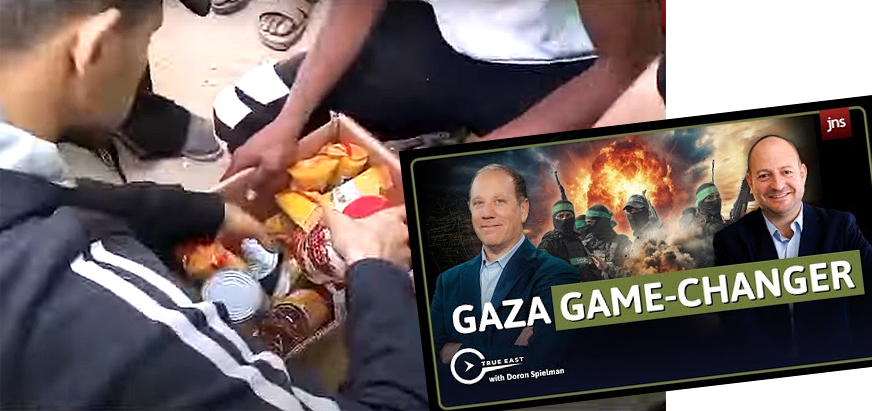
Israel Shifts Strategy in Gaza & Aims to Defeat Hamas – Major Amiad Cohen
Key Themes:
- Food distribution in Gaza by the IDF
- Shift in Israeli military strategy
- Role of Bedouin tribes in Gaza
- Israeli conservative youth trends
- Hamas and the population separation strategy
- Potential Israeli strike on Iran
- US-Israel relations and military support
For the first time in 600 days, food is entering Gaza directly by the IDF. But something has changed. It’s not IDF troops that are protecting these food distribution centers or the convoys.
Major Concepts & Lessons
Here is a comprehensive overview of the recent episode of the True East podcast, which delved into significant developments in the Gaza Strip and broader geopolitical dynamics involving Israel and its regional challenges. Below are the key lessons and concepts to carry forward from this insightful discussion:
Shift in Humanitarian Aid Strategy in Gaza
- For the first time in 600 days, the Israel Defense Forces (IDF) are directly involved in distributing food in Gaza, marking a significant shift from previous reliance on international humanitarian aid groups.
- This change aims to sever the connection between Hamas and the Gazan population by directly providing aid, thereby reducing Hamas’s control over resources and its ability to profit from aid distribution.
Emergence of Local Militia Support
- The podcast highlighted the involvement of local Bedouin tribes, specifically the Abu Shabab gang under the Tarabin tribe, in securing food distribution centers. This collaboration indicates a strategic shift in local alliances, as these groups assess the likelihood of Israel’s victory over Hamas.
Conservative Trends Among Israeli Youth
- A notable trend discussed is the increasing conservatism among Israel’s younger generation, characterized by a strong belief in national defense, traditional values, and free-market economies. This demographic shift is influencing Israel’s socio-political landscape and its approach to national security.
Geopolitical Implications and Military Strategy
- The discussion touched on the broader geopolitical implications of Israel’s military strategy, including the potential for a decisive victory over Hamas and the strategic importance of holding territory in Gaza.
- The conversation also explored the potential for future military action against Iran, with the possibility of US support, as part of a broader strategy to address regional threats.
US-Israel Relations and Regional Stability
- The podcast highlights the significance of US-Israel relations, particularly in the context of potential military actions and the broader objective of regional stability. The US’s stance, as articulated by former President Trump, emphasizes support for Israel’s security needs while navigating complex diplomatic negotiations.
Realism in Middle Eastern Politics
- A recurring theme was the pragmatic approach Israel is taking in dealing with local militias and regional threats. This realism reflects an understanding of the complex tribal, religious, and political dynamics in the Middle East.
In conclusion, the podcast provided a nuanced analysis of the current situation in Gaza and the broader regional context. It highlightss the strategic shifts in Israel’s approach to humanitarian aid, military operations, and alliances, as well as the evolving socio-political landscape within Israel itself. These developments have significant implications for regional stability and the future of Israeli-Palestinian relations.
I encourage you to reflect on these insights and consider their broader implications as we continue to monitor the evolving situation in the Middle East.
RESOURCE: Hamas PANICS! Israel’s HIDDEN strategy they didn’t see coming w/Amiad Cohen – True East | https://www.youtube.com/watch?v=hokMPXDfVSk&t=10s