“They gotta make a deal. They gotta make a deal.” Sure, Mr. President. They already have, and it’s not with you. There is no deal you can offer the Muslims that would be a deal to die for, because Allah already clinched that one.
***
Dr Anjuli Pandavar is a British writer and social critic who holds a PhD in political economy. She was born into a Muslim family in apartheid South Africa, where she left Islam in 1979. Anjuli is preparing to convert to Judaism. She is one of the staunchest defenders of Israel and a constructive critic of the Jewish state when she believes it is warranted. She owns and writes for “Murtadd to Human,” where she may be contacted.
Those who urge US President Donald Trump to reject the gift of a luxury $400 million aircraft from the rulers of Qatar only ever see peace, never war, even when missiles and bullets fly all over the place. How much more so, when the offensive object in flight is a gleaming “palace in the sky?” Qatar’s “gift” of a super-opulent Boeing 747-8 was not a peaceful gesture, but a hostile act, an act of psychological warfare.
Donald Trump is a man easily flattered. Even the charisma-challenged Erdoğan, the gangster-dictator Putin, and the shape-shifting terror boss Al-Julani all managed to charm the billionaire real estate mogul. “He’s a great guy. We get along. I like him a lot,” is the US President’s standard response to warnings against the wiles of such scumbags. Even Trump’s most staunch supporters are alarmed that the “palace in the sky” is a reward for something, or an inducement to something. But the billionaire top boss has the magic.
What everyone seems to forget is that there is a war going on, in which Qatar’s boys are getting hammered and Donald Trump is supporting the side doing the hammering. Everything that transpired during the President’s visit to the Middle East, as perceived by Middle Eastern leaders, must be viewed in the context of the current Middle Eastern conflict. While Donald Trump is a man with a golden heart, he is also petulant and fickle, like someone still bearing an early-life resentment.
Qatar plays a high-stakes game on a tightrope. In this bizarre micro-state of fewer than a million citizens, over 2 million foreign quasi-slaves do the work. Here, they dismiss those who “bang on” about their horrific working conditions with “Death is part of life.” Qatar sits atop a vast and expensive resource, natural gas, and as an Arab Muslim state, it does with its natural resources what Arab Muslims have traditionally done: plunders them. The spoils go on conspicuous consumption, hand-outs to citizens, and jihad.
Qatar is a major force in jihad, yet with only a few thousand citizens, it has hardly any armed forces to speak of. So, who does its fighting and who deters its enemies?
Answer: its principal enemy, the United States of America.
How does Qatar pull off such a feat? By having its principal enemy maintain a vast airbase, Al-Udeid, on its tiny territory! Its other enemies are all deterred, and to its principal enemy, the base projects kinetic power over a region many thousand times larger than Qatar. To its principal enemy, the United States, Qatar effectively ceases to be an enemy and becomes an ally.
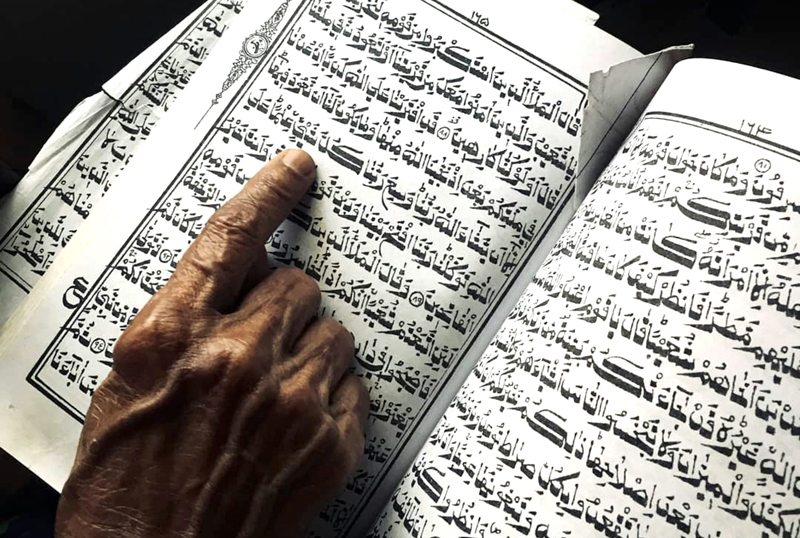
This is Qur’an 3:28 at its finest:
“Let not the believers take unbelievers for their friends in preference to believers. Whoever does that has no connection with Allah unless you are guarding yourselves against them, taking security. Allah bids you to beware of him. To Allah is the journeying.” (My emphasis)
Hate them all, even as you smile at them, or give them $400 million jets. Ibn Kathir, in his exegesis of Qur’an 3:28, makes clear that Muslims who fear the kufaar:
“They are allowed to show friendship to the disbelievers outwardly, but never inwardly. For instance, Al-Bukhari recorded that Abu Ad-Darda’ said, ‘We smile in the face of some people although our hearts curse them.’ Al-Bukhari said that Al-Hasan said, ‘The Tuqyah [Taqiyya, AP] is allowed until the Day of Resurrection.’” (Tafsir Ibn Kathir, 3:28)
Qatar’s one security priority above all else is to make sure the Al-Udeid airbase remains, naturally.
The $400 million aeronautically themed gift is more than just subliminal. It is a psychological body blow. It’s message: The President of the greatest kafir power the world has ever known can be bought for $400 million, the kind of money we give away. Of all the Americans we’ve got eating out of our hands, this one’s the biggest. No one will not eat out of our hands.
The Western mind is a curious thing. Gregg Roman, Executive Director of Middle East Forum, says of Benjamin Baird’s book “America for Sale: Qatar’s $40 Billion Spending Spree Buys Influence and Control of Elite Institutions” on Middle East Forum:
“The numbers speak plainly: $33.4 billion into businesses and real estate; $6.25 billion to universities; $72 million to lobbyists. Qatar purchases access to our corridors of power while simultaneously funding Hamas terrorists who seek our destruction.”
Roman lines up the dots, but fails to connect them despite going on to say:
“The pattern is clear: Qatar targets critical infrastructure, including our energy grid. It bankrolls academic departments that foment campus unrest, buys Manhattan skyscrapers, and infiltrates Silicon Valley. Its capital flows to Washington insiders who shape Middle East policy.”
Under the subheading, “Masters of Soft Power Strategies,” Baird reports:
“The State of Qatar—a tiny, gas-rich emirate with just 300,000 citizens—projects prestige and influence well beyond its borders. The Persian Gulf powerhouse leverages its abundant financial resources as a geopolitical force multiplier, purchasing prestige and influence where other countries rely on military strength, diplomatic alliances, and cultural exports to establish their global standing.
“Qatar’s state agents have developed a sophisticated arsenal of soft power strategies to project influence on the global stage, often advancing an agenda that conflicts with Western values, particularly concerning human rights, democracy, and religious extremism. From hosting billionaire Hamas terrorist leaders in Doha’s high-rise hotels and luxury villas to bankrolling jihadist militias in Syria and Libya, Qatar remains a prolific state sponsor of terror. Furthermore, the emirate’s record of labor and immigration abuses, history of bribery and corruption, and support for extreme Islamist organizations and causes stand in direct contrast to the image that Doha seeks to cultivate on the international stage.
“As a master of soft power stratagems, Qatar burnishes its image by employing mass media manipulation through its Al Jazeera news conglomerate, while buying up professional sports teams around the world and hosting the 2022 World Cup in a practice called ‘sportswashing,’ all to distract the public from Qatar’s reactionary ideology [not Islam? Ed.] and authoritarian leadership. Doha’s financial support for global education initiatives provides access to intellectual elites and the opportunity to influence academic views on a wide range of sensitive political topics.
“Qatar’s not-so-soft power tools—from bribery to espionage to corruption—offer insights into its true identity as an unscrupulous middle-power micro-state. Doha’s recent misdeeds include bribing soccer officials ahead of the World Cup, planting agents in the Israeli prime minister’s office, and hiring a former CIA officer to discredit Senate Republicans who sought to designate the Muslim Brotherhood as a terrorist group.” (My emphasis)
Why would “an unscrupulous middle-power micro-state” go to the trouble of “hiring a former CIA officer to discredit Senate Republicans who sought to designate the Muslim Brotherhood as a terrorist group”? Baird finds no hint anywhere, not even in:
“…often advancing an agenda that conflicts with Western values, particularly concerning human rights, democracy, and religious extremism. From hosting billionaire Hamas terrorist leaders in Doha’s high-rise hotels and luxury villas, to bankrolling jihadist militias in Syria and Libya, Qatar remains a prolific state sponsor of terror.”
This entire litany of infiltration and ideological subversion amounts to one thing and one thing alone: destroy their enemy’s will to fight. This has to be the most elaborate psychological warfare operation since the heyday of the KGB.
But no one sees Qatar as an enemy, because no one sees a war. At best, they see a corrupt, hypocritical statelet. Even with those who perceive Qatar’s “palace in the sky” gift to the President as a Trojan horse, the implications of what they discern do not sink in. Right-wing Trump supporters are watching this movie, but see only random alarming frames.
FactCheck.org summarises these responses as follows:
- Sen. Ted Cruz of Texas told CNBC that use of an aircraft from Qatar “poses significant espionage and surveillance problems.”
- He also said, “I’m not a fan of Qatar. I think they have a really disturbing pattern of funding theocratic lunatics who want to murder us, funding Hamas, and Hezbollah. And that’s a real problem.”
- Conservative commentator Ben Shapiro, noting Qatar’s past financial support for terrorist organizations while currying the favor of American politicians, called Trump’s decision to accept the jet “shady behavior” that “undermines his agenda and credibility,” according to The Wrap.
- Staunch Trump ally Laura Loomer also condemned accepting the aircraft from Qatar.
Trump himself in 2017 referred to Qatar as a sponsor of “Radical Ideology,” and he supported an economic and diplomatic blockade of the nation.
At his May 12 press conference, however, when he spoke about the gift of the luxury jet, Trump said, “I have a lot of respect for the leadership and for the leader of Qatar.”
In recent years, the Trump Organization and members of the president’s family have reached deals with businesses in Qatar, including a Trump International Golf Club and villas near Doha, Axios reported. (“Unwrapping Qatar’s $400 Million Winged Gift to Trump” on FactCheck.org)
Qatar is the nexus of a vast global jihad machine, one predicated on a psychological warfare campaign against the free world, or what remains of it.
Its latest salvo was aimed straight at Donald Trump’s greatest weakness, his susceptibility to flattery. And he knows stuff, because he’s a billionaire, and told the world all about it in The Art of the Deal. From this, they understand Trump’s ideological weakness: deals mean peace.
The people of jihad, though, have a far older book, and one that got them from a lonely desert oasis all the way to the White House, not by deals, but BY WAR. In a straight shoot-out between the Qur’an and The Art of the Deal, the latter stands no chance because it presumes a desire for peace, whereas the former sanctifies, rationalizes, and inculcates a desire for war, the war it commands:
“Fight against those do not believe in Allah or the last day, and do not forbid what Allah and his messenger have forbidden, and do not follow the religion of truth, even if they are among the people of the book, until they pay the jizya with willing submission and feel themselves subdued.”(Qur’an 9:29)
It is worth pointing out a few things here:
- “Fight” means kill, as in wage war.
- Muslim apologists describe jizya as a tax in exchange for “protection,” failing to point out that the “protection” is from Muslims killing them and seizing their property. Their lives are forfeit for refusing to become Muslims, an act that Muslims understand as aggression against Muslims. Their execution is stayed as long as they keep paying.
- The Jews and Christians end up in this situation at the end of losing a jihad that the Muslims were waging against them. The phrase “with willing submission and feel themselves subdued” refers to the time commencing with their first jizya payment, and not to the time of losing the war.
When they lose the jihad, they do not submit. They surrender and are therefore prisoners of war.
- The prisoner of war who chooses to pay jizya, rather than be beheaded on the spot – a dhimmi – is consequently not a second-class citizen. A citizen’s life is not forfeit, whatever his class. A dhimmi’s life is.
- This is what Qatar and all who pursue jihad intend for all Christians and Jews who survive jihad.
- The Muslim Brotherhood is a Sunni Islamic organisation aimed at that end. This is why the Muslim Brotherhood must be protected at all costs.
There are places The Art of the Deal will never reach,
- Such as all places where the Qur’an is hard at work preparing the faithful for jihad.
- But more especially, in the raison d’être of Muslims, sealed in a deal made before they were even born, and in which Allah exhorts them to rejoice.
- Whatever deals Donald Trump’s The Art of the Deal might have secured for him elsewhere, in the Muslim world, this is what it is up against:
Indeed, Allah has bought from the believers their lives and their wealth, because the garden will be theirs, they will fight in the way of Allah and will kill and be killed.
It is a promise that is binding on him in the Torah, the Gospel, and the Qur’an.
Who fulfils his covenant better than Allah? Rejoice then in your bargain that you have made, for that is the supreme triumph. (Qur’an 9:111)
To this, Robert Spencer, in his excellent book The Critical Qur’an, adds in a footnote that there is nothing of the sort in either the Torah or the Gospels, further adding:
- Ibn Kathir explains: “Allah states He has compensated His believing servants for their lives and wealth—if they give them up in His cause—with Paradise.”
- Ibn Juzayy adds significantly that this verse’s “judgment is general to every believer doing jihad in the way of Allah until the Day of Rising.”
“They gotta make a deal. They gotta make a deal.” Sure, Mr. President. They already have, and it’s not with you. There is no deal you can offer the Muslims that would be too good to be true, because Allah already clinched that one. You may think you’ve made a good deal with them, but the deal you’ve made with them is never the deal they’ve made with you. You gotta read the Qur’an. You gotta read the Qur’an.
As for that awkward Boeing 747-8, take it, then donate it to Israel for flying Palestinian Arabs out of Gaza. That’s still your plan, no? Now, that would be a terrific deal, a deal like no one has ever seen, a deal so great people will be talking about it all over the world for a hundred years. They won’t be able to stop talking about it.
That is how you get the better of the Qataris, but first, you are going to have to admit that they are at war with you.
THEY ARE YOUR ENEMY. That’s the art of the deal.
READ FULL ARTICLE: Israel National News Opeds – The Art of the Deal vs. the Qur’an
by Dr Anjuli Pandavar
May 30, 2025
INSIGHTS
Understanding the Dynamics of Geopolitical Influence & Ideological Conflict
Key Lessons & Concepts from The Art of the Deal vs The Quran
The article offers a complex analysis of geopolitical strategies, ideological conflicts, and the intricate interplay between power, influence, and belief systems. It’s essential to distill the major lessons and concepts to enhance our understanding of these global dynamics.
Key Lessons & Concepts
Geopolitical Influence & Soft Power:
- Qatar exemplifies the use of soft power strategies to project influence globally. Despite its small size, Qatar utilizes its financial resources to gain prestige and influence international opinion, often at odds with Western values.
- The concept of “sports washing” and media manipulation, as exemplified by Qatar’s hosting of the 2022 World Cup and its ownership of Al Jazeera, underscores how states can strategically shape their global image.
Psychological Warfare & Diplomacy:
- The narrative suggests that Qatar’s gift of a luxury aircraft to former President Donald Trump was a strategic move in psychological warfare, aiming to exploit his susceptibility to flattery.
- This act highlights the significance of understanding the underlying motives behind diplomatic gestures and the potential for such actions to shape political decisions.
Ideological Conflict & Religious Doctrine:
- The transcript contrasts the principles of “The Art of the Deal” with those of the Quran, emphasizing the deep-rooted ideological differences that can drive conflict.
- It highlights the notion that certain religious doctrines may prioritize conflict over peace, as interpreted by the speaker, which can shape geopolitical strategies and alliances.
Economic & Political Alliances:
- Qatar’s investment in Western institutions and infrastructure is portrayed as a means to gain influence and control, raising questions about the implications of foreign investments on national security and policy-making.
- The relationship between Qatar and the United States, particularly the strategic importance of the Al Udeid airbase, illustrates the complexity of alliances where economic interests and security concerns intersect.
The Role of Ideology in Global Politics
- The discussion on jihad and the Muslim Brotherhood reflects the ongoing ideological battles that influence global politics, with Qatar positioned as a significant player in these dynamics. Understanding the motivations and objectives of different ideological groups is crucial for comprehending the broader geopolitical landscape.
Conclusion: The article serves as a reminder of the multifaceted nature of global politics, where economic power, ideological beliefs, and strategic diplomacy converge. It’s essential to critically analyze these elements to gain a deeper understanding of the motivations and actions of state and non-state actors on the global stage.
________________________________
Recommendations for Further Study
- Explore the concept of soft power and its applications in modern geopolitics.
- Examine the influence of religious ideology on shaping international relations and conflicts.
- Analyze the impact of foreign investments on national security and policy-making.
By delving deeper into these areas, we can gain a more nuanced understanding of the forces shaping our world today.