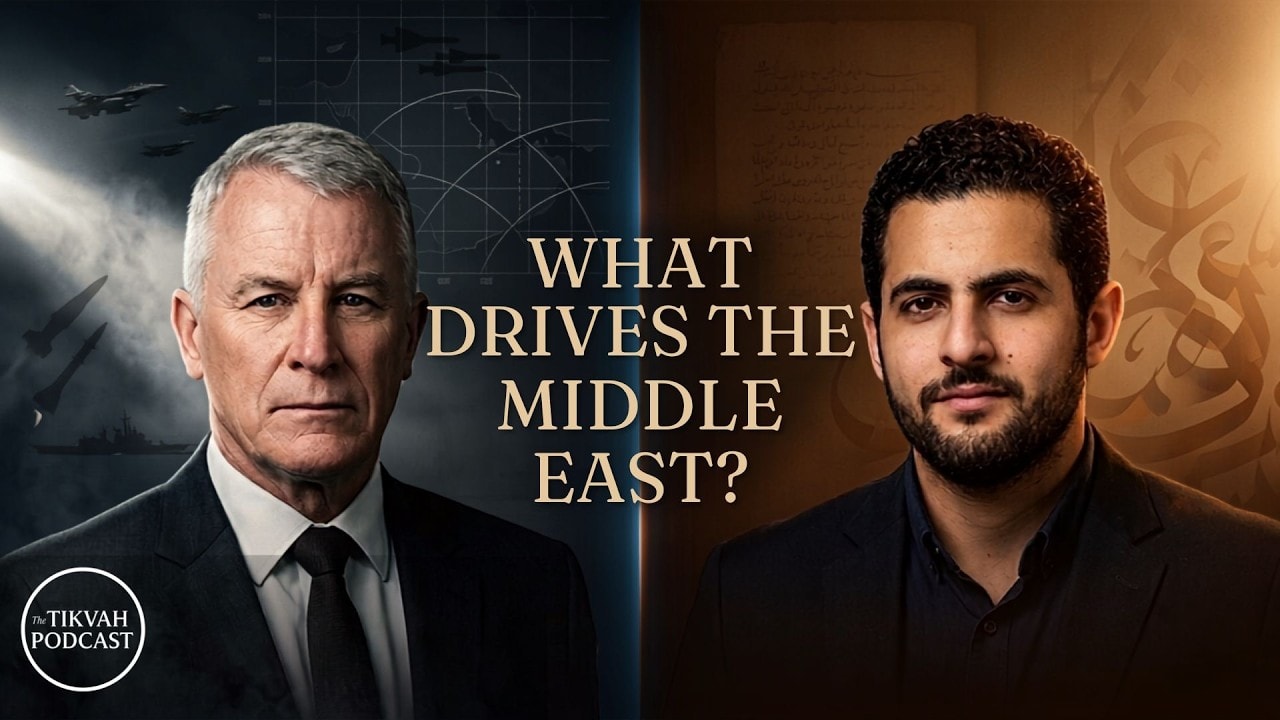
Understanding the Middle East requires more than one map. You need the map of tanks, missiles, money, alliances, and fear. But you also need the map inside people’s heads: the myths, loyalties, grievances, identities, and moral stories that tell them what matters.
One map explains what states can do. The other helps explain what they want to do in the first place.
That is the central challenge of understanding the Middle East. If we only study raw power, we can miss the forces that move millions of people. If we only study ideology, we can forget the hard limits imposed by military strength, coercion, and political survival.
Ideas may define the destination. Power determines which roads are open.
Takeaways
- Power determines political limits, while ideology shapes the goals political actors pursue.
- Anti-Zionist narratives can turn complex social failures into one simplistic scapegoating story.
- Israel’s strongest case in America rests on strategic value, military capability, and reliability.
- Rebuilding cultural literacy helps societies resist destructive narratives and think more seriously.
Two Lenses for Understanding the Middle East
Students of international politics often meet competing schools of thought. One puts power at the center. Who has weapons? Who can coerce whom? Which state can project force outside its borders? Who is afraid of whom?
The other approach begins with culture and ideas. What does a society honor? What story does a regime tell about itself? What does a political community love, fear, or define itself against?
For understanding the Middle East, both questions matter. A state is never merely a pile of military capabilities. But a state also cannot escape political gravity through clever slogans or emotionally satisfying narratives.
Michael Doran’s approach is deliberately hardheaded. He looks at relative power. His job, as he puts it, is a bit like an accountant checking the books or someone in an airplane telling you how much fuel remains. You may have grand plans, inspiring ideals, and a beautiful flight path. But gravity does not care.
You can believe anything you like. But if you ignore gravity, the plane still comes down.
This is why military capability matters so much. In the Middle East, power politics is not some hidden feature beneath the surface. It is often the main game. States calculate interests, vulnerabilities, and opportunities in an unforgiving neighborhood.
Still, power alone does not tell us why certain ambitions exist. It does not explain why some causes become sacred, why enemies become symbols of ultimate evil, or why political identity can form around hostility toward one country.
That is where Hussein Aboubakr Mansour’s lens becomes essential.
A Personal Journey Through Arab Nationalism
Hussein grew up in Giza, in the greater Cairo area, in a fairly ordinary middle-class Egyptian family. His father worked at a government bank. His mother cared for the household and children. The family was modestly religious, neither radical nor especially political.
Yet Israel, Jews, and Zionism were everywhere.
That is not because every conversation was about foreign policy. It is because Israel occupies a central place in modern Arab self-narration. Egypt, Arab identity, Muslim identity, national dignity, colonial history, and political failure could all become tangled up in the same story.
For a child, the villain is often the most fascinating character. In Egyptian popular culture, the Jewish villain could appear even in stories unrelated to Israel. A crime drama about drugs or corruption could end with the familiar twist: the whole thing was supposedly a Zionist plot to destroy Egyptian youth.
When one explanation is used for everything, it eventually stops explaining anything.
The early 2000s made these narratives more intense. The September 11 attacks, the rise of global jihadism, the Second Intifada, the Iraq War, and the growing influence of Al Jazeera all created a powerful atmosphere of radicalization across parts of the Arab world.
For many young people, the conflict came to feel cosmic. Islam, the West, America, Jews, Zionism, Palestine, humiliation, and redemption were placed inside one huge moral drama.
Hussein did what intensely curious young people do. He read. A lot. He worked through popular polemics, then more sophisticated intellectual arguments. He encountered versions of critical theory, revolutionary thought, materialist critiques of imperialism, and arguments portraying Zionism as a deep historical force of domination.
These were not merely crude conspiracy theories. Some were polished and academic. That matters. Bad ideas do not become harmless because they use difficult vocabulary.
The Importance of Encountering Reality
The break came through language and direct cultural exposure. Hussein taught himself Hebrew using the internet. He encountered Israeli society, Israeli humor, Israeli television, and ordinary people living ordinary lives.
The story he had been taught did not match the society he could now see.
This is a crucial lesson for understanding the Middle East. Ideological systems can make real people almost disappear. They replace human beings with symbols. Then the symbol can carry every fear, every grievance, and every political disappointment.
But a society seen up close is harder to turn into a cartoon villain.
Reality has a way of becoming inconvenient when your ideology depends on not seeing it.
Deconstructing inherited beliefs, however, can be dangerous. It is not enough to discover that an old identity was built on distortions. A person still needs a meaningful structure of life. Without one, the result can be nihilism.
That question is not merely personal. It is political. If a society has built major parts of its identity around destructive narratives, how can those narratives be challenged without leaving a vacuum behind?
That haunting question drives a deeper inquiry into understanding the Middle East: how did entire political cultures become organized around a fixation on Israel, regardless of whether Israel could plausibly explain the problem at hand?
Power Explains Means, Ideas Explain Ends
The apparent disagreement between power-centered analysis and ideology-centered analysis is not really a contradiction. They answer different questions.
Power analysis tells us what political actors can accomplish. It clarifies constraints. It shows why certain threats matter, why alliances endure, and why groups with guns often get their way.
Take Hezbollah in Lebanon. It is tempting to say that an opposing narrative can defeat Hezbollah’s narrative. But a narrative does not erase coercion. Hezbollah’s position rests on its ability to use force. Those who lack the power to resist may repeat its slogans, accommodate its demands, or remain silent. That does not mean they are persuaded in their hearts.
A slogan backed by a gun is not just a slogan.
Ideological analysis asks a different question: why do people seek certain political goals? Why does a leader embrace a cause that carries enormous costs? Why do states that compete fiercely with each other still speak in a shared language of Arab unity and struggle against Israel?
Modern mass politics needs cohesive stories. People need to know who belongs and who does not, what the nation is for, which sacrifices are noble, and which possibilities are morally forbidden.
For understanding the Middle East, ideology shapes the menu of imaginable choices. It can open options, close options, and make some compromises feel impossible. Yet the final political outcome is still shaped by power.
Put simply:
- Ideas shape political objectives.
- Identity defines moral boundaries.
- Power determines practical limits.
- Force decides what can be imposed.
This is not a neat division in every moment. Ideas can help create power. Power can spread ideas. But it is a useful starting point, especially when public debate treats slogans as if they were more decisive than weapons, institutions, and fear.
How Revolutionary Ideas Reshaped the Region
One argument about the modern Middle East is that many of its instabilities emerged from the adoption of destructive European revolutionary ideas. Concepts of history, identity, struggle, collective liberation, and the self entered societies that lacked institutions strong enough to absorb the shock.
Older social structures weakened. Revolutionary identities became more intense. National, religious, ethnic, and sectarian categories could become totalizing.
The result was not simply political disagreement. It was a deeper collapse in the way people understood themselves and their relation to one another.
Islamism, jihadism, aggressive identitarianism, and the obsession with Palestine cannot be explained without studying these narratives. They do not control every decision. But they shape the world in which decisions are made.
Mass politics needs a story. The danger begins when the story needs an enemy to make sense.
This is why understanding the Middle East can illuminate problems far beyond the region. The Middle East is not an exotic exception, safely separated from the West. It can serve as a warning.
When Zionism Becomes the Explanation for Everything
One of the clearest examples is the way Zionism can become a universal causal narrative. In Egypt, a chain of reasoning could turn any social frustration into an accusation against Israel.
Food prices rise. Why? Egypt needs foreign currency. Why? It has become dependent on export agriculture. Why? Capitalism and economic policy. Why those policies? Camp David. Why Camp David? Wars with Israel. Therefore, the price of strawberries is supposedly Zionism’s fault.
The chain can contain real facts at different points. Countries do face economic pressures. Wars have consequences. Governments make choices. But the final conclusion becomes absurd because every complexity is forced into one predetermined story.
Once that happens, the story is no longer an effort to understand the world. It becomes an emotional machine for assigning blame.
Businesses can be ruined by rumors of Jewish ownership. Social failures can be blamed on Israel without evidence. The logic becomes self-sealing: if something goes wrong, Zionism caused it. If evidence does not support the claim, that only proves how powerful the conspiracy must be.
A universal scapegoat is politically convenient because it saves people from asking harder questions.
And this pattern should feel familiar. Versions of the same causal chain are emerging in American life. A person may complain about declining cities, expensive health care, homelessness, military spending, or foreign wars. Then every issue is routed through the Middle East. Finally, Israel becomes the alleged source of domestic American problems.
That is not a serious analysis. It is the old habit of turning one political symbol into the explanation for everything.
Understanding the Middle East helps identify this pattern before it takes deeper root elsewhere.
Theology Hidden Inside Foreign Policy
Ideas also shape American policy toward the Middle East. One important influence came through Protestant modernism.
During the Cold War, the United States needed regional experts. Many people with language skills, cultural knowledge, and extensive experience in the Middle East came from American missionary families. They had grown up in the region, understood Arabic, knew local politics, and were committed Americans.
But their prior missionary project shaped their assumptions.
These Protestant modernists often focused less on conversion and more on practical cooperation. They built schools and hospitals. They worked with Muslim communities. They framed their mission around good deeds and shared projects rather than religious doctrine.
In this worldview, Zionism could appear as an obstacle. It seemed to undermine trust between Americans and Muslim societies. Later, when missionary scholars moved into diplomacy, intelligence, and government work, some carried this assumption into American foreign policy.
The logic became familiar: to gain credibility with Muslim states, America must distance itself from Israel.
This current of thought has remained influential in parts of the national security establishment. It also sits alongside another Protestant current, one that sees Israel as both a strategic partner and, for some, a religiously meaningful part of history.
The conflict over Israel in American life is therefore not only about policy. It reflects old divisions within American Protestantism itself: modernists versus evangelicals, deeds versus dogma, and skepticism toward Christian Zionism versus commitment to it.
Making the Strategic Case for Israel
What follows for those who want a strong United States-Israel relationship?
Start with interests. Theology matters to many Americans, and it should not be mocked. But it can be easy to caricature religious arguments or reduce them to abstract fights that make believers seem strange to outsiders.
The clearest public case is strategic.
Israel is a reliable American ally in a region where military power matters enormously. It has real capabilities. It can project force. Its interests are closely aligned with America’s in key areas. And because it is smaller and dependent on American support, it is highly responsive to American concerns.
That is the realist argument. It is not sentimental. It does not depend on vibes.
A durable alliance should rest on shared interests, real capability, and proven reliability.
For understanding the Middle East, this is the point where both lenses meet. Israel’s strategic value is a question of power. The ability to recognize that value and to resist distorted narratives about Israel is a question of culture and ideas.
Israel should also continue strengthening the capabilities that make it indispensable, especially in defense and emerging technological fields such as artificial intelligence. Sentiment can shift. Political coalitions can change. Strategic usefulness is a firmer foundation.
Rebuilding the Culture that Makes Serious Thought Possible
There is a larger challenge here. American biblical literacy has declined sharply. The language that once shaped public speech, literature, moral imagination, and political argument is no longer widely shared.
Reading Abraham Lincoln’s Second Inaugural Address and its biblical language feels natural, almost effortless. In much of contemporary public culture, that same language can feel foreign or incomprehensible.
That loss matters. Around biblical culture stood a larger literary inheritance: the King James Bible, Milton, English literature, the great books, and a moral vocabulary rich enough to discuss obligation, sin, sacrifice, duty, justice, and human dignity.
When language collapses, thought gets thinner. When thought gets thinner, political myths become easier to sell.
Rebuilding culture is not glamorous. It may begin with small acts of seriousness: reading better books, criticizing bad taste, taking language seriously, and refusing to pretend that every cultural habit is equally nourishing.
Yes, this can make you a little annoying at family gatherings. But perhaps a bit of cheerful cultural annoyance is not the worst thing in the world.
If we want better politics, we need better habits of mind long before election day.
Understanding the Middle East is not just about decoding a distant region. It is about recognizing how power works, how identity hardens, how narratives create enemies, and how civilizations can forget the language required to defend themselves.
We need both maps. The map of force keeps us grounded. The map of ideas explains why people are going where they are going. Ignore either one, and the picture gets dangerously incomplete.
RESOURCES:
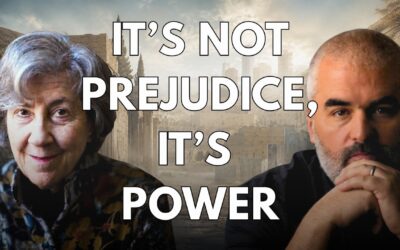
This article was created from the video Two Ways to Understand the Middle East | Michael Doran & Hussein Aboubakr Mansour | Tikvah Podcast | https://www.youtube.com/watch?v=2l8SYW0n35k with the help of AI.
PHOTOS & VIDEOS Use According to Section 27 A