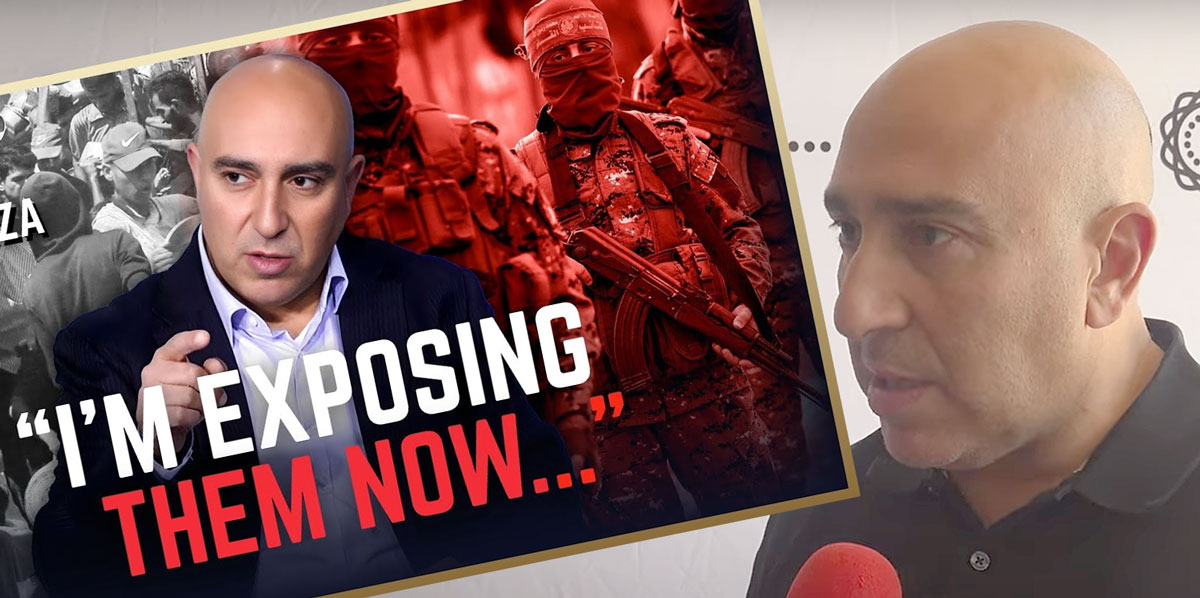
In the midst of ongoing conflict and deep-rooted tensions, voices calling for reform and peace often struggle to be heard. Yet, Samar Sanjilawi, a Palestinian activist and advocate for change, emerges as a courageous leader willing to challenge the status quo.
Born in the Old City of Jerusalem, Samar shares a unique perspective shaped by decades of dialogue, political activism, and a heartfelt desire for coexistence between Palestinians and Israelis.
This article explores his insights on leadership, the future of Palestinian politics, and the complex path toward peace.
A Childhood of Coexistence & Impact of Conflict
Samar recalls growing up in Jerusalem’s Old City, where Muslims, Christians, and Jews lived side by side, each following their traditions peacefully. He attended a Christian school as a Palestinian Muslim and embraced the diversity around him without feeling conflict. However, the outbreak of the First Intifada marked a turning point. The uprising created a divide between the younger generations on both sides, fostering an “us versus them” mentality that continues to influence identities today.
Despite this, Samar’s journey took a unique path. At just 15 years old, he was imprisoned and began a dialogue with his guards—a dialogue that would extend over 37 years across all spectrums of Israeli society.
From left-wing to right-wing Israelis, Samar has engaged in conversations that many Palestinians might avoid. He believes that understanding the other side is the best investment anyone can make for peace.
Critiquing Palestinian Leadership: A Call for Reform
One of Samar’s most controversial yet necessary actions was writing an open letter published in the New York Times, calling for a change in Palestinian leadership following the devastating events of October 7. He openly criticizes both Mahmoud Abbas and Hamas for perpetuating corruption and destruction, respectively. According to Samar, 90% of Palestinians desire Abbas’s resignation, fed up with oligarchic governance and the absence of hope.
“Palestinians would like to see a kind of leadership that will replace Abbas’s corruption and Hamas’s destruction by a way of construction, hope, positive things, development, cooperation.”
He acknowledges the difficulty and personal risk in opposing entrenched powers but stresses the urgency of internal reform. Samar insists that leadership must be courageous, able to make painful but realistic decisions, much like early Zionist leaders who accepted compromises to build the State of Israel.
Understanding the Conflict Through Both Eyes
Samar emphasizes that the Israeli-Palestinian conflict is fundamentally about two core needs: security for Israelis and freedom and dignity for Palestinians. He argues that Palestinians must learn to see the conflict from the Israeli perspective to find creative solutions. Likewise, Israelis need to understand the Palestinian experience.
He challenges the prevailing assumption that Palestinians are uniformly supportive of violence or extremist groups. In a candid recounting of a survey he conducted at Birzeit University, Samar found nuanced views among Palestinian youth:
- All students surveyed expressed solidarity with Gaza and its cause.
- Most rejected the killing of civilians and kidnapping of hostages.
- The majority supported resistance but not direct participation in violence.
This complexity reflects a generation confused by the absence of leadership and overwhelmed by negative media narratives on both sides. Samar calls for combating hatred and incitement wherever it exists, whether in textbooks or classrooms.
The Path Forward: Elections & Institutional Reform
For Samar, the key to ending Hamas’s destructive role and reforming Palestinian governance lies in democratic elections. Despite skepticism, he believes elections would allow Palestinians to choose their leaders and hold them accountable, even if Hamas were to win some seats. The critical difference is that these outcomes would be the result of choice rather than an imposed rule.
He advocates for building strong institutions rather than relying on individual leaders, highlighting the need for a political system that mirrors Israel’s parliamentary democracy with checks and balances. According to Samar, sustainable peace requires parity in political structures and economic strength.
“If we want to create a sustainable peace between Palestinians and Israelis, there should be some kind of parity similarity in the political systems.”
He dismisses external interventions that have historically failed to bring genuine change, urging international actors to step back and allow Palestinians to take responsibility for their future. Samar sees foreign aid and diplomatic recognition as largely symbolic unless Israel itself recognizes Palestinian statehood and the two peoples work toward coexistence.
Hope Amidst Pain: A Shared Humanity
Samar’s message is ultimately one of hope rooted in shared history and humanity. He recounts the story of Abdul Aziz Rantisi, co-founder of Hamas, whose family was split between Jewish and Muslim members—siblings who once lived together but became enemies overnight due to conflict. This story symbolizes the deep connections that persist beneath political divides.
He calls on Palestinians and Israelis alike to move beyond questions of who belongs first and instead focus on how both peoples belong to the land. Recognizing each other’s historical presence and rights is essential for forging a peaceful future.
Conclusion: A Vision for Peace & Change
Samar Sanjilawi embodies a new generation of Palestinian leadership willing to confront brutal truths and advocate for reform, dialogue, and coexistence. He acknowledges the trauma and wounds inflicted by recent violence but urges both sides to look toward the future with one eye, ready to embrace peace when the opportunity arises.
His plea is clear: Palestinians must assume responsibility for their destiny, build democratic institutions, and engage Israelis with empathy and understanding. Only through such courageous leadership and mutual recognition can the cycle of violence be broken, and a new chapter of hope and cooperation be written for future generations.
“This war will end… Once it ends, we will find ourselves again, fifty percent Palestinians and fifty percent Israeli Jews living in this land. And we will realize again that maybe we should go to the path of peace of no choice. And we would be there. I am confident that we would be there.”
RESOURCE: Palestinian activist says what no one DARES say about Hamas and Abbas | The Quad | https://www.youtube.com/watch?v=IhTIPHTE5Cw&t=3s
RESOURCES:
This article was created from the video Palestinian activist says what no one DARES say about Hamas and Abbas | The Quad | https://www.youtube.com/watch?v=IhTIPHTE5Cw&t=3s with the help of AI.