The Call That Changed Everything
It all started with a trip that almost didn’t happen. The host, Francis Foster, and his co‑host, Konstantin Kisin, were heading to Russia to help rebuild churches after the fall of communism. They didn’t know that a single stop in a remote Arctic town would flip their lives upside‑down.
I almost ducked out, but I went anyway, and that decision rewired my whole future.
What they found was a city called Norilsk, a place so far north that the sun never really set in summer and barely peeked out in winter. The permafrost was three hundred meters deep, the temperature could plunge to minus 50°C, and the air was thick with the smell of nickel and copper smelting.
The City Built On Blood & Steel
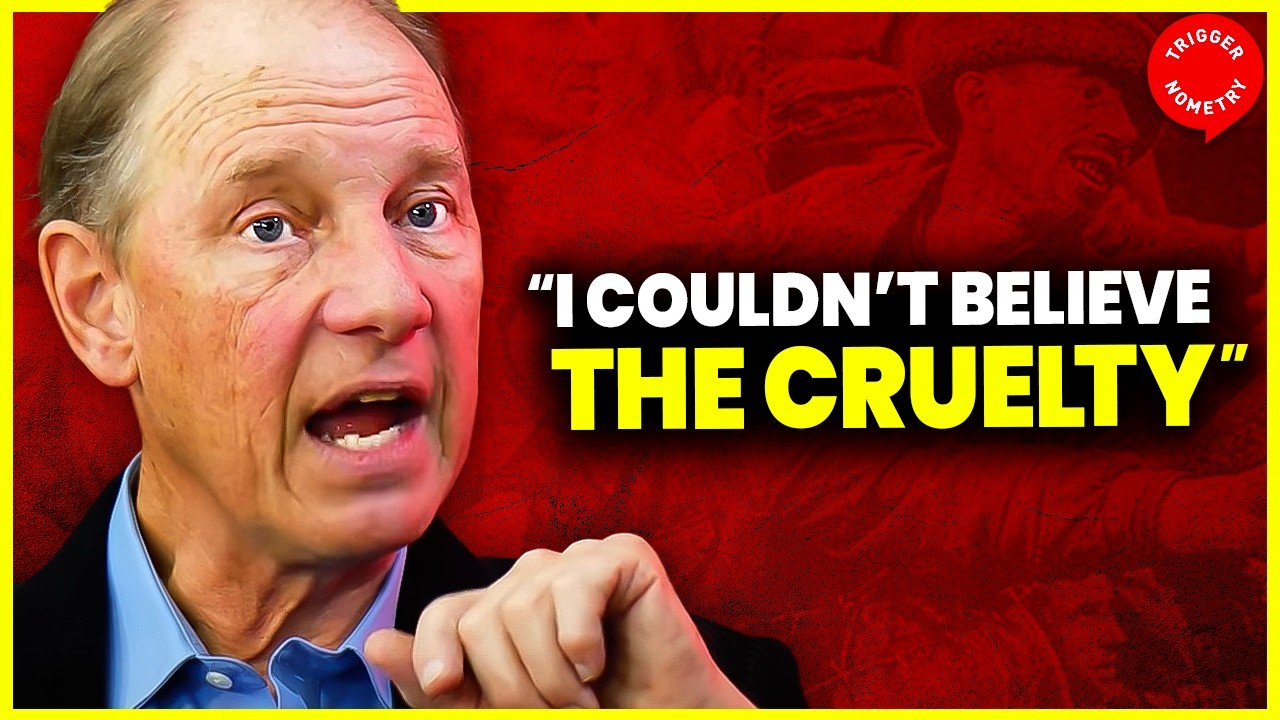
Norilsk isn’t just a mining town. It’s a living museum of Soviet cruelty. The city grew around a network of Gulag camps that forced prisoners to mine the world’s richest nickel deposits. The labor was brutal, the conditions were lethal, and the cruelty was engineered to break spirits.
The doors were studded like a cheese grater – you could bang on them, but your hands would be torn.
Imagine a punishment cell where the only light was a sliver of darkness, where you were stripped of clothes, given no heating, and left to stare at a wall that never moved. That was the “refinement of cruelty,” the host describes—a system designed not just to punish but to dehumanize.
How the West Turned a Blind Eye
While the prisoners suffered, the British Labour Party was busy polishing its own image. In the early 1930s, Labour leaders like George Lansbury and later Clement Attlee gave speeches that praised the Soviet experiment, even as reports of mass shootings and forced labor filtered in from the front lines.
The government said the Soviets were conducting an ‘interesting economic experiment’ and should be left alone.
Trade ministries were happy to import a million tonnes of timber a year from the camps, turning human misery into a profit line. The British press, the House of Lords, and even some MPs dismissed the evidence, calling it “fabrication” or “exaggeration.”
Why the Story Still Matters
Today, the echoes of Norilsk’s past are still heard in the polluted skies and the crumbling concrete of punishment blocks that survived the cold. The city still houses 120,000 people, but the ghosts of the past linger in every rusted pipe and every empty cell.
We need to keep telling the real story so people understand what lies behind the symbols that look ‘cool.’
It’s not just a Russian story. The same pattern of ignoring atrocities for political convenience shows up in the history of Iran, in Xinjiang, and in the way some modern movements romanticize revolution without seeing the human cost.
From Personal Pain To Public Purpose
Giles Yewdy, the historian on the show, grew up hearing his mother’s family talk about the kulaks, peasants who were punished simply for owning a horse. He saw his own grandmother’s brother starve on a forced march. Those personal scars turned into a mission: write a book, give talks in schools, and make sure the next generation sees the faces behind the numbers.
When you put a photo of a farmer next to the word ‘shot for counter‑revolutionary activity,’ the horror becomes real.
He’s also pushing for a “Schindler’s List” for Soviet crimes, a public memorial that forces us to confront the scale of the tragedy.
What Can We Do?
It’s easy to feel powerless. The story of Norilsk shows how a single city can be built on the backs of millions, yet stay hidden from the world. But the conversation on the podcast ends on a hopeful note: ordinary people can stand up, speak out, and demand truth.
Courage starts with a single voice, and it spreads when we gather around a table and ask, ‘What should we do?’
Whether it’s supporting investigative journalism, sharing these stories on social media, or simply asking tough questions in a classroom, each action chips away at the silence.
Remembering the Forgotten
When you think of the Gulag, think of the concrete punishment block with a single, dark cell. Think of the permafrost that never thaws, the nickel that fuels modern industry, and the families whose names are lost in archives. Remember that history isn’t just dates and figures. It’s people, pain, and the choices we make today.
If we don’t talk about it, we repeat it.
So next time you hear a story about a “cool” revolution, pause. Ask yourself: who paid the price? And then, share the answer.
RESOURCES:
This article was created from the video The Truth about Communism, Gulags and the Left with Giles Udy | https://www.youtube.com/watch?v=zz30g8-T8i0&t=2701s with the help of AI.