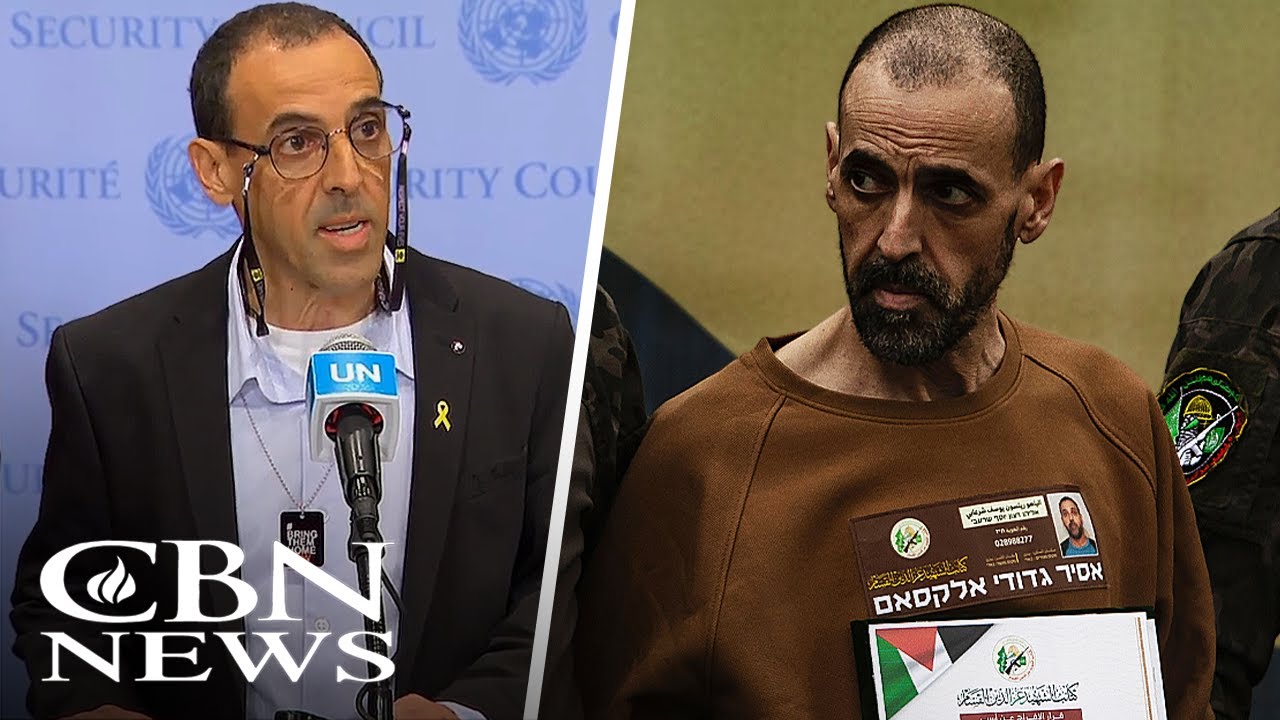
In a moving and sobering address before the United Nations Security Council, Eli Sharabi, an Israeli who endured 491 harrowing days as a hostage in Hamas captivity, shared his testimony of survival, loss, and a call for urgent action.
His story is not only a personal account of unimaginable suffering but also a powerful demand for justice and humanity on the global stage.
From a Peaceful Life to a Nightmare
Eli Sharabi lived a peaceful life in Kibbutz Be’eri with his British-born wife Leanne, their two daughters, Noya and Yahel, and their beloved dog, Mocha. For 23 years, they built a home filled with love and hope for the future. However, everything changed on October 7, 2023, when Hamas terrorists invaded their community.
“On October 7th, my heaven turned into hell.”
As sirens blared warning of the attack, Eli tried to reassure his wife, telling her, “The army will come. They always come.” But that day, the army did not arrive in time.
Terrorists broke down their door, opened fire, and dragged Eli away despite his desperate pleas to his daughters, promising, “I will be back.” What he did not realize was that this was a farewell that would last for more than a year.
The Horrors of Captivity
After being seized, Eli was taken to the Hamas-controlled border and then into a mosque, where he was held as a “trophy.”
For nearly 500 days, he was confined underground in terror tunnels—chained, starved, beaten, and humiliated. The chains cut into his skin from the moment of capture until his release. Food and water were nearly nonexistent; he survived on a piece of bread and a sip of tea some days, constantly begging for basic needs like food and bathroom use.
Despite this torment, Eli never gave up hope of reuniting with his family. “Begging became my existence,” he said, emphasizing the psychological and physical torture he endured. When he was finally freed on February 8, 2025, he weighed only 44 kilos, having lost over 30 kilos during captivity.
The Pain of Loss & the Fight for Justice
Returning home, Eli’s relief was shattered when he learned that his wife and daughters had been murdered during the attack.
His brother Yossi was also killed in captivity, a fact Hamas cruelly confirmed by showing Eli a picture of him just before his release. Yossi’s body remains in Gaza, denied the dignity of burial.
Eli’s pain is compounded by the silence and inaction he experienced during his ordeal.
“Where was the Red Cross when we needed them? Where was the United Nations?” he asked.
He recounted how civilians in Gaza cheered his kidnappers and were complicit in the suffering of hostages. “No one came,” he declared, highlighting the abandonment felt during those dark days.
A Call to Action: Bring Them All Home
Though Eli survived, 59 hostages remain captive. His message to the UN Security Council was clear and urgent: “No more excuses. No more delays. No more moral blindness.” He implored every nation and person in power to act immediately and bring all hostages home.
In his quest for justice, Eli has met with influential leaders, including former U.S. President Donald Trump and UK Prime Minister Keir Starmer, urging them to prioritize the freedom of all hostages. His advocacy extends beyond his own story—it is a rallying cry for humanity and dignity for those still suffering.
“You cannot claim to stand for humanity and abandon those who are still in hell.”
Conclusion: A Story of Survival and a Plea for Humanity
Eli Sharabi’s testimony is a harrowing reminder of the human cost of conflict and the resilience of the human spirit.
His journey from a loving family man to a captive survivor bearing witness before the world is both heartbreaking and inspiring.
As he stands before the global community, his message resonates with urgency and hope: the time to act is now.
Bringing all hostages home is not just a political or military imperative—it is a moral one.
May Eli’s story inspire action, compassion, and a renewed commitment to protect human dignity in the face of terror.
Breaking the Silence: Eli Sharabi’s Harrowing Account of Hamas Captivity
In a powerful and deeply moving interview, Eli Sharabi, released hostage in the recent exchange deal, shares his story of nearly 500 days of captivity underground in the Hamas tunnels.
Speaking candidly about the unimaginable physical and emotional torment he endured, Eli’s testimony sheds light on the brutal reality faced by hostages trapped underground, chained, starved, and tortured.
His story is not only a personal account of survival but also a solemn reminder of those still held captive, including his late brother Yossi Sharabi and his friend Alon Ohel.
This article draws from Eli’s interview on Uvda (Keshet 12), bringing his voice to those who seek to understand and support the ongoing efforts to bring all captives home.
The Reality of Captivity: Hunger, Pain & Desperation
Eli begins by describing the simple, yet profound dream of freedom—opening a refrigerator and taking food without fear or permission. This basic human freedom was a distant memory and an impossible luxury during his captivity. The hunger was relentless and brutal, a constant ache that consumed both body and mind.
“The feeling of hunger—your stomach literally sticks to your back. You see your stomach shrinking inward, and you can’t believe this is happening to your body.”
During the worst periods, Eli explains, they ate only once a day—a small bowl of pasta amounting to roughly 250-300 calories, far less than a tenth of what his body needed. This deprivation lasted for months, turning simple dry bread into a precious, life-saving meal.
The physical pain was compounded by the harsh conditions of captivity: bound hands and feet with ropes that cut into his flesh, broken ribs from beatings, and constant fear.
The Physical & Psychological Torment
The torture was relentless. Eli recounts the agony of being tied in painful positions for days, unable to find relief or rest.
He describes the unbearable pain in his shoulders and the agony of movement, which made even falling asleep impossible. There were moments when the pain was so intense that he lost consciousness, only to awaken and face the same torment again.
“In the first three days, my hands were tied behind my back, my feet bound with ropes cutting into my flesh. Every movement made me want to scream.”
Despite this overwhelming suffering, Eli’s spirit remained unbroken. He focused on survival, managing the chaos by finding small ways to regain a sense of control—an instinctive fight for life amidst total helplessness.
From a Life of Normalcy to a Nightmare
Before his capture, Eli was a member of a kibbutz, living with his wife and two daughters, working, and enjoying a peaceful life.
The sudden transition from this reality to the horrors of captivity was stark and devastating. Yet, Eli chose not to dwell on despair. Instead, he channeled his energy into survival and hope, refusing to let the situation define him.
Brotherhood & Solidarity in the Darkness
One of the most poignant parts of Eli’s story is his bond with fellow captives, especially his friend Alon Ohel. Despite the horrific conditions, the presence of others gave them strength. Eli recalls how having companions to talk to, to share their pain and hopes, helped sustain their will to live.
“It’s terribly hard to be alone. When we were four, it gave us strength. You had someone to wake up with in the morning and someone to talk to at night.”
Alon’s plight, still trapped underground after 50 days in the tunnels, weighs heavily on Eli’s heart. He has taken it upon himself to fight for Alon and all other captives, promising never to leave them behind. This personal commitment fuels his determination to speak out and raise awareness.
The Urgent Call to Action: No One Left Behind
Eli’s decision to break his silence and share his story publicly stems from a deep conviction that no hostage should be forgotten or abandoned. He emphasizes the importance of keeping the world’s attention on those still held captive and the ongoing efforts to secure their release.
“We cannot leave anyone behind. Every minute counts. I remember every detail in the tunnels, every face. I promised Alon I would fight for him. It’s a matter of days.”
His testimony is a stark reminder of the human cost of conflict and the resilience of those who endure it. It is also a call for solidarity, urging society and leaders alike to continue striving for the freedom of all hostages.
Conclusion: Hope Amidst Darkness
Eli Sharabi’s story is one of unimaginable suffering but also enduring hope and unyielding courage. His willingness to share his experience brings vital visibility to the ongoing hostage crisis and honors the memory of those who have been lost or remain captive.
As the world watches, Eli’s voice stands as a testament to survival, the power of human connection, and the unwavering fight to bring every hostage home.
Eli’s testimony is a powerful reminder: behind every headline and statistic is a human life, a family waiting, and a hope that refuses to be extinguished.
RESOURCES:
‘I Have Come Back from Hell’: Eli Sharabi Speaks to U.N. Security Council | https://www.youtube.com/watch?v=lFTYLTddUdo
Hamas terrorists wiped out the Sharabi family on October 7 | Keshet 12 | https://www.youtube.com/watch?v=lbydvT3D_cw&t=2s
He Survived 500 Days in Hamas Captivity But His Nightmare Was Only Starting (Eli Sharabi’s Story) | https://www.youtube.com/watch?v=c1Amz6WjKu4&t=1s
Breaking the Silence: Eli Sharabi’s First Interview on Hamas Captivity | Keshet 12 | https://www.youtube.com/watch?v=jVPAlnqDorc
Yossi Sharabi was murdered in Hamas captivity, his widow Nira recalls his abduction | https://www.youtube.com/watch?v=UY7NBPqzUPI
Eli and Yossi Sharabi: two families torn apart by violence | https://www.youtube.com/watch?v=6IymdsKdd2Q&t=1s
This article was created from the videos with the help of AI.
PHOTOS & VIDEOS Use According to Section 27 A