No one is prepared for Iran when the pressure that has been building for decades starts breaking through all at once. Across the country, protests have erupted as people face a collapsing currency, soaring prices, shuttered shops, and a government that seems far more focused on foreign battles than the daily survival of its own people.
This is not merely an economic story. It is a story about what happens when a regime pours its resources into regional aggression, proxy wars, missiles, and ideology while ordinary families struggle to afford food, health care, and a basic future.
A Crisis That Was Years in the Making
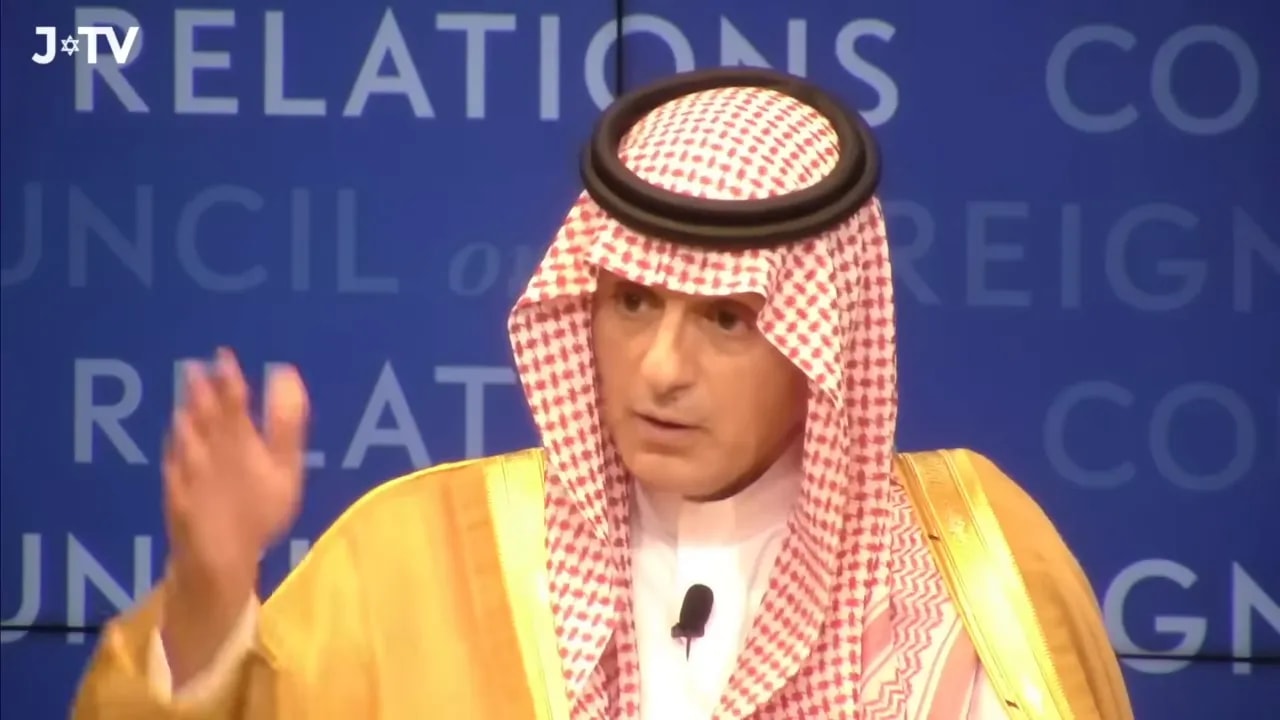
Years ago, former Saudi foreign minister Adel al-Jubeir made a striking assessment of Iran’s position. He argued that Tehran’s regional power was not permanent, its economic course was unsustainable, and the pressure inside Iran would eventually become impossible to ignore.
“A model built on terror, sectarianism, domination, and murder cannot win forever.”
That warning now feels painfully relevant. No one is prepared for Iran when economic failure meets deep public anger. Iran’s currency has reportedly fallen to around 1.42 million rials to the US dollar. Inflation has climbed above 42 percent. Food prices have risen dramatically, with some reports putting increases as high as 72 percent. Health costs are also surging.
For people trying to make rent, buy groceries, get medicine, or plan for their children, these numbers are not abstract. They are daily misery.
And that is why protests matter. Fear is real under an authoritarian system. But there comes a point where the fear of staying silent becomes smaller than the fear of what happens if nothing changes.
Protests Are About More Than Prices
The current unrest has been driven by the economic crisis, but it is not confined to economics. Demonstrations have included anti-regime chants and direct criticism of Supreme Leader Ayatollah Ali Khamenei. Security forces have reportedly used tear gas, while armed security personnel on motorcycles have been deployed in Tehran and other areas.
Students have also played a major role. Universities have long been places where frustration turns into organized action, and calls for demonstrations have spread beyond a single city or social group.
When people chant against the dictator, they are saying the problem is not just the price of bread. The problem is the system.
State media may try to paint unrest as a purely financial issue. But people can see the bigger picture. They can see where money goes. They can see the contrast between a government funding regional militias and a population being squeezed by inflation.
No one is prepared for Iran when a population begins connecting its empty wallet to the ideology and choices of its rulers.
Where Did the Money Go?
The central accusation is blunt: Iran has had resources, but the regime has not used them to build a better life for Iranian citizens.
After the nuclear deal, known as the JCPOA, Iran had access to billions of dollars. Yet the question remains: Where were the new roads, schools, hospitals, and opportunities for ordinary Iranians?
Instead, Iran has continued investing heavily in its network of armed allies and proxies across the region. The regime has backed Hezbollah in Lebanon, the Houthis in Yemen, and forces active in Syria and Iraq. It has been accused of sending weapons, explosives, funding, and military support far beyond its own borders.
A government reveals its priorities through what it funds.
This is why the economic crisis cannot be separated from Iran’s foreign policy. The regime’s confrontation with Israel, the United States, and much of the West is not a side issue. It is central to the political identity it has created.
Even as people suffer, President Masoud Pezeshkian has declared that Iran is at war with America, Europe, and Israel. It is hard to imagine a more revealing statement. The leadership recognizes the hardship, yet still frames the country’s future around conflict.
Regional Power Is Not the Same as Stability
For years, Iran projected influence throughout the Middle East. It entrenched itself in several conflict zones and built a powerful proxy network. But influence built through militias, intimidation, weapons, and chaos has a serious weakness: it creates enemies everywhere and lasting prosperity nowhere.
No one is prepared for Iran if the illusion of regional strength starts collapsing at the same moment as the economy at home.
Al-Jubeir’s argument was that Iran had become increasingly isolated, including in parts of Africa and the wider Islamic world. He believed Iran’s position in Syria, Iraq, Yemen, and Lebanon could be challenged over time because it was based on intervention rather than genuine partnership.
That does not mean change comes easily. Iran’s rulers have shown they are willing to use repression. They have spent decades responding to opposition with force, censorship, arrests, and propaganda.
But no regime can endlessly ignore the reality outside its own slogans.
The Fear of Another 2019
Rising fuel prices have also raised concerns about renewed violence, as seen during the 2019 fuel protests. That moment showed how quickly economic anger can spread and how brutally the state may respond when it feels threatened.
Today’s tension carries the same dangerous ingredients:
- A currency in free fall
- High inflation and rising food costs
- Growing public discontent
- Visible anti-regime anger
- Heavy security deployments
- A government blaming outside enemies
No one is prepared for Iran when those ingredients are all present at once. A government can control the narrative for a while. It cannot make a collapsing economy disappear with a television broadcast.
People can be told that everything is fine. But they still know what they paid for dinner.
The Deeper Ideological Problem
There is also a deeper question. Why has the Islamic Republic spent more than four decades defining itself through hostility toward Israel and the West?
This cannot be explained only by politics or regional power. Iran’s revolutionary ideology has often framed the conflict in spiritual and apocalyptic terms. Israel and America are cast not simply as political rivals but as cosmic enemies in a struggle that the regime presents as sacred.
That theology has consequences. It shapes rhetoric. It fuels proxy wars. It glorifies martyrdom. And it makes compromise seem like betrayal.
No one is prepared for Iran when a government treats destruction as a path to redemption. This is why the regime’s hostility toward Israel is not just a talking point. It is woven into the worldview that drives its actions.
Antisemitism Is Never Contained
There is a hard lesson here for every society. Antisemitism does not remain neatly focused on Jews. It poisons the culture that embraces it. It teaches people to blame, hate, scapegoat, and worship violence. Eventually, that poison spreads through everything.
The Jewish people are often described as the canary in the coal mine. When Antisemitism rises, it is a warning sign that something much bigger is going wrong in society.
Hatred of Israel does not build a flourishing nation. It leaves ordinary people paying the price.
Iran’s people have a great history, a rich culture, and enormous potential. They deserve a future that is not defined by authoritarianism, poverty, isolation, and endless calls for war.
No one is prepared for Iran because the stakes extend beyond one country. The regime’s decisions affect the whole region. Yet the most immediate victims are often Iranians themselves.
Choose Life Over Destruction
The Iranian people deserve leaders who invest in their schools, hospitals, jobs, families, and future. They deserve a government that joins the community of nations in good standing rather than treating chaos as a national mission.
No one is prepared for Iran at a moment like this, but moments of rupture can also become moments of courage. A country trapped in darkness can choose another path. A people exhausted by fear can demand life, dignity, and hope.
No one is prepared for Iran when its people finally refuse to be sacrificed for an ideology of hate. But the world should be ready to stand for a different future: one built on life, progress, responsibility, and peace.
RESOURCES
This article was created from the video Saudi Leader “NO ONE Is Prepared For What’s About To Happen In Iran…” with the help of AI.